


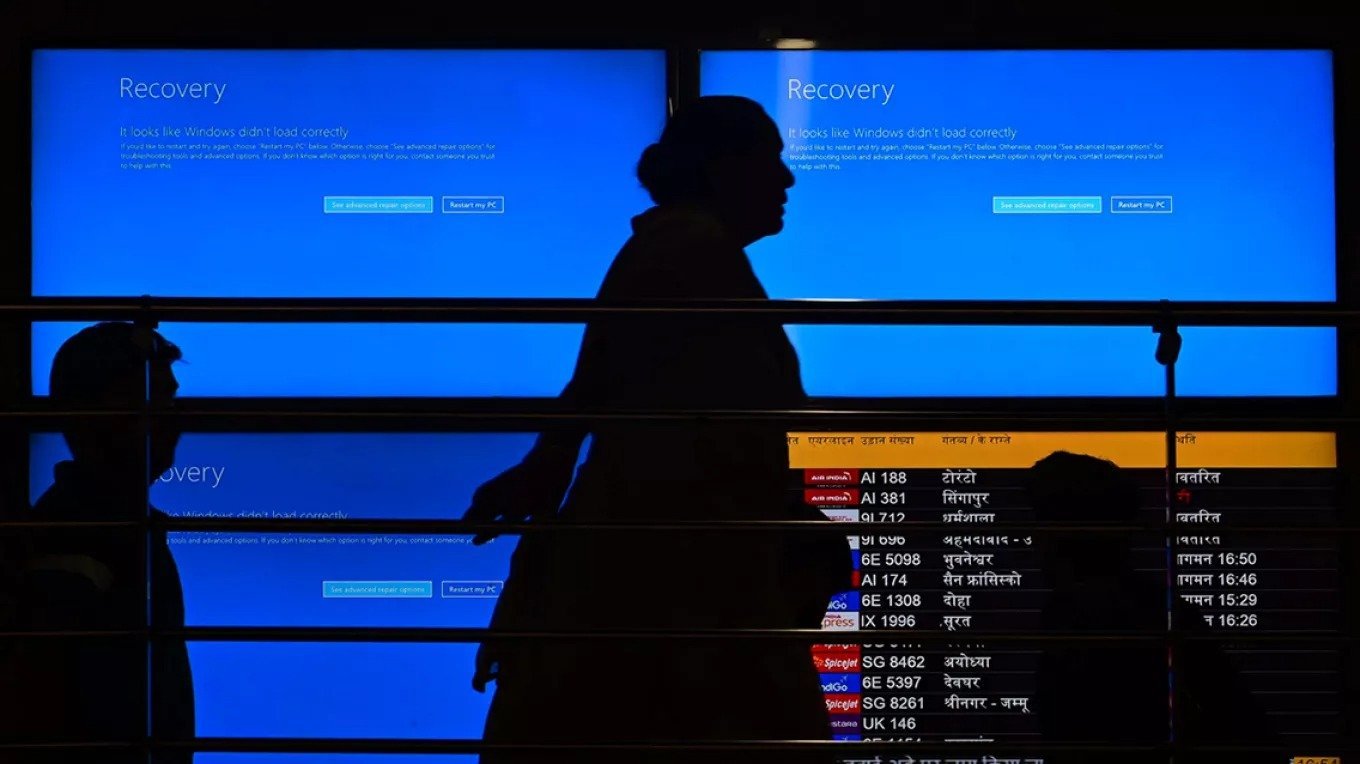
Around the world, thousands of computer users continue to encounter the so-called “blue screen of death” on their devices.
Regarding the issue with the CrowdStrike cybersecurity program, which caused an electronic blackout and chaos worldwide, both Microsoft and CrowdStrike have issued instructions to resolve the problems for Windows users, at least for those whose computers do not automatically fix the issue. This is also the reason why the problems that arose where computers are used are being resolved gradually.
Experts say that even where the problem is solved – when it comes to companies – manual intervention on each computer separately may be required, and this explains why the return to normalcy can take time. In some cases, however, the solution is quite simple.
One such solution is for those who use Microsoft’s Azure Cloud. As the company announced, customers using this solution can resolve the problem by restarting their computers… 15 times. Amazon also recommends the same restart solution (as many times as needed) to its customers using the AWS cloud software.
However, this is a solution only for some. For others, as CrowdStrike CEO George Kurtz told NBC, the company has identified the problem and developed a fix that is being automatically applied, but “it could take quite some time for some systems that just don’t automatically recover” before the issue is resolved.
Surprisingly, the company’s technicians found that the traditional solution of restarting computers proved to be “miraculous” for a large number of users. However, it didn’t work for everyone. In case the problems persist, CrowdStrike has developed a manual workaround for the blue screen error. This solution involves booting the system in safe mode or recovery mode and navigating to the C:\Windows\System32\drivers\CrowdStrike folder. Then, users should delete the file titled “C-00000291*.sys.” This process puts the system into a state where CrowdStrike and other third-party driver software cannot function.
A security issue
Beyond the massive delays and cancellations of thousands of flights, as well as the disruption to businesses and services of all kinds, from hospitals to car rental companies, there is also the issue of security. A former FBI special agent said that the impact of today’s global computer outage on national security is “greater than most people realise.”
Agent Rob d’Amico explained that the services of countries that use teams with malicious targeted cyber activity are likely monitoring what happened during the technological disruption. “They may not be involved in how it happened, but they are watching what happened, what the reactions were, what the response times were, how they fixed it, so that if they examine an aggressive cyber operation against the United States, they can map out what happened,” the former agent told CNN, adding that another national security issue could arise from malicious users who may be exploiting the outage to carry out phishing cyberattacks.
CrowdStrike, the company behind the technological disruption, said in a statement Friday that “this was not a cyberattack,” and that its team is “fully mobilised to ensure the security and stability of CrowdStrike customers.” Something that d’Amico said he remains skeptical about.
Regardless of whether national security issues arise for states, what is certain is that security issues arise for ordinary citizens and businesses. From the first hour the problem arose, criminals in cyberspace have been exploiting the chaos, promoting fake websites full of malicious software designed to compromise unsuspecting victims, according to warnings from the US government and many cybersecurity professionals.
Hackers have created fake URLs designed to target people looking for information or solutions to the global computing breakdown, but are actually intended to collect visitor information or compromise their devices, security experts said.
These trap sites use keywords such as “CrowdStrike” – the cybersecurity company behind the faulty software update that led to the crisis – or “blue screen,” which is displayed on computers affected by the CrowdStrike fault during startup.
These sites may try to lure victims by promising a quick fix for CrowdStrike or by offering fake cryptocurrency deals. Not coincidentally, the US Department of Homeland Security issued a statement, warning of “malicious actors exploiting this incident for phishing and other malicious activity.”
Read more:

