


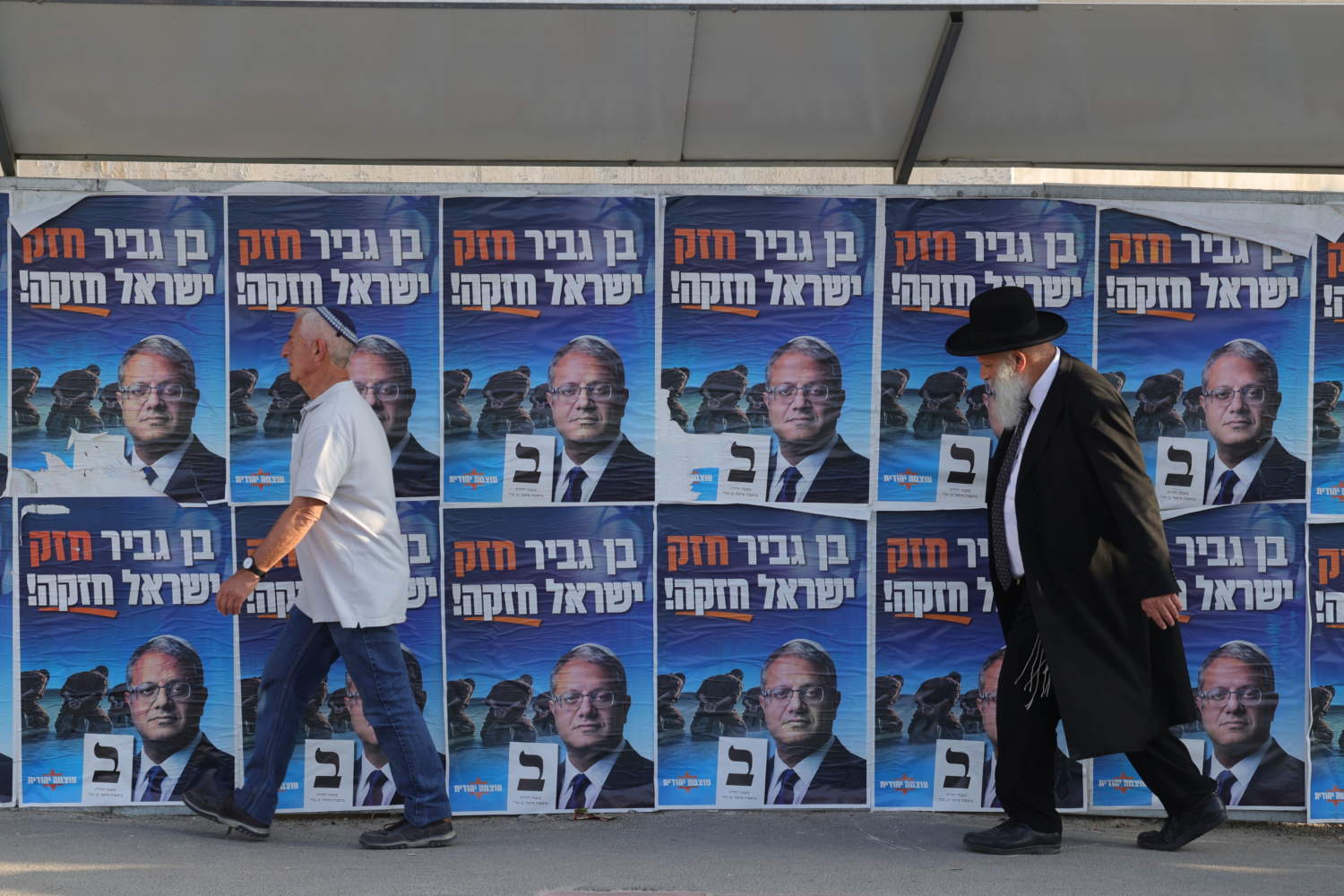
Israel goes to the polls today in what is widely regarded as one of the most consequential elections in the country’s history, with no clear indication of who, if anyone, will be able to form the next government.
The final opinion polls leave both Prime Minister Benjamin Netanyahu’s bloc and the opposition short of the 61 seats needed for a parliamentary majority.
Some 7.3 million Israelis are eligible to vote in the first general election since the October 7, 2023, terrorist attack. Accountability for that day’s catastrophic security failures and the contentious issue of ultra-Orthodox military conscription have dominated the campaign.
Former military chief Gadi Eisenkot, leader of the Yashar party, has overtaken Netanyahu’s Likud in the latest television polls. But coming first is one thing; assembling a governing coalition is quite another.
Under the current political balance, coalition-building looks extremely difficult, whether or not Arab parties are involved. Some polls give those parties a combined record 16 seats in the 120-member Knesset.
US President Donald Trump renewed his endorsement of Netanyahu on Monday, urging Israelis to support the prime minister. Eisenkot said he expected Washington to work with whoever Israeli voters chose to lead the country.
Meanwhile, Channel 12 reported that Netanyahu had clashed with senior military commanders over a potential operation that could trigger a confrontation with Iran. His office denied the report, while Defence Minister Israel Katz rejected allegations that a pre-election strike was being planned.
For the opposition, the challenge extends well beyond defeating Netanyahu at the ballot box. One scenario that is being discussed according to the Jerusalem Post is that of a possible minority government led by Eisenkot, with outside parliamentary support from the Arab Ra’am party.
However, Naftali Bennett, Yair Lapid and Avigdor Liberman have all ruled out forming a government dependent on Arab parties, whether through their votes or abstentions. Abstention could nevertheless prove decisive. Under Israel’s parliamentary rules, a new minority government does not necessarily need 61 affirmative votes to win its initial confidence vote. It needs more votes in favour than against among participating lawmakers.
The performance of smaller parties will also be crucial. Any list failing to cross the 3.25% electoral threshold receives no seats, potentially changing the balance between the rival blocs.
Should coalition negotiations fail, Israel could face another election, with Netanyahu remaining in office as caretaker prime minister in the meantime. Most polling stations close at 22:00 local time. That is when the first exit polls are expected. Vote counting will continue overnight, with preliminary results expected later Wednesday. Official results are due to be published by November 4.
The weather could also complicate voting in some areas. Heavy thunderstorms and flash floods are forecast for southern Israel, prompting warnings of possible road closures and disruption to travel.

