


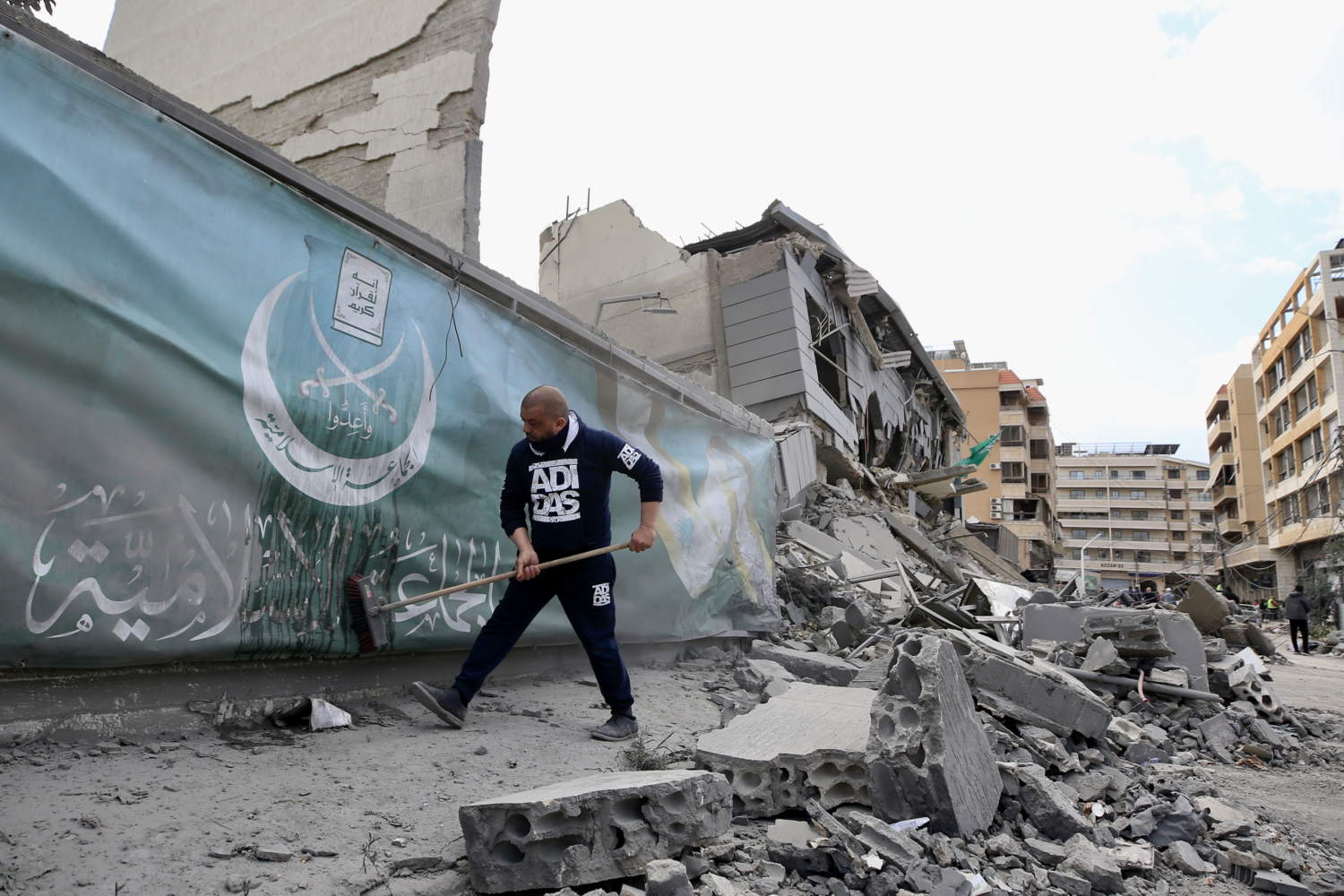
Hamas has for the first time accepted a framework to fully disarm in Gaza, under a plan brokered by US President Donald Trump’s Board of Peace. Israel has yet to respond publicly, and scepticism remains on all sides.
Israel must approve the agreement before Hamas will implement it, Ghazi Hamad, a Hamas official involved in the negotiations, told Reuters. Once both sides approve the agreement’s text, Israel must begin implementing its first phase, Hamad said, adding that Israeli forces must withdraw from Gaza and that the Palestinian National Committee and an international force must enter the territory, while Israeli-backed armed militias will be dismantled.
Hamas will hand over its weapons for storage under the Palestinian National Committee’s responsibility, contingent on Israel endorsing the agreement, Hamad said. If Israel does not approve the deal, Hamas will not implement it, he added.
Trump announced overnight that an agreement had been reached for the “complete disarmament” of Hamas and other armed groups in Gaza, alongside the withdrawal of Israeli troops as disarmament is completed. He described the deal as a step towards Gaza being governed by a new Palestinian government.
A senior Hamas official told the BBC the group has agreed to the plan, though an official Hamas statement had not yet been released. The four-page roadmap, seen by the BBC, sets out phased disarmament of Hamas alongside gradual Israeli disarmament, with US officials saying each step of the process will be “verified.”
US and Board of Peace officials said on a call with reporters that the process would involve multiple phases, with progress independently monitored. The agreement was brokered with the help of mediators from Qatar, Egypt and Turkey. While some negotiators are describing it as a breakthrough, caution and scepticism remain on all sides.
The development follows Hamas’s recent leadership elections, which brought Gaza-based leader Khalil al-Hayya to the head of the movement. Palestinian officials involved in the talks believe the new leadership was prepared to take what they describe as the most consequential political decision in Hamas’s history, driven by the humanitarian conditions facing more than two million Palestinians in Gaza.
It remains too early to judge whether the agreement will be fully implemented or whether all parties will honour their commitments. If it holds, it could mark a first step towards ending a war that has lasted nearly three years.
Background to the plan
Trump unveiled his 20-point Gaza peace plan at the White House on September 29, 2025, alongside Israeli Prime Minister Benjamin Netanyahu, who said Israel accepted its terms. On October 3, Hamas said it agreed to return all 48 remaining hostages held in Gaza in exchange for Palestinian prisoners in Israeli jails and Gaza detainees, and to the idea of handing governance of Gaza to Palestinian technocrats. The group did not, at that time, mention other elements of the plan, most notably the requirement that it disarm.
The plan, as provided by the White House, described Gaza as a “deradicalised terror-free zone that does not pose a threat to its neighbours.” It also proposed an economic development initiative to rebuild Gaza, created by convening a panel of experts described as having helped build “some of the thriving modern miracle cities in the Middle East.”
Israeli reaction
There has been no official Israeli response to Trump’s announcement, though some government members have voiced sceptical and dismissive reactions. Moshe Sa’ada, of Netanyahu’s Likud party, told public broadcaster Kan News: “Israel says it will not take any action until Hamas is disarmed with its weapons, tunnels and infrastructure and we all understand the complexity of this.” Sa’ada said Hamas wanted the sequence reversed, expecting an Israeli withdrawal before it disarms, and said he still believed there would ultimately be “no other option” in Gaza “apart from military rule and end-to-end occupation.”
Far-right National Security Minister Itamar Ben Gvir criticised the emerging deal before Trump’s announcement, writing on X: “You only talk with Nazis through the crosshairs – and no other way.” He added: “The only solution in Gaza to which Israel is willing to be a partner is encouraging emigration and destroying Hamas.”
(With information from Reuters and BBC News)

