


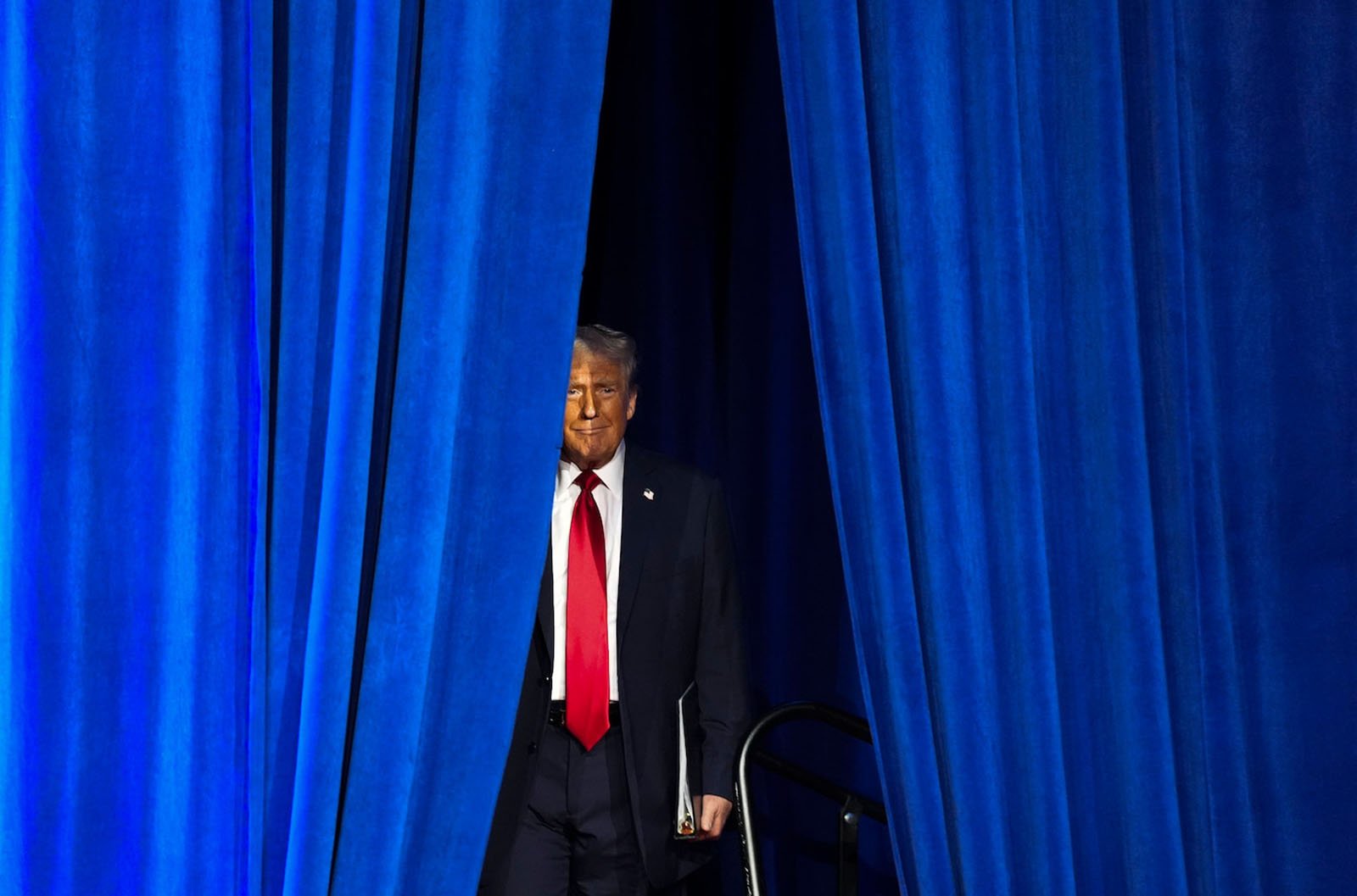
Donald Trump’s first cabinet meeting last Wednesday began with a prayer. This, however, did not prevent the new American president from launching a crude attack against Europe, stating that “the EU was created to screw the US” and emphasising that his government would soon take appropriate measures. This was not the first time Donald Trump has targeted the EU, as he has frequently placed the bloc in his crosshairs.
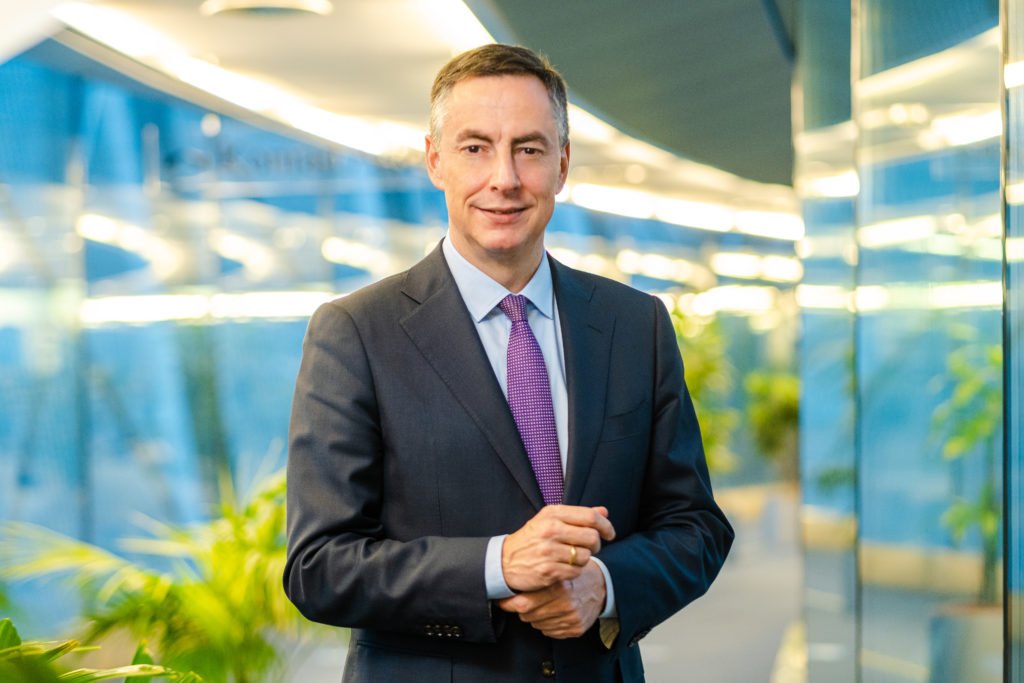
The American president’s second term brings the European Union face to face with a series of enormous challenges concerning primarily its security but also its prosperity, according to German MEP David McAllister, Chair of the Foreign Affairs Committee of the European Parliament, in an interview with Phileleftheros. As he stated, Donald Trump is dismantling the global order that the United States itself built. “Europe must do more to gain weight on the international stage, not only economically, but also with regard to our security and defence policy.”
The transition to a new model is anything but easy, however with determination and unity the EU can move forward and gradually become autonomous from the US on security and defence issues. The German MEP emphasised the steps that need to be taken and stressed that Europe must not abandon Ukraine, as this would encourage Vladimir Putin to attack other parts of Europe in a similar manner.
Finally, he highlighted Cyprus’s geostrategic role in the Eastern Mediterranean region. He said that Nicosia, through humanitarian missions and its close cooperation with countries in the region, “effectively promotes peace and prosperity, reinforcing its position as both a European gateway and a stabilising force in the geopolitically sensitive Eastern Mediterranean.”
What are the greatest threats and challenges Europe is now facing?
Due to the resurgence of global systemic conflicts with acute threats of violence, a stable partnership between the US and Europe would have been all the more crucial. Europe has signalled that we are willing to proactively explore shared interests and opportunities for transatlantic cooperation. However, since 20 January, we have been confronted with a US government that is dismantling its own world order – and the Western values associated with it – and that at a dizzying pace. The withdrawal from the Paris Climate Agreement and the WHO, the freezing of American development cooperation, the threats of tariffs, the questioning of state sovereignty and multilateral cooperation as well as the recent pro-Russian sentiment displayed by President Trump have all illustrated the currently shrinking value basis between the US and Europe.
Our differences have sadly taken on a new dimension. It is now about our fundamental understanding of democracy, the rule of law and an open society. President Trump’s administration seems unwilling to distinguish between historically grown partnerships and associated diplomatic conventions on the one hand and anti-democratic, authoritarian forces on the other. Europe must prepare itself for a new era of American isolationism in international relations. Post-war security guarantees from the United States for allies are being called into question.
Our values do not change – they are universal. However, because the world is changing, we need to adapt the way we act. We need a Europe that is pragmatic, focussed and decisive. At the same time, a European approach that puts our own interests at the centre is not a departure from the transatlantic partnership. We recognise the importance of this historic link. Because even the United States will need reliable allies in these challenging global political times.
The U.S. has made it clear that the security of Europe must be taken on by Europe itself. What needs to be done to achieve this goal? What are the obstacles for the EU to finally have its own army and defence?
Europe must do more to gain weight on the international stage, not only economically, but also with regard to our security and defence policy.
We have reached a decisive moment for collective security in Europe. It is about Ukraine, but it is also much more fundamentally about our own security. Europe needs a boost in its defence capabilities. Simplification, standardisation and economies of scale are now crucial.
To achieve this, we should swiftly implement several steps:
Firstly, we need a substantial increase in Member States’ defence spending to above three percent, based on the commitments already agreed within NATO. To this end, Member States should activate the escape clause in the Stability and Growth Pact, in a controlled and conditional manner. The European Investment Bank should review its lending practices, which would also send a strong message to private ban.
Secondly, we need to focus on joint defence procurement and the development of common capabilities to reduce costs. Models to promote this joint approach, such as the instrument to strengthen the European defence industry through joint procurement (EDIRPA), should be further developed. Simultaneously, we need to simplify the procurement of defence equipment. The relevant regulations, transfers within the EU and the authorisation process should be harmonised across Europe.
In addition, the redeployment of troops and equipment within Europe will become even more important in the coming years. Therefore, much more joint investment in our military mobility is needed.
We should also work to expand the defence cooperation with international allies. Pragmatic solutions to strengthen technological, procurement and operational co-operation with our partners in the face of common threats are needed.
Finally, draft legislation that already exists at European level to modernise our security and defence policy must finally be adopted. This includes in particular the European Defence Industry Programme (EDIP). We should also strengthen cooperation with the Ukrainian defence industry and lay the foundations for a European defence equipment production system.
I am convinced that these priorities can be advanced quickly, especially with the help of the current Polish EU Presidency. In addition, extraordinary EU and NATO summits are now needed to take decisive steps to strengthen our strategic autonomy and defence capabilities.
New German leader signals seismic shift in transatlantic relations. Can Friedrich Merz be the leader who (brings this shift about for) Germany and the European Union?
The alignment of the United States with Russia – most recently within the United Nations regarding a resolution on Ukraine – has emphasised a seismic shift in the US government’s approach to the rules-based international order. President Trump does not seem willing to abide by long-standing diplomatic practices and US security assurances towards Europe.
In his recent comments regarding the future of our transatlantic relationship, Friedrich Merz reflected on this drastic change in a realistic manner. Neither he, nor the German Christian Democrats want to cut ties with the United States. We continue to believe in the historic significance and future importance of this alliance. However, this must not keep us from a realistic assessment of the current US government’s intentions and priorities: The Trump administration does not care much about Europe – and they adhere to the Kremlin’s narrative of Russia’s illegal war of aggression against Ukraine.
While this in itself is a hard pill to swallow, it was absolutely right and crucial that Friedrich Merz signalled on day one after his election victory that his new government would focus on strengthening Europe as quickly as possible, in order to achieve step-by-step independence from the US in security and defence matters.
At a time, when – based on Russian war propaganda – the US government seems willing to sell Ukraine out to the Kremlin, we in Europe have to face up to a simple fact: for three years, the courageous people in Ukraine have not only defended their own sovereignty, but the security of our entire continent. If the US and Russia forced Ukraine into a dictated “peace”, Putin would have no reason not to attack other parts of Europe in a similar manner. Consequently, we in Europe have to be able to defend ourselves – and we have to build these capabilities up as a matter of urgency.
Germany was the last country where the far-right significantly increased its power. To what extent do you think this brings about change in EU policies?
The AfD’s increased vote share in these general elections will not affect the next government’s approach to the European Union, for a simple reason: the AfD is an extremist, anti-democratic and pro-Russian party and will not be part of the next German government. In short, AfD policies will not be represented in any way, shape or form at the European Council or at EU Council meetings.
The sanctions against Russia were not effective, the Ukrainian forces cannot defeat the Russian ones, and the Europeans cannot help. Practically, this means that Russia has won and can impose its terms on Ukraine? And what does this mean for the EU?
The sanctions the EU has implemented against Russia have been of historic proportion, and we continuously work to readjust them to close existing loopholes. They have drastically reduced EU-Russia trade, immobilised over €210 billion of Russian Central Bank reserves and the disconnection from SWIFT has isolated Russia from the international financial system. These measures have devalued the rouble and contributed to economic stagnation. The sanctions have also restricted Russia’s access to advanced technologies and military components, undermining its military-industrial complex.
However, Russia has been continuously able to circumvent certain parts of these sanctions, for example by deploying a “shadow fleet” of over 400 tankers. The continued import of Russian LNG by the EU also exposed a critical gap in the sanctions regime that has been further increased by inconsistent enforcement across Member States. The EU’s 16th sanctions package, adopted on 24 February 2025, aims to close key loopholes, for example by expanding aviation and maritime controls.
The war in Ukraine is being fought on European soil. If necessary, we in Europe must provide more support for Ukraine’s defence. Europe is capable of empowering Ukraine to sustain itself in this war. Ukraine also needs a clear and concrete perspective for EU membership and strong security guarantees. It is of vital importance that any peace negotiations take place with Ukraine and Europe at the table. The aim of negotiations with the Kremlin must not be to enable Russia to achieve precisely the victory over Ukraine which – thanks to the support of the Americans, the Europeans and other international partners – it has not been able to achieve militarily.
So, is this how things will be from now on? Have we reached the point where the strong impose their will either to seize territories from the weak or to force them to sell their country’s valuable resources against their will?
Together with our international partners, the European Union will always be the strongest advocate for the rules-based international order. We must ensure that the might of the right continues to trump the right of the might.
Arguably, the administration of President Trump has done very little to facilitate this task over the recent weeks. Even before a single serious round of negotiations began, President Trump and his new Secretary of Defence, Pete Hegseth, made drastic concessions — including the abandonment of a NATO perspective for Ukraine and territorial concessions to Russia. With these actions, they have surrendered a valuable bargaining chip that Ukraine and the West could have used to negotiate reciprocal concessions from Russia.
For the European Union, one thing is clear: comprehensive security guarantees for Ukraine must be at the core of any peace negotiations. These guarantees should be backed by Europe and our international allies — above all, the United States. Only in this way will the Russian killing in Ukraine finally end. Only in this way can a just and lasting peace for Ukraine be achieved.
Ukraine needs a sovereign, secure, and economically stable future — and the European Union will continue to fight for this with determination. In addition, President Zelensky himself has made concrete proposals how this could be ensured. In his “victory plan” he proposed agreements between Ukraine and the US on the joint extraction and utilisation of Ukrainian resources, in return for continued US military support. In the medium and long term, such an agreement could be beneficial for both sides, provided it is based on fair agreements that allow Ukraine to build a secure and economically stable future.
However, what cannot be, as the EU’s High Representative Kaja Kallas rightly pointed out, is that Russia gets the Ukrainian territories, the US gets the natural resources and Europe pays the bill for peacekeeping.
In your opinion, what should be the EU’s long-term strategy for dealing with Russia, particularly in the context of recent geopolitical tensions? Can the bilateral relations be restored?
We should remind ourselves of one simple fact: It was Russia that invaded Ukraine on 24 February 2022. It was Russia that turned the international order on its head. It was Russia that reintroduced power politics as a tool of global policy making, thereby dismantling every bit of progress that had been made in our bilateral relations since the end of the Cold War.
Putin is at the heart of this process, and Europe should be under no illusion: Putin does not want to end the war in Ukraine. He wants full regional control without the need to deploy his military. That’s not peace, that’s tyranny.
As long as Russia occupies Ukrainian territory, as long as Russia threatens the European security structure, our bilateral relations will remain at the absolute minimum.
The Eastern Mediterranean is a region undergoing transformation after the developments in Syria. Cyprus is at the edge of the EU. How can Nicosia, as a representative of the EU, contribute to bringing peace and prosperity to the wider region?
Cyprus plays a vital role in promoting peace and prosperity in the Eastern Mediterranean by leveraging its strategic geopolitical and historical ties with neighbouring countries, such as Syria, Lebanon, Israel, Gaza, Türkiye and Egypt. Cyprus’s leadership in humanitarian initiatives, particularly through the Amalthea Initiative and the Cyprus Maritime Corridor, showcases its pivotal role as a mediator and logistics hub for delivering aid to Gaza and Syria. This humanitarian diplomacy enhances Cyprus’s influence and solidifies its role as a bridge between Europe and the Middle East.
Cyprus’s economic contribution to regional stability is bolstered by its involvement in the EastMed Gas Forum, which fosters cooperation in energy security and political relations among Eastern Mediterranean nations. By promoting economic interdependence and political collaboration among countries like Egypt, Israel, and Greece, Cyprus reduces regional tensions and enhances mutual prosperity.
EU Commission President Ursula von der Leyen recently acknowledged Cyprus’s historical role as a mediator and praising the leadership in facilitating humanitarian cooperation. This diplomatic influence enables Cyprus to convene regional dialogues, strengthening its strategic role in regional diplomacy and humanitarian aid coordination. Through strategic mediation, economic integration, and humanitarian leadership, Cyprus effectively promotes peace and prosperity, reinforcing its position as both a European gateway and a stabilising force in the geopolitically sensitive Eastern Mediterranean.
Read more:

