


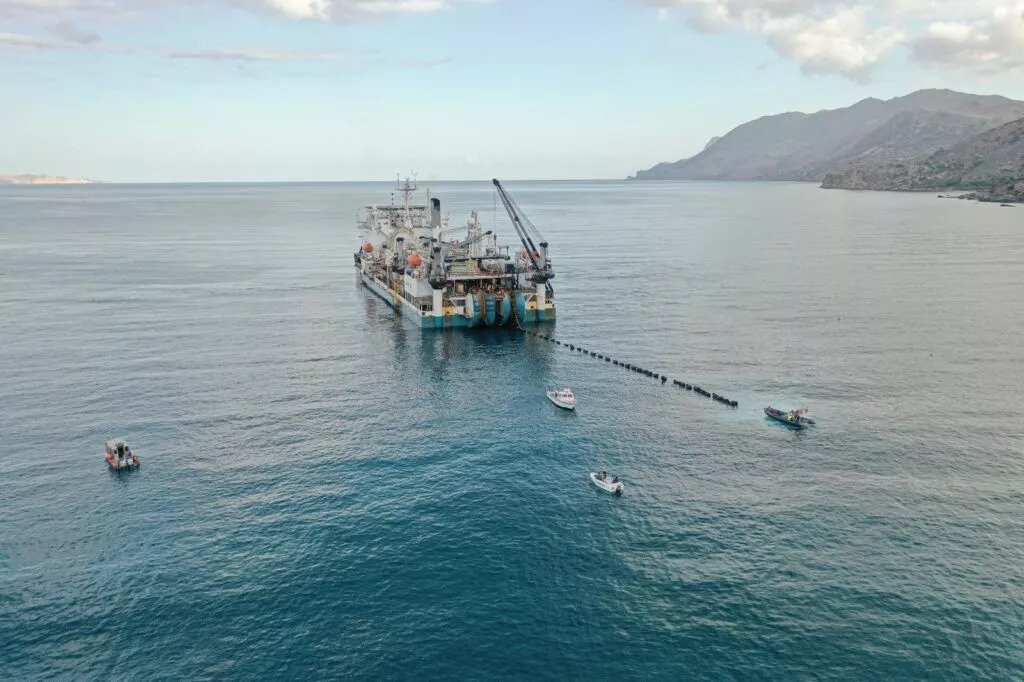
Cyprus is waiting for the implementing body to move forward with the Great Sea Interconnector (GSI) electricity project linking the country with Greece, while diplomatic discussions continue with countries that may object to the plan.
Energy Minister George Papanastasiou told the Cyprus News Agency (CNA) that Greece is managing diplomatic consultations regarding the project of common European interest, which must be completed by late 2029.
“As the Republic of Cyprus, we have contributed what we agreed to in the memorandum of understanding signed between the two states,” Papanastasiou said, noting that regulatory frameworks are in place with both countries’ regulators monitoring implementation.
The minister indicated that Greece is engaged in diplomatic talks with a country that may be objecting to the project, along with other European nations and potentially investment funds that influence their home countries.
“The European Commission should take a clear position” on the project, he added.
Cyprus has factored the electrical interconnection into its National Energy and Climate Plan (NECP) from 2030 onwards, as part of efforts to increase renewable energy in its electricity mix.
When asked about potential delays to the original timeline, Papanastasiou confirmed the project should be completed by the end of 2029, in line with Cyprus’s planning.
The minister noted that the interconnector is part of an integrated approach that includes energy storage, natural gas imports and completion of the Vasilikos energy centre. “All these are interconnected and dependent on each other,” he said.
Responding to comments from European Investment Bank Vice President Kyriacos Kakouris that EIB financing decisions would follow European Commission approval of revised NECPs from both countries, Papanastasiou said he was unaware of this specific requirement.
He acknowledged it was logical for financial institutions to ensure their investments would provide returns. “Cyprus has submitted its NECP on time, and I believe Greece has done the same. It’s up to the Commission when they will approve them,” he said.
Regarding Monday’s blackout on the Iberian Peninsula, Papanastasiou said the cause remains unknown but suggested a network shock combined with high renewable energy penetration may have triggered it.
He emphasised that Cyprus’s grid operator sometimes needs to cut conventional production and renewable sources due to lack of storage capacity. “A total blackout has a very high cost for an economy, much more serious than any renewable energy curtailment,” he warned.
While electrical interconnections generally help mitigate such problems, the minister cautioned they could create issues in other geographical areas if connected countries experience similar weather conditions simultaneously.
“In Spain and Portugal, there must have been identical weather conditions in electrically interconnected countries with tremendous renewable energy penetration. A shock in one network triggered reactions in other networks like a domino effect, leading to the total blackout,” he suggested.
Read more:

