


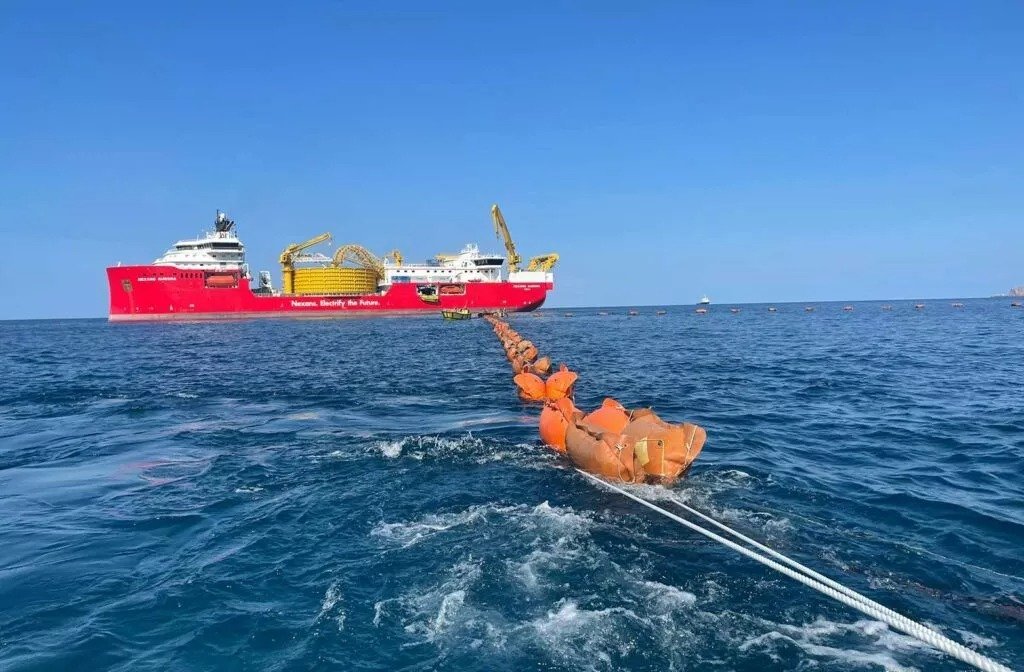
The European Commission has avoided mentioning the Crete-Cyprus-Israel electric interconnection project (GSI) while publicly endorsing other energy initiatives, as the €657 million EU-funded project faces indefinite suspension.
European Commission President Ursula von der Leyen praised the Gregy project connecting Greece and Egypt during an energy security summit in London, calling it essential for Europe’s energy strategy.
“We are also helping to develop a connection between Greece and Egypt. These projects will help enhance energy security across both our continents,” von der Leyen said.
Her endorsement comes as the more advanced GSI project faces mounting uncertainty. The Greek government has made no official announcement regarding the cable following a National Security Council meeting, intensifying criticism that it has retreated in the face of Turkish opposition.
The timing of the EU’s public support for Gregy raises questions, as it coincides with the suspension of the more mature GSI project, which has already secured EU funding and necessary permits.
The Gregy project, listed as a Project of Common Interest by the EU, remains in its final study phase with an investment decision pending. The cable, estimated to cost over €4 billion, aims to transfer 3,000 MW of green energy from North Africa to Greece and onward to Europe.
The Copelouzos Group, leading the initiative, noted that von der Leyen’s statements confirm the project’s strategic importance and highlight Greece’s role as a gateway for clean energy from Africa to Europe.
Von der Leyen also stressed the importance of developing domestic renewable energy sources, noting that renewables now account for 47% of Europe’s electricity mix, with solar and wind energy showing the strongest growth.
The GSI project began as an ambitious European initiative to create the first electrical “corridor” connecting the Eastern Mediterranean with Europe. Despite progress in licensing and technical studies, the project has faced repeated delays due to technical difficulties, financing challenges, and geopolitical factors.
Read more:

