


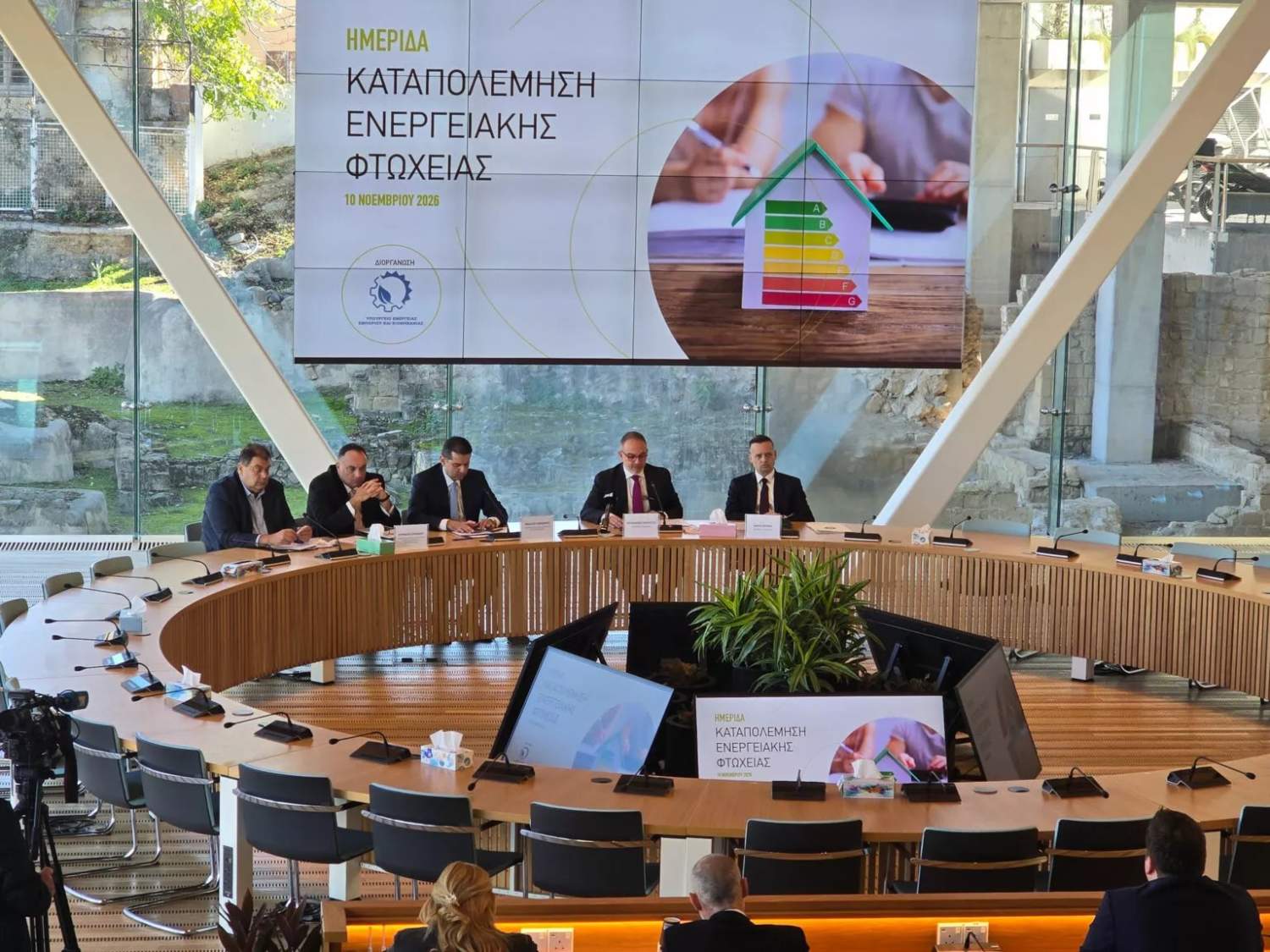
Almost 15 per cent of households in Cyprus are affected by energy poverty, Minister of Energy, Commerce and Industry Michalis Damianos said on Tuesday, as he outlined an indicative target to reduce it by 10 per cent by 2030.
Speaking at a conference on combating energy poverty at Nicosia Municipality, Damianos said the estimate and the target were set out in the final National Energy and Climate Plan. He said policies needed to be strengthened further and support better targeted, to ensure “no affected household is left behind”.
Under the new EU Energy Efficiency Directive, 15.1 per cent of Cyprus’s mandatory cumulative end-use energy savings target must be met by 2030 through measures for energy-poor and low-income households, vulnerable customers and people living in social housing, he said.
Damianos said the Energy Efficiency Law of 2026 had given energy poverty a substantive definition in national law, taking into account financial hardship, insufficient disposable income, high energy costs and the low energy efficiency of homes.
He said that on 8 July 2026 the cabinet approved a National Governance System for Energy Poverty. This provides for a national observatory of state bodies to monitor and assess the problem every year, a network of experts to support policy development, and Local Energy Hubs.
Support measures
More than 30,000 vulnerable households benefit from electricity charges about 20 per cent lower under the Special Household Electricity Tariff, Damianos said.
He said grant schemes cover up to 80 per cent of the eligible cost of energy upgrades for vulnerable households, and up to 100 per cent for individual measures such as installing photovoltaic systems. Grants are also available for replacing solar water heaters and energy-hungry appliances.
New grant schemes are being designed for energy-poor households, covering up to 100 per cent of eligible costs, he said. They will allow both full and step-by-step home upgrades under the ‘Energy Efficiency First’ principle, with energy-saving investments coming before renewable energy.
About 100 million euros from the Social Climate Fund, including the national contribution, will help speed up energy upgrades, promote cleaner technologies and improve energy-poor households’ access to affordable energy, Damianos said. He added that energy communities were creating new ways for citizens to take part in the energy transition together.
Interconnector
Athens Mayor Haris Doukas told the conference that the Great Sea Interconnector (GSI) electricity link between Cyprus and Greece was directly linked to tackling energy poverty in Cyprus. He said it would cut electricity prices in Cyprus by 19 per cent and bring annual savings of up to 138 million euros for consumers in Greece and Cyprus.
He said the link would also bring more stability to the power system, a greater share of renewables and cheaper electricity imports. He noted that Cyprus remains the last EU member state without an electricity interconnection.
Local authorities
Nicosia Mayor Charalambos Prountzos said local authorities had a decisive role to play and called for an Energy Poverty Register and for needs to be mapped at municipal level. He said the municipality had proposed a ‘One Stop Shop’ office for energy poverty, linked to its social services, offering information, energy advice and help with grant schemes and funding tools.
He also called for a Special Energy Poverty Fund and closer cooperation between the state and local government on funding home upgrades, appliance replacement and energy-saving measures for the most vulnerable households. He cited the ‘Lefkothea’ citizen energy community, set up by the municipalities of Nicosia, Lakatamia and Latsia-Geri, and the municipality’s involvement in the EU project LIFE EP-MED.
The energy transition, he said, would “only truly succeed when it is fair and inclusive”.
Doukas described Athens Municipality’s measures for energy-vulnerable residents, including exemption from municipal fees and an office to identify, map and support energy-poor households. He also cited the Athens Energy Portal, which monitors energy use and emissions in public buildings with a view to reinvesting the savings for vulnerable residents, and an Energy Benefit Card giving eligible households access to support tools and benefits.
(Information from Cyprus News Agency)

