


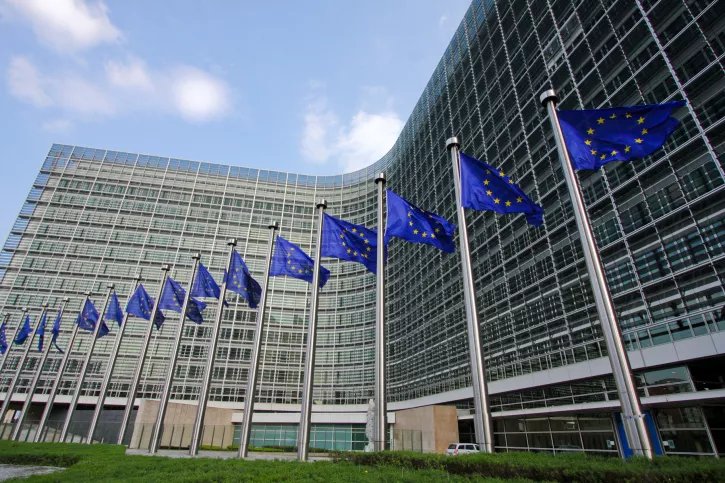
The European Commission on Tuesday reported progress on its Pact for the Mediterranean, including the Cyprus Regional Aerial Firefighting Station (CRAFS), as it presented an updated action plan with nine new flagship initiatives, bringing the total to 30.
The station, known as the Cyprus Hub, is extending disaster prevention and response support to southern Mediterranean countries for the first time. Six aircraft were pre-positioned at Paphos air base for the 2026 fire season, and a regional workshop on wildfires was held in May.
The Commission presented the plan jointly with the European External Action Service (EEAS), a year after the pact was launched. The pact was approved by the Commission in October 2025 and formally launched by the EU and its southern Mediterranean partners on 28 November 2025. It involves the EU, its member states and southern Mediterranean countries.
Security and migration
The Cyprus Hub is part of the pact’s third pillar, on security, preparedness and migration management. Under the same pillar, the MED-OP initiative on operational cooperation against serious and organised crime, developed with justice and home affairs services, is due to be presented on 11 November. It will be presented alongside the Secure Borders initiative on border management and security sector governance. The first EU-Mediterranean Forum on Peace and Security will be held in Brussels on 18 November.
The pact also includes measures to tackle irregular migration and networks of migrant smugglers and human traffickers. Under Talent Partnerships, projects were carried out in Egypt, Morocco and Tunisia to better match legal labour migration routes with labour market needs, particularly in transport, tourism, hospitality and construction. The pillar’s one new initiative will strengthen protection for vulnerable migrants, asylum seekers and refugees along their routes through the southern Mediterranean.
Economy and connectivity
Under the second pillar, on economic development and regional connectivity, the T-MED initiative on renewable energy and clean technologies has been in force since 9 June. Its investment platform aims to build a portfolio of renewable energy, power grid and clean technology projects, with investment of 25 billion euros expected to be mobilised.
The StartUp4Med initiative on social entrepreneurship and decent jobs is also progressing, as is the SWEI initiative, run with the UN, which aims to create 500,000 jobs for women in high-growth sectors. About 900 businesses in the Middle East, North Africa and the Gulf have committed to applying the Women’s Empowerment Principles.
The pillar’s six new initiatives cover areas including modernising trade and investment relations, sustainable transport, the green transition and climate resilience, as well as a Blue Mediterranean Mission to develop the blue economy and strengthen water resilience.
People and education
Under the first pillar, on people, education and innovation, work is advancing on a Mediterranean University and on innovation and research centres. The MED Skills Tracker, linking young people with the labour market, is progressing, and a new Mediterranean Youth Skills and Employment Initiative, announced by Commission President Ursula von der Leyen, is being launched. The pillar’s two new initiatives are a Centre for Mediterranean Science Diplomacy and an initiative promoting the physical and mental health benefits of sport.
The action plan will be updated regularly, with the next review expected in spring 2027. An interactive website has also been launched, allowing users to find projects and initiatives by country and sector and follow their progress.
(Information from Cyprus News Agency)

