


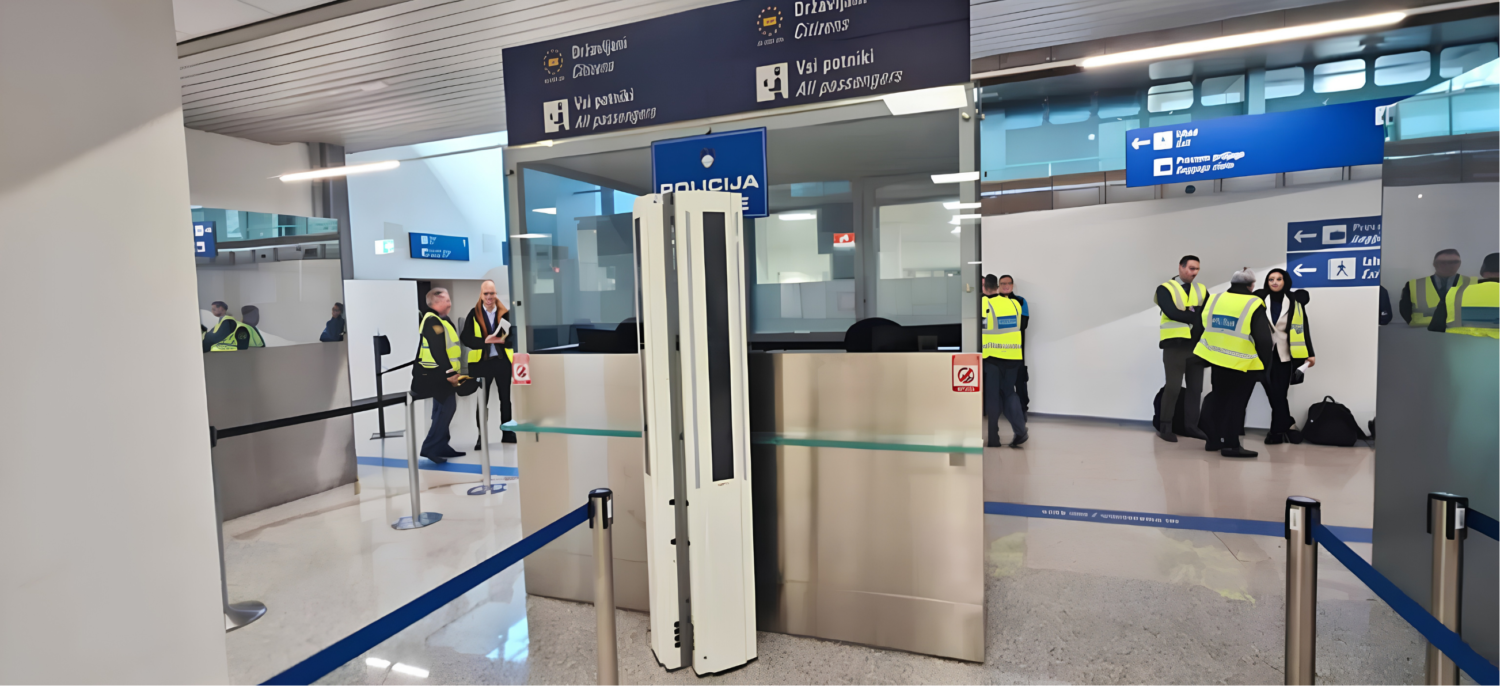
New passport control booths at Larnaca and Paphos airports will have measuring tapes fitted to their front windows so immigration officers can check travellers’ height, under a tender for 22 booths issued by the Public Works Department.
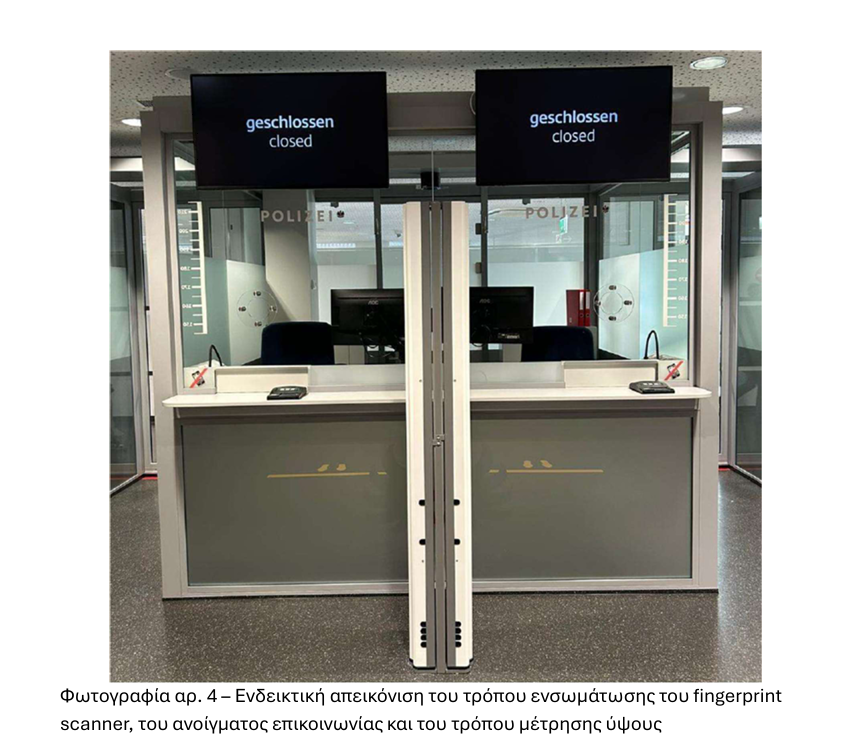
The tape will let officers estimate a passenger’s height and “compare it with the corresponding entry in the travel document”, according to the tender documents. It will be transparent or semi-transparent, marked every ten centimetres, and reach at least 2.10 metres.
The department, part of the Ministry of Transport, Communications and Works, has put the estimated value of the contract at 440,000 euros plus VAT. Twelve booths will go to Larnaca airport and ten to Paphos, split equally between arrivals and departures at each.
The booths will also have special mirrors so that immigration officers can check the area in front of the booth, including for any children or shorter passengers accompanying adults, without having to move.
Biometrics and cameras
The booths will include the infrastructure needed for biometric checks, including fingerprint scanners for the EU’s Entry/Exit System (EES) and Visa Information System (VIS), and cameras to take travellers’ facial photographs under the EES. Cyprus is seeking to join the Schengen area, at whose external borders the EES already operates.
Four of the 22 booths, one in arrivals and one in departures at each airport, will also allow fingerprints to be scanned at a suitable height for people with disabilities.
The tender also provides for infrastructure for the future installation of two surveillance cameras per booth, recording every passenger served for security purposes or for investigating complaints or criminal cases. The cameras will be able to show a live feed inside the booth and could be linked to the airport’s security system.
To protect personal data, the booths will have one-way glass so that passengers cannot see immigration officers’ computer screens.
The tender covers only the infrastructure for these systems, not the purchase of the cameras or biometric equipment.
Eight-month timetable
The booths are designed for use 24 hours a day, seven days a week, with a minimum design life of 20 years.
They will be installed while both airports remain in operation, in phases, one at a time or as otherwise agreed between the parties, so that passport control continues without disruption.
The booths must be built within five months of the contract being signed, with a further three months for installation and trial operation, bringing the total to eight months. The contractor must provide a one-year warranty.
The project is funded wholly or partly by EU funds. The deadline for bids is 21 December 2026, and the contract will be awarded on lowest price.

