


Greek Prime Minister Kyriakos Mitsotakis predicted on Wednesday that Cyprus will formally join Europe’s Schengen passport-free zone on 1 July 2027, making it the first major decision of Greece’s upcoming presidency of the Council of the European Union.
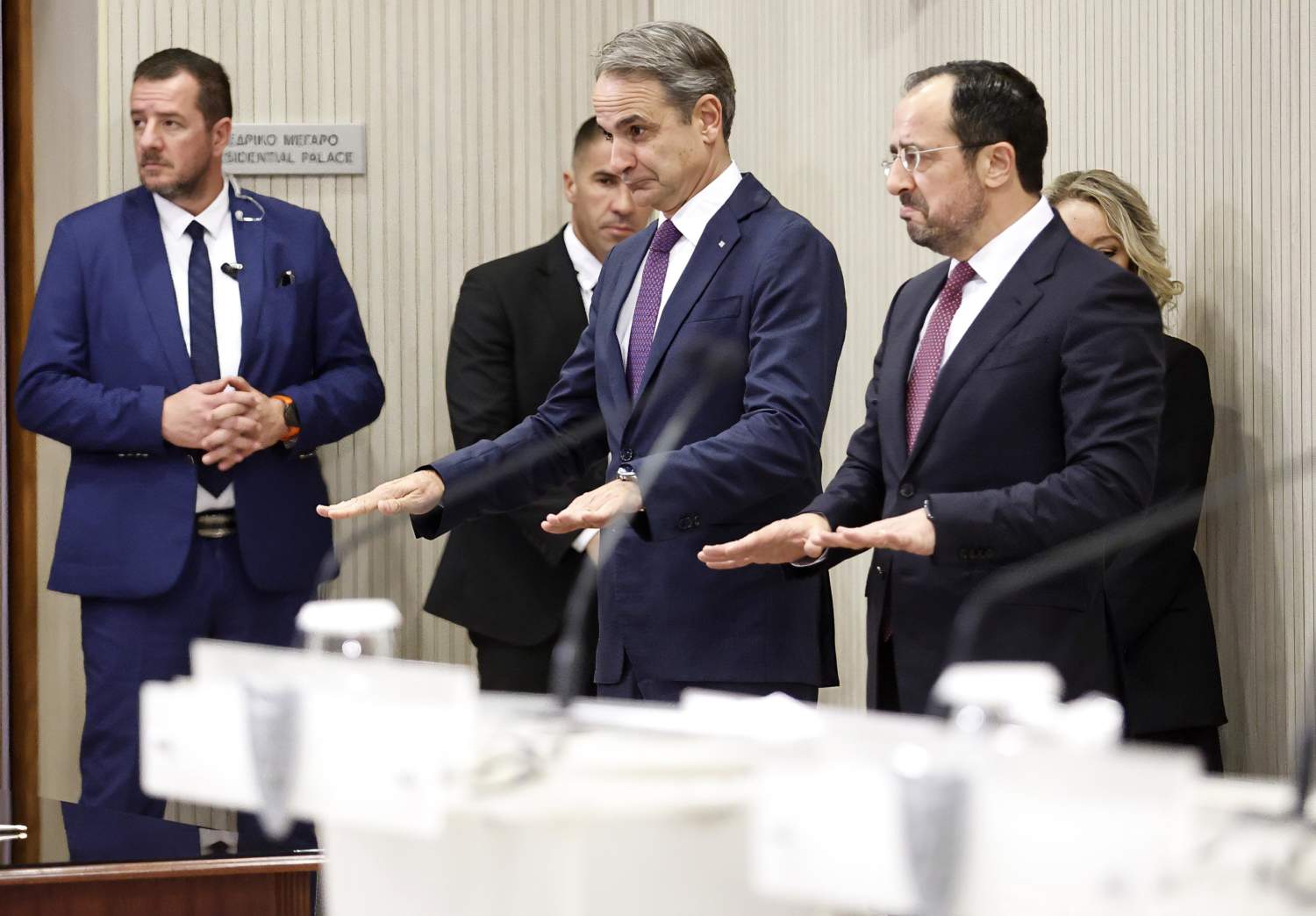
Speaking at a joint news conference in Nicosia alongside President Nikos Christodoulides after the fourth Cyprus-Greece intergovernmental summit, Mitsotakis said Cyprus’s accession would coincide with the start of Athens’s six-month EU helm in the second half of 2027.
Cyprus, which joined the EU in 2004, has long sought entry into the 29-nation travel zone, though progress has required technical evaluations and navigating security considerations along the United Nations-patrolled buffer zone dividing the island.
The two leaders also struck an upbeat tone over the Great Sea Interconnector (GSI), a flagship subsea electricity cable aimed at ending Cyprus’s energy isolation by linking its power grid to Europe via Crete.
Mitsotakis welcomed the resumption of seabed surveys for the cable last week, saying the project was “progressing smoothly, without hindrance and according to the initial plan”.
A French-flagged research vessel began mapping the route in international waters east of the Greek island of Karpathos earlier this month, against a backdrop of diplomatic friction with Turkey over maritime jurisdiction in the eastern Mediterranean.
”We insisted and continue to insist on the implementation of this very important strategic project, overcoming whatever obstacles we encountered along the way,” Mitsotakis said, pointing to its European dimension and expected benefits for Cyprus.
Christodoulides described the interconnector as vital for Cyprus, the wider region and Europe, citing “continuous coordination” and “continuous cooperation” with Mitsotakis, French President Emmanuel Macron and EU institutions.
His remarks came a day after Nicosia initiated procedures to disburse the first of five planned 25-million-euro instalments to support the financial viability of Greece’s Independent Power Transmission Operator (IPTO).
Launched in 2023 on Christodoulides’s initiative to institutionalise annual policy coordination between Athens and Nicosia, Wednesday’s summit brought together 14 Greek and 11 Cypriot ministers and deputy ministers around three core pillars: transferring EU presidency expertise, practical applications of artificial intelligence and civil protection.
Ahead of Greece taking over the EU presidency next year, Cypriot officials briefed their Greek counterparts on managing complex European dossiers following Cyprus’s own six-month EU Council presidency in the first half of 2026. Mitsotakis also called for sufficient funding in upcoming EU budget talks to bolster competitiveness, defence and climate resilience.
On the Cyprus problem, Christodoulides said Nicosia was working to capitalise on renewed diplomatic momentum toward a meeting with the UN secretary-general. He reiterated that the goal remained resuming substantive negotiations from where talks collapsed in Crans-Montana in 2017, within the UN framework and in line with EU law and principles. Mitsotakis restated Athens’s backing for a “just, viable solution, a bizonal, bicommunal federation without anachronistic guarantees, without occupation forces”.
Artificial intelligence featured as a cross-cutting theme across the summit, with Mitsotakis saying Greece was making its AI infrastructure—including the Pharos AI Factory and the Daedalus supercomputer—available to Cyprus alongside work on Greek-language models and cultural preservation.
While highlighting plans to integrate sports match tickets into Cyprus’s Digital Citizen app following Greece’s model against fan violence, and noting Greece’s planned ban on social media access for children under 15 from 1 January 2027—a measure for which Nicosia has already sent a draft bill to public consultation—Mitsotakis stressed that AI “must never replace humans” and required strict data protection and human accountability.
Civil protection cooperation also took centre stage following the 2026 wildfire season, when 21 Greek firefighters were pre-positioned in Cyprus for the first time under the EU Civil Protection Mechanism. Both leaders backed plans for a regional aerial firefighting hub in Paphos, backed by over three million euros in planned funding alongside roughly four million euros for wider regional initiatives, with Mitsotakis noting Greece would take delivery of new Canadair 515 aircraft in 2028.
On the sidelines of the summit, the two governments signed a memorandum of understanding on ambulance crew training and letters of intent allowing Cypriot police officers to train at Greece’s police academy and coast guard personnel to attend Greek naval schools. The next intergovernmental summit will be held in Greece in 2027.

