


By Farid Mirbagheri*
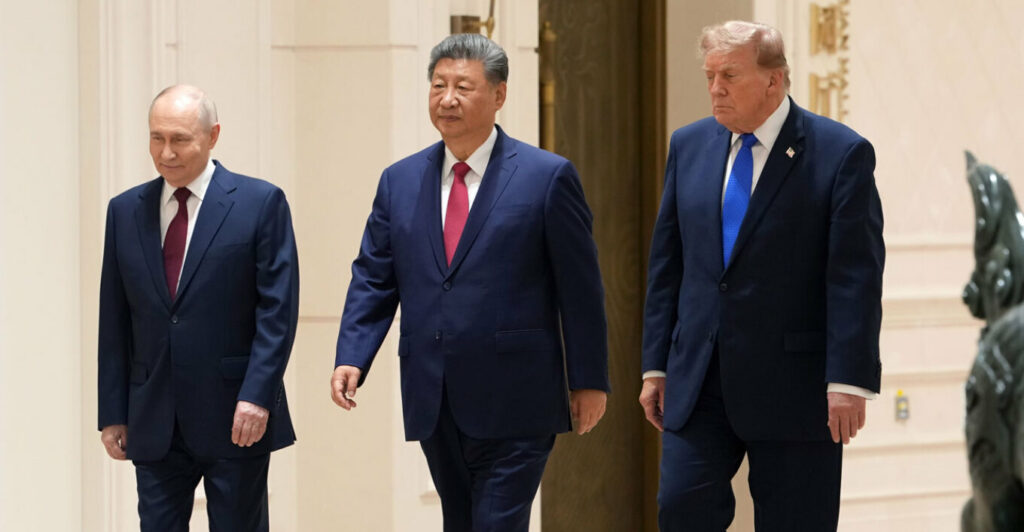
19 November 2026 may turn out to be a turning point in the emerging international order. Presidents of the United States, China and Russia gathered together at the Asia-Pacific Economic Cooperation (APEC) Meeting in Shenzhen, China to discuss a range of pressing global issues including Ukraine and Iran. The conspicuous absence of European countries at the meeting was what could mark this event as defining moment in the new international order.
Ever since the end of the Cold War and the end of bipolarity in international relations there has been ambiguity in the nature of international order. The calamities in Rwanda and the Balkans, to mention a couple, were partly the byproduct of an absent global security structure in the immediate aftermath of the collapse of the post-Soviet Union. The US soon found out that she could not take on the role of world policeman and the need for a new international system was felt throughout the globe.
The European Union was eager to firmly establish herself as one of the pillars of the new emerging international structure. China was also a contender to assume the role of a new powerful pole in global affairs. Vladimir Putin, ruling from a much weaker Kremlin, sought to gradually regain some of the lost prestige and influence of his country in the world. And of course, the United States remained the unparalleled superpower that stood at the helms of a somewhat disorganized anarchy in international life. Yet neither multipolarity nor unipolarity had been established or acknowledged as the predominant feature of world politics.
Several events turned out to be pivotal in shaping the state of the new world security framework. Terrorism by radical Islamist groups on 9/11 and on other occasions and the increasing migratory and financial pressure on west European states after the EU inclusion of the less well-off east European countries played their part. Also, the growing economic and financial power of Beijing and the widening division between Washington and her European partners on fundamental aspect of strategic cooperation were influential in the new international environment.
Since the European balance of power in 1815 to the new arrangements for collective security after the WW I to the era of bipolarity and the Cold War the green continent has managed to stay at the core of the global structure for security. The trilateral meeting of 19 November, however, is openly challenging that by seeking to lay the foundations for a non-Euro centric international order. The three greatest nuclear powers appear confident to push ahead with a tripolar agenda that will underpin the future of international security arrangements.
The European project never managed to drive out the strong sense of competing nationalism in European countries, particularly at a time when austerity measures have been adopted across the continent. The war in Ukraine, irrespective of the ethical aspects of the conflict, is draining European funds, and the higher subscription rates for North Atlantic Treaty Organization (NATO) membership is further depleting their resources. Is there a need for a new European strategic outlook? Most definitely yes but current political divisions within European countries and the prevailing international structural pressures do not appear to be conducive to that.
*Farid Mirbagheri is a Professor of International Relations and Senior Fellow at Strategy International

