


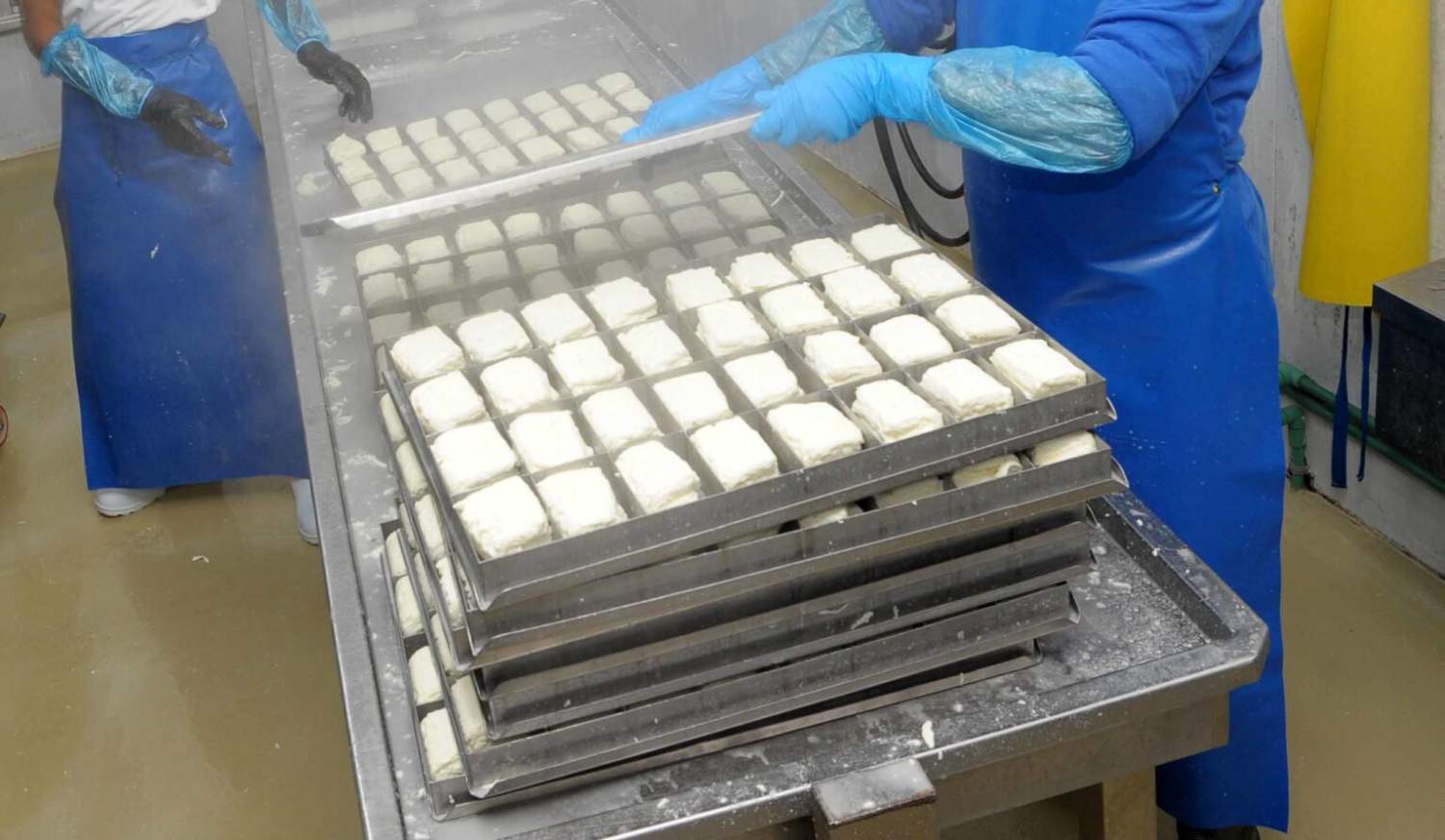
Exports of halloumi, Cyprus’s flagship export, rose to 354.3 million euros in 2025 from 324.2 million euros in 2024, according to official foreign trade figures, but the industry warns that preserving the country’s production base is the real challenge. Volumes of the PDO (Protected Designation of Origin) cheese rose to 46,561 tonnes from 42,384 tonnes.
Halloumi accounted for 9.6 per cent of Cyprus’s total exports of domestically produced goods in 2025, ahead of pharmaceuticals. The sector has a turnover of close to 603.6 million euros and supports more than 15,000 jobs, according to Ministry of Energy, Commerce and Industry figures and data presented at the recent 8th Pancyprian Milk, Agriculture and Livestock Conference.
In the first seven months of 2026, exports were worth 233.4 million euros, with 30,702 tonnes shipped, compared with 237.1 million euros in the same period of 2025. Despite the slight drop, halloumi’s share of Cyprus’s domestic exports rose to 11.2 per cent.
Top markets
The UK remains by far the largest market, consistently taking about 40 per cent of total exports. Exports to the UK exceeded 148.7 million euros in 2025 and reached 85.9 million euros in January to July 2026. Greece remains in second place, with 34.5 million euros in 2025 and 23.4 million euros in January to July 2026.
Behind them, the order has shifted. Germany rose to third place in January to July 2026 with 22.4 million euros, overtaking Sweden, which slipped to fourth with 16.9 million euros. In 2025, Sweden was third with 27 million euros and Germany fourth with 24.8 million euros. Poland was fifth in January to July 2026 with 11.8 million euros, having been sixth in 2025 with 14 million euros, behind Australia with 15.2 million euros.
Among other markets, Belgium rose from about 6.1 million euros in 2024 to about 12.7 million euros in 2025. Exports to Austria reached about 9.4 million euros in January to July 2026, compared with about 8.7 million euros in the whole of 2025. Saudi Arabia took about 11.6 million euros in 2025 and the US about 11.4 million euros.
Protecting the PDO
Christoforos Triantafyllou, an officer at the commerce ministry’s Trademark Management Unit, said halloumi was “a purely national matter at the heart of the country’s identity”. Safeguarding its quality was essential to keeping its leading position, and its reputation was the only foundation for maintaining consumer trust, he said. PDO status and the protection of trademarks preserve the product’s added value internationally, he added.
The need to restructure the Foundation for the Protection of Halloumi was also raised, to ensure effective coordination, clear roles and greater trust among all those involved.
Pressure on producers
Marios Konstantinou, chief executive of Charalambides Christis, said the business environment in 2026 was particularly demanding because of geopolitical turmoil, higher production costs, new animal health risks, stricter EU regulation and global competition.
“The real threat lies in maintaining our production base itself,” he said, adding that the sector’s problem was not the product or international demand for it.
To protect the sector, the industry is backing five key steps. These are raising milk output per farm, protecting livestock through biosecurity, and using advanced technologies such as IoT sensors and data analysis to cut costs and boost yields. They also include attracting and supporting young livestock farmers to restart farms, and closer cooperation between farmers, cheesemakers and the state.

