


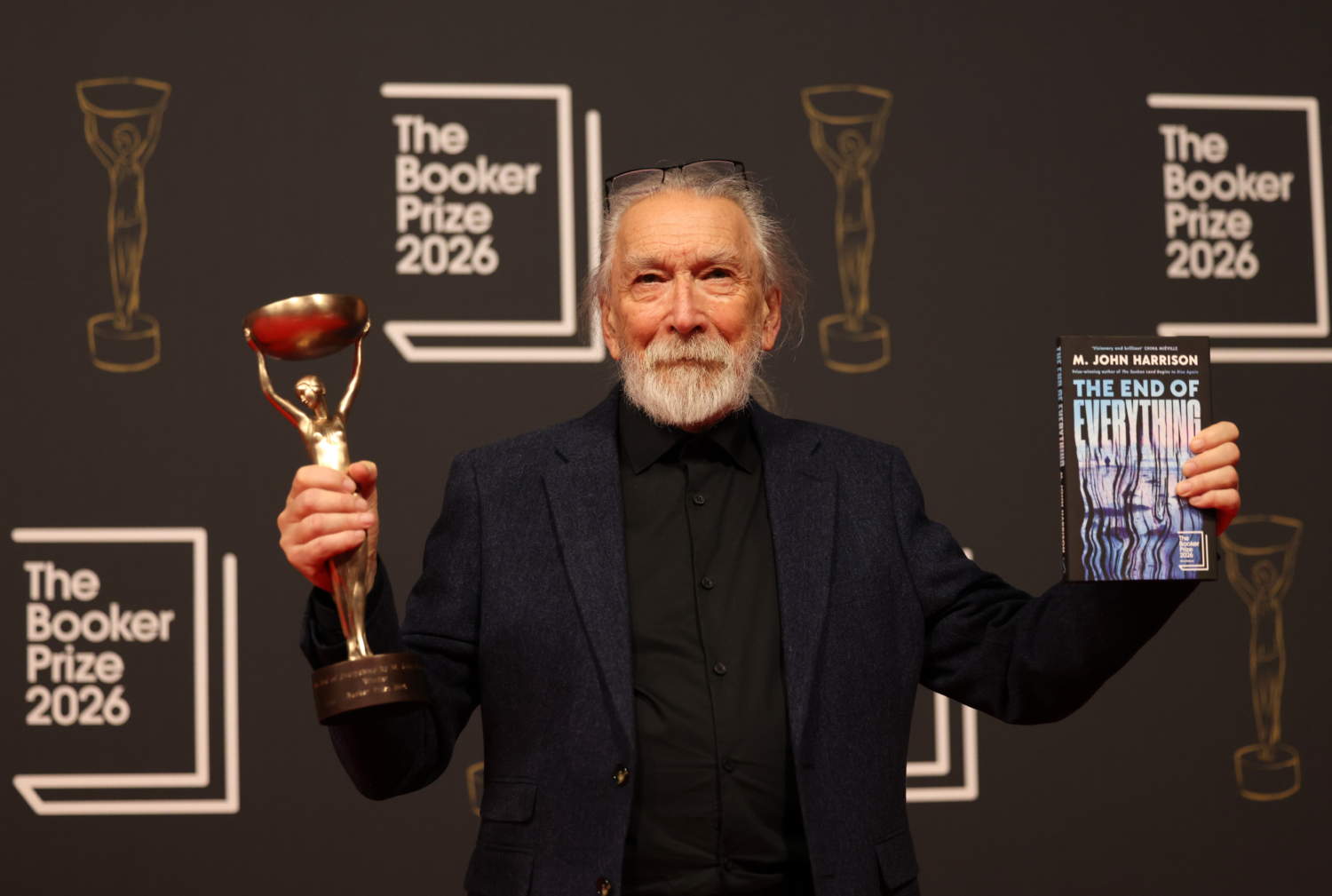
Author M John Harrison became the oldest winner of the Booker Prize on Monday, taking the 50,000-pound award at a ceremony in London for his post-apocalyptic novel ‘The End of Everything’, the BBC reported.
Harrison, 81, who has built a cult following over a 60-year career, surpasses Margaret Atwood as the prize’s oldest winner, according to the BBC. He began writing in the 1960s and has published 13 novels, five short story collections and an ‘anti-memoir’.
The novel is set in the years after a mysterious catastrophe causes British society to collapse. It follows a man and his aunt as they muddle through on the south-east English coast in the aftermath of an unexplained disaster and the arrival of mysterious alien beings.
Mary Beard, who chaired the judging panel, said: “It’s a challenging read, but some of the best fiction is challenging.” She said the book upends the reader and draws a wry smile, and, surprisingly given its subject, leaves a hint of optimism.
Booker Prize chief executive Gaby Wood described Harrison as “a genuinely original thinker, a genre-defying writer who takes ideas seriously”. She said he was the first Booker winner to have come from the science fiction world proper, and called the novel a realist book about a strange world rather than a strange book.
Harrison dislikes labels such as science fiction and fantasy, though, the BBC noted, he has been hailed as a giant of literary science fiction.
A divided reception
Harrison has said he deliberately left out as much explanation of the background to events as possible, so that readers would feel the same disorientation as his characters. “It’s a disaster story in which the disaster is the failure to comprehend,” he has said.
Speaking to BBC Radio 4’s Today programme on Tuesday, he said he had wanted to satirise the barrage of information people face today without the tools to understand, analyse and think critically about it, building a story around a disaster of failing to understand the world as it is now.
The approach has divided readers and critics. The Guardian praised the book but said “it won’t be for everyone”, while the New York Times said the more readers learn about the novel’s broken world, the harder it becomes to grasp. The Literary Review called it “tender and terrifying in equal parts”.
A Telegraph critic said it felt less like reading than dreaming, while another Telegraph critic judged it a cut above the rest of the shortlist in skill and humour, and genuinely timely at a time of fears about AI and government advice to stockpile tinned food and bottled water.
Judging
Beard said the panel spent a whole day debating the six shortlisted novels before reaching a unanimous decision. She told reporters on Monday there had been plenty of discussion and disagreement, but nobody had walked out.
When the shortlist was announced in September, she said agreeing on the final six had been hard work. Fellow judge Patricia Lockwood, a US novelist, said she had thrown books across the room during judging sessions, while poet Raymond Antrobus described the selection as a tussle. The other judges were Pulp frontman Jarvis Cocker and journalist, editor and critic Rebecca Liu.
The other shortlisted novels were ‘The Disappearers’ by Marlon James, ‘Black Bag’ by Luke Kennard, ‘May We Feed the King’ by Rebecca Perry, ‘The Things We Never Say’ by Elizabeth Strout and ‘John of John’ by Douglas Stuart.
The Booker Prize, launched in 1969, is awarded annually for the best novel written in English and published in the year up to 30 September.
(With information from BBC News)

