



Thousands of foreign students, migrant workers and asylum seekers living in the occupied north of Cyprus face exploitation, trafficking and gaps in legal protection, according to a new study examining how migration has reshaped the divided island.
Researcher and author Andreas Nicolaides argues that migration in the occupied territories cannot be understood separately from the Cyprus problem, Turkey’s political influence and the lack of internationally recognised institutions in the north.
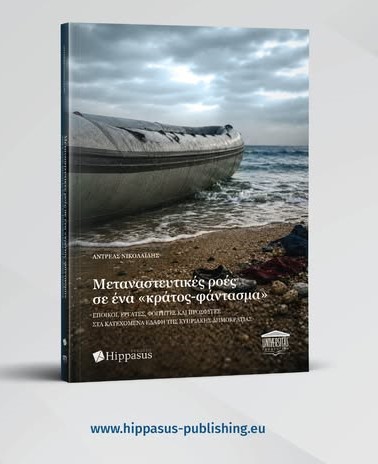
His book, Migration Flows in a ‘Ghost State’: Settlers, Workers, Students and Refugees in the Occupied Territories of the Republic of Cyprus, examines the complex relationships between Turkish Cypriots, Turkish settlers and migrants from other countries.
“The issue of migration in the occupied territories of the Republic of Cyprus reveals a complex and controversial landscape shaped by historical, political and social developments,” Nicolaides writes.
“The coexistence of Turkish Cypriots, Turkish settlers and migrants, and migrants from third countries creates a complex social mosaic, with diverse cultural, political and economic relationships, often marked by ambiguity, tension and the exploitation of the most vulnerable migrant groups.”
The study was published in 2026 by Hippasus Publications with funding from the Universitas Foundation. Its academic editor was Universitas president Nicos Peristianis, while the foundation’s director, Katerina Hadjistylli, was responsible for language editing.
Nicolaides argues that migration, both in the occupied north and across Cyprus, cannot be separated from the island’s geopolitical and legal circumstances.
“The existing conditions and legal shortcomings of the self-declared administration in the ‘TRNC’, Turkey’s political influence, the absence of a regulatory framework for migration and, above all, the continuing uncertainty over the final settlement of the Cyprus problem make managing the issue extremely complicated,” the study states.
It argues that the unresolved Cyprus problem does more than perpetuate political deadlock. It creates new, interconnected and increasingly serious problems, with significant humanitarian consequences, particularly for vulnerable populations.
Human exploitation, migrant smuggling, human trafficking, rising crime and the inability to provide effective protection and asylum are among the issues Nicolaides links to Cyprus’s continuing division.
The study maintains that the failure to resolve the Cyprus problem not only sustains existing difficulties but also creates new challenges affecting migration flows and the ability of authorities across the island to manage them effectively.
A difficult personal experience
To mark the book’s publication, Phileleftheros met Nicolaides to discuss the research process, which took more than a year and involved visits to several areas of occupied Nicosia, Kyrenia and Famagusta.
Nicolaides, 43, was born and raised in Athienou. He studied Turkish and Middle Eastern Studies at the University of Cyprus and graduated from the Vladimiros Kafkaridis Drama School.
He also holds a master’s degree in directing and acting from the Open University.
He has worked as an actor in theatre and film, collaborated with the Cyprus Broadcasting Corporation (CyBC) as a screenwriter and written novellas, plays and poetry. More recently, he has been working full-time as a copywriter at an advertising agency.
“My relationship with research has its roots in my Turkish Studies degree at the University of Cyprus, where I specialised in history and politics,” he told Phileleftheros.
“Although I subsequently followed different professional and writing paths, my interest in this country and its history has always remained with me, both through my involvement in public affairs and through various things I have written.”
It was during this journey that he met Nicos Peristianis, who knew his academic and writing background and suggested that he undertake a study of migration flows in the occupied territories.
“The truth is that I hesitated. It took me about two months to decide. I was aware of the difficulty, complexity and sensitivity of the subject. Eventually, I accepted the proposal and began the study, with Nicos Peristianis providing invaluable guidance.”
For Nicolaides, the motivation was both personal and humanitarian.
“If someone asked me what my main motivation was, I would say, first and foremost, my concern for this country. And, of course, the humanitarian dimension of the issue, as well as my love of research.
“This particular research project, however, also proved to be a difficult personal experience.
“Especially at the beginning, I struggled to cope with what I was reading and learning. There were painful stories about people that deeply disturbed me.
“This was not information I could simply write down, close my computer and carry on with my day as though nothing had happened.
“Those stories stayed with me. They affected my thoughts, my everyday life and even my sleep.”
Finding reliable information and people willing to speak to him in the occupied north was another challenge.
“Finding sources and people on the other side was far from easy,” Nicolaides said.
“Nevertheless, I managed to speak with lawyers, migrants, NGO representatives, members of student organisations and associations, and people with first-hand knowledge of the reality I was trying to study.”
His research drew on books, academic studies, news reports, archival material, reports by international organisations, government bodies and humanitarian groups, as well as documents and statistical data from the Republic of Cyprus.
He also examined information published by services and organisations operating under the unrecognised administration in the occupied north, paying particular attention to questions of reliability and interpretation.
Personal interviews formed an important part of the research.
These included discussions with asylum seekers, legal advisers, humanitarian workers, officials from the Republic’s Asylum Service and Cyprus Police, sociologists and researchers.
“I tried, as far as possible, to cross-check information and approach the gaps and contradictions in the available data with particular care,” he said.
“As the research progressed, I increasingly realised that migration in the occupied territories cannot be examined in isolation from the Cyprus problem.
“On the contrary, it is another consequence of the island’s continuing division.”
The ‘university industry’ and human trafficking
The administration in the occupied north uses universities both as a route towards recognition and as a lucrative business opportunity, with enormous sums invested and generated.
One of the study’s central findings concerns the rapid growth of universities in the occupied north and the risks facing some of the thousands of foreign students who travel there.
“The chapter on students is among the most important in the study, because thousands of young people from Turkey and many other countries are studying in the occupied territories,” Nicolaides said.
“During the research period, some estimates put the number of foreign students at approximately 110,000.”
He said the expansion of university education had created a new economic, social and demographic reality, providing substantial revenue for the budget of the self-declared “TRNC”.
“The other side also uses universities as a route towards recognition and as a business opportunity, with enormous sums being invested in and earned from this ‘university industry’.”
But Nicolaides said the sector had also been associated with scandals and serious forms of exploitation.
These included misleading promises about education and employment, fraud, labour and sexual exploitation, and cases of human trafficking.
“That certainly does not mean this is every student’s experience. But some people arrive in the occupied territories with a dream and end up trapped in a nightmare, living in conditions they could never have imagined.”
Refugees and asylum seekers face similarly serious difficulties, he said.
The legal uncertainty surrounding the administration in the north, the absence of an effective asylum system, serious gaps in human rights protection and problems with implementing international conventions create an extremely precarious environment.
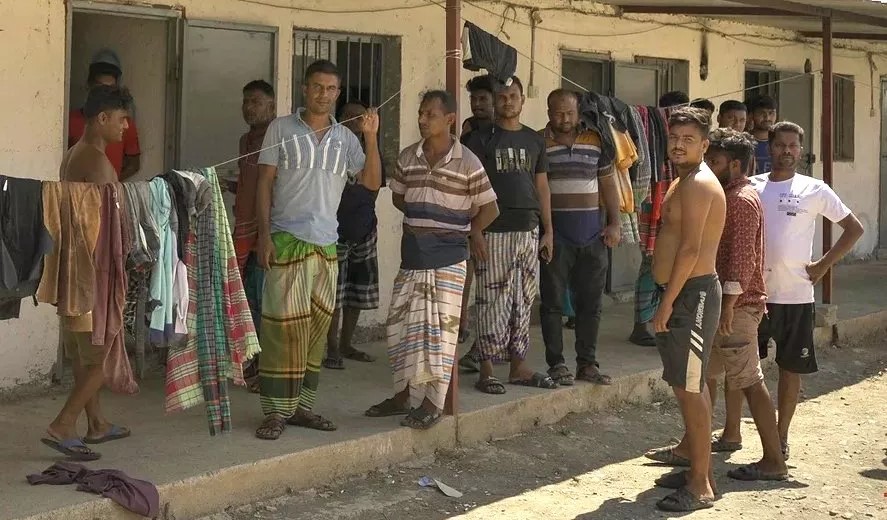
“The study documents cases of people living in appalling conditions, without meaningful protection, facing exploitation, insecurity and uncertainty about their future.”
These problems do not stop at the Green Line.
Nicolaides said the Republic of Cyprus also faces serious challenges in managing migration and asylum, with the island’s division creating difficulties that extend beyond the northern part.
“The buffer zone is, in reality, anything but ‘dead’,” he said.
“It is a place where many things happen, where people move, where tensions arise and where, in quite a few cases, people become trapped.”
The legal and administrative uncertainty is particularly acute.
The Republic of Cyprus has its own responsibilities and obligations, the administration in the occupied north intervenes in its own way, and the United Nations operates between them with a specific mandate but limited powers of intervention.
This complex arrangement makes effective monitoring and management of people’s movements even harder.
“And caught in all this legal uncertainty are human beings. There have been cases in which the Republic of Cyprus has faced complaints and adverse rulings by European courts,” Nicolaides said.
“Even if we set aside the humanitarian dimension, or the religious one, if you prefer, there are laws, international conventions and provisions that require us to meet our obligations towards these people.
“We cannot justify human suffering, exploitation or mistreatment through legal ambiguity or nationalist and racist outbursts.
“What I realised when completing the study is that the unresolved Cyprus problem does not merely perpetuate the problems we already know about. It continually creates new ones.
“And very often, those who pay the price are the people in the most vulnerable position.”
Foreign students exploited: Men on farms, women forced into prostitution
Numerous cases of trafficking involving young women from African countries.
Nicolaides’s study cites research by the student organisation VOIS Cyprus, which represents and supports the rights of foreign students in the self-declared “TRNC”.
According to the research, more than half of the 800 students surveyed reported negative experiences with the agents who had arranged their studies.
African students accounted for 79.1% of the survey sample.
During 2025, Nicolaides interviewed Emmanuel Achiri, co-founder of VOIS Cyprus, a doctoral candidate in international relations and a legal adviser specialising in combating racism in Europe.
Achiri described how students can become trapped in a cycle of financial hardship, irregular immigration status and exploitation.
“Students often try to find work but are unable to do so, leaving them unable to pay their university fees,” he said.
“They become inactive students and eventually find themselves in an irregular situation, without being able to return easily to their home countries.
“In many cases, they fear social disapproval because their families have invested substantial sums in their education abroad.
“In many African societies, the opportunity to study overseas is considered particularly important, increasing the pressure on young people to succeed.
“As a result, they remain in the country, hoping to find employment and complete their studies.”
Achiri said male students often find work in construction, agriculture and on farms.
He also raised serious concerns about the trafficking and sexual exploitation of young women.
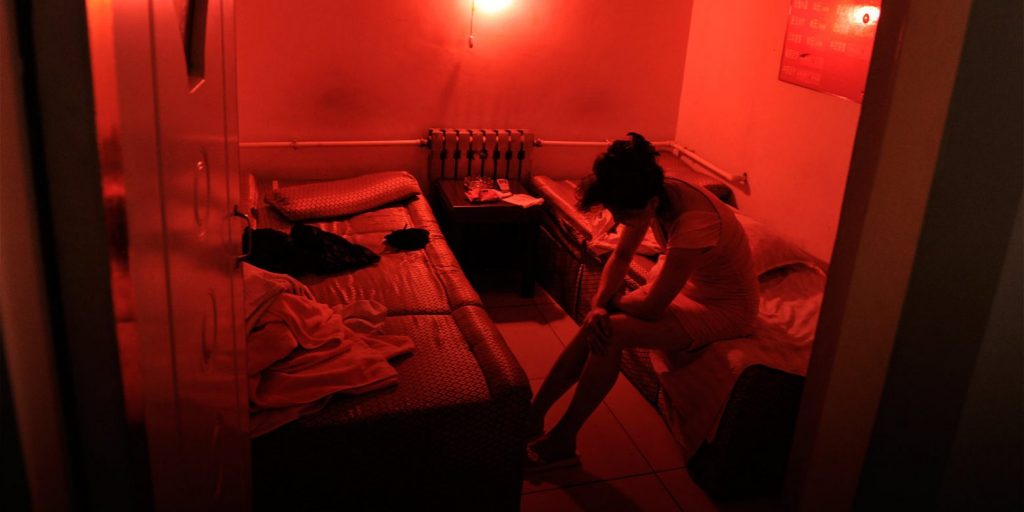
“Unfortunately, there are also numerous cases of trafficking involving young women from African countries.
“Many are forced into prostitution by traffickers or criminal groups.
“They are deceived and, after arriving, taken to private apartments where pressure and blackmail over debts owed to agents push them into sexual exploitation.
“When they resist, they often suffer physical or psychological abuse.
“These are clear examples of human trafficking.”
US State Department report documents exploitation
Nicolaides also cites the US State Department’s 2024 Trafficking in Persons Report as evidence supporting concerns about human trafficking in the occupied north.
The report describes the vulnerability of foreign university students and other migrant groups in the Turkish Cypriot-administered area.
“Foreign university students, primarily from sub-Saharan Africa, South and Central Asia, and the Middle East, make up 30% of the total population in the Turkish Cypriot-administered area,” according to the passage reproduced in Nicolaides’s study.
The report says Turkish Cypriot-funded and for-profit universities pay unregulated agents and recruitment agencies up to €1,000 for each student successfully enrolled.
Recruiters deceive prospective students with false promises of scholarships, free accommodation and employment.
Unlicensed lenders also provide loans to students and seize their passports as collateral, increasing their vulnerability to trafficking as they attempt to repay their debts.
The report describes female students being forced into sexual exploitation in apartments, while male students are subjected to forced labour or pushed into criminal activities, including transporting or selling drugs.
It also identifies local business owners who deceive newly arrived students into working in nightclubs, casinos, hotels and other establishments under inhumane conditions, sometimes for little or no pay.
Migrants, asylum seekers, LGBTQI+ people, refugees and their children also face an increased risk of sexual exploitation, according to the report.
Filling the knowledge gap about the ‘other’ Cyprus
Nicos Peristianis, a sociologist and president of the Universitas Foundation, said he commissioned Nicolaides’s research because of a significant gap in what is known about migration in the occupied north.
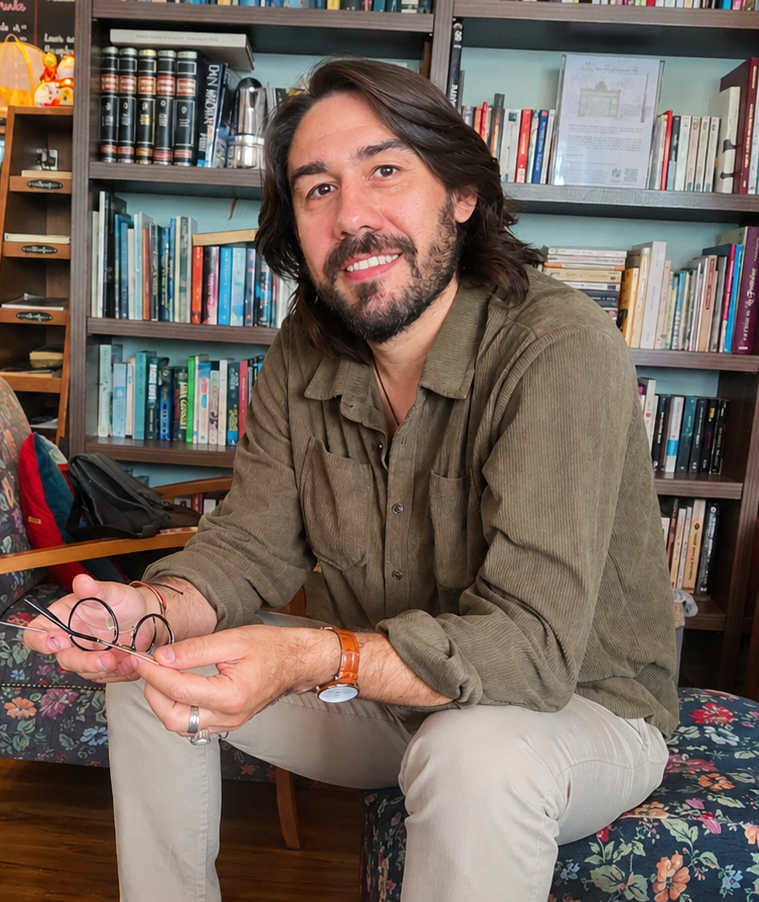
“As president of the Universitas Foundation, I commissioned Andreas Nicolaides to carry out the research that led to the book Migration Flows in a Ghost State: Settlers, Workers, Students and Refugees in the Occupied Territories of the Republic of Cyprus, recognising an important gap in our knowledge of Cyprus,” he told Phileleftheros.
“While we have considerable information and research on migration, foreign workers, international students and asylum in the government-controlled areas of the Republic of Cyprus, we know comparatively little about the corresponding phenomena in the self-proclaimed ‘TRNC’.”
He argued that this lack of information limits understanding of the social and demographic changes taking place across the island.
A particularly important example is the situation facing people who arrive in the occupied north seeking international protection.
“How many are there, and which countries do they come from? Why do they choose this route? What role does Turkey play, and to what extent does it facilitate or encourage their movement?
“How do the ‘authorities’ there treat them? Under what conditions, and through which networks, do some cross into the government-controlled areas?
“These are questions that require systematic research, beyond speculation and political agendas.”
Peristianis said the foundation’s mission was to promote knowledge about issues that could improve people’s lives.
“The value of this research lies precisely in linking knowledge with that responsibility: gaining a better understanding of developments in the occupied territories, encouraging a more meaningful public debate and developing more effective, people-centred policies.
“Because behind migration flows and demographic changes are people with needs, rights and aspirations.”

