


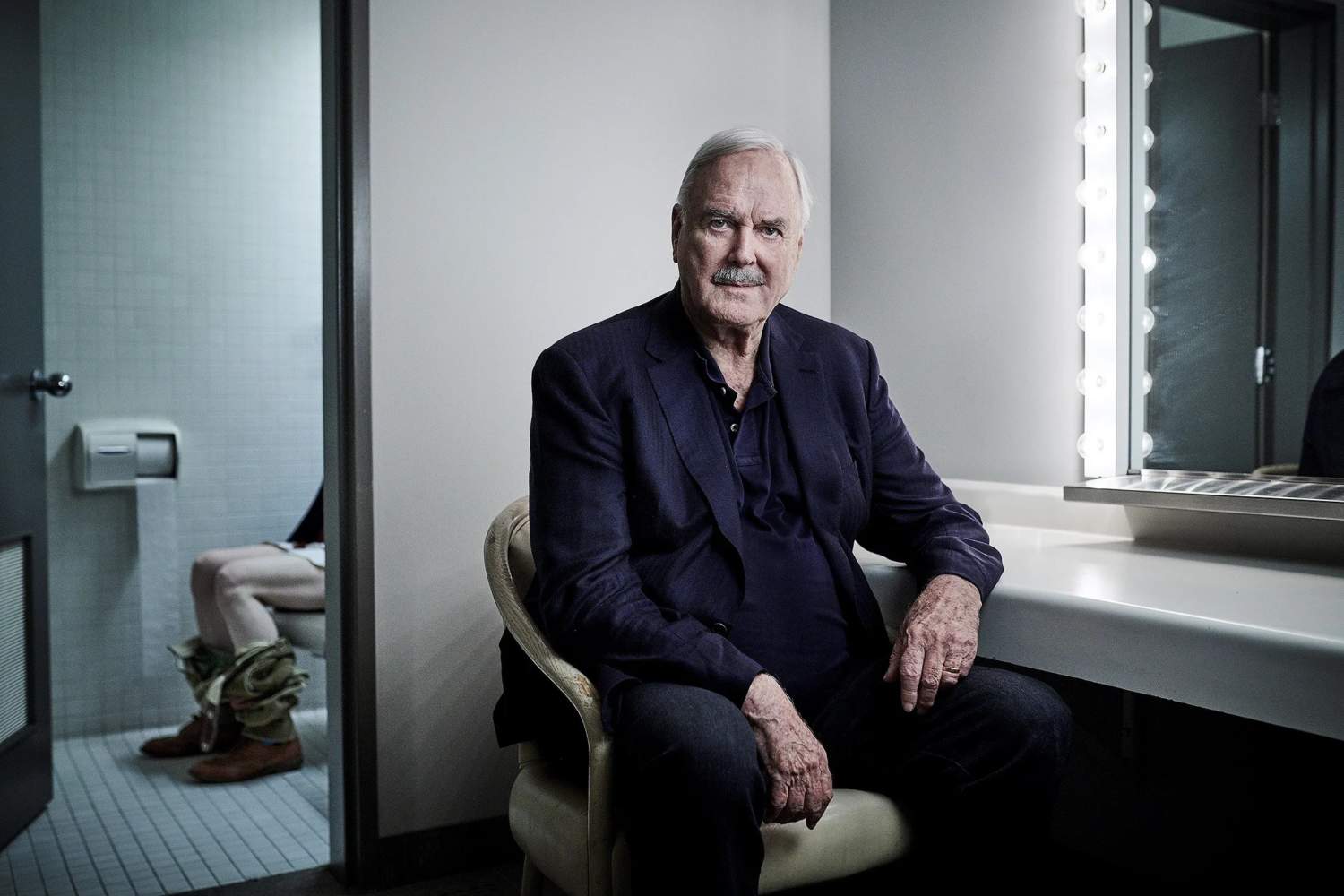
The pompous, self-destructive hotelier Basil Fawlty. The flustered barrister Archie Leach. The civil servant from the Ministry of Silly Walks. The customer who insists the parrot he has just bought is no longer with us. These are just a few of the characters and moments that have earned John Cleese a place among the most recognisable figures in world comedy. From the television revolution that Monty Python launched in 1969 with Flying Circus, to Fawlty Towers and the box-office hit A Fish Called Wanda, the British writer and performer helped shape a new language of comedy: subversive, absurd, unpredictable and relentlessly hostile to pomposity.
On 10 November, Cleese, now 87, comes to Cyprus for the first time with ‘Last Time To See Me Before I Die’. It is a farewell show that, despite its title, keeps on touring, and it gives him the chance to look back over more than six decades of work, partnerships, successes and personal experiences. Fame, creativity, ageing and death are all filtered through his familiar black humour.
The subversive mind that has spent a lifetime mocking every kind of certainty has not escaped the contradictions of our own times. Cleese has himself been at the centre of controversy over his public comments on political correctness, cultural identity and gender. He remains, however, a passionate defender of comedy’s freedom, and he keeps returning to the things that still fascinate him: human imperfection and the reliably unpredictable absurdity of everyday life.
Your show is called ‘Last Time To See Me Before I Die’. Is the title a joke about death, or about the idea of saying goodbye?
Well, the title was suggested by the Just For Laughs people when I was touring Canada, and it amused me. I’ve always enjoyed black humour, particularly jokes about death and dying. And there is, of course, some truth in it. I’m not going to be here for ever.
What makes a subject irresistible to a comedian?
I think comedy comes from the imperfections of human beings. A perfect person isn’t funny. What makes us laugh is the collection of odd habits and weaknesses people have. Basil Fawlty is a good example: someone who is very funny to watch would be an awful person to deal with in real life. And the older I get, the more ridiculous ordinary life seems.
You are coming to Cyprus for the first time, after more than six decades of performing around the world. What still draws you to the stage?
I enjoy performing on stage because it gives you direct contact with an audience. People have chosen to buy a ticket because they enjoy what you do. There’s also something special about laughing together: people respond more when others around them are laughing than when they watch television alone. It’s a form of entertainment that has existed for a very long time.
You have spent most of your life making people laugh. What still makes John Cleese laugh?
Lots of things. The last time I laughed hysterically for a long time was watching the coronation of King Charles III. It looked exactly like a Monty Python sketch: lots of people in silly costumes taking everything very, very seriously. I also adore good physical comedy, Laurel and Hardy, Chaplin, Buster Keaton. Having been in the business since 1962, I recognise most of the shapes of jokes, so performed comedy surprises me rather less. But the ordinary funny things that happen every day still make me laugh a great deal.
Python humour often took an ordinary situation and pushed it into complete absurdity. Where did that instinct come from?
Graham [Chapman] and I sometimes began by reading words from a thesaurus. One word led us to the idea of a sheep attempting flight and falling. That became a sketch. The important moment was when one of us said something that set the other laughing and we suddenly saw a possibility that hadn’t been there a few seconds earlier.
Monty Python took aim at institutions, authority, religion, class and social conventions with remarkable freedom. Did you feel you were getting away with something at the time?
People often say we were against authority, but we were really against authority being exercised stupidly. We weren’t proposing to abolish traffic lights. And we were fortunate that Michael Mills at the BBC took a considerable risk with us. Quite a few people there didn’t like the programme at all. The fact that it was very cheap probably helped.
You have often defended comedy’s right to offend. What makes a joke worth telling, even when you know it might offend someone?
You have to understand what the joke means. With sarcasm, the meaning may be the opposite of the words. If you ignore the context, you misunderstand the intention. That’s what concerns me: people deciding what a joke is doing without considering how it’s being said.
How has political correctness changed the relationship between comedians and their audiences?
I think it has made the comedian more apprehensive about the audience, and that’s very damaging to creativity. The creative process needs to be uninterrupted. If a young comic has an idea and immediately thinks, “Will somebody be offended by that?”, the flow has already been broken. Instead of exploring the idea, you’re worrying about the reaction to it. That’s not a very good state of mind in which to discover something funny.
What do you think audiences have become less willing to laugh at?
Comedy depends on being able to recognise the imperfections in people. It’s our oddities and weaknesses that make us funny. Humour also gives us a little distance from events, so that we can notice how ridiculous they are instead of taking everything so seriously. A very literal way of thinking makes that much more difficult.
At 87, what has age taught you about ambition?
I’ve noticed that people either become more ambitious or more satisfied with their lives. And if you’re more satisfied, you’re rather freer to play. I think I’ve become more creative as I’ve got older. The difficulty is energy. I have energy for things that interest me, but I find it increasingly difficult to manufacture enthusiasm for things that don’t.
What happens to a comedian when the audience stops laughing?
If they repeatedly don’t laugh, you have to reconsider the joke. At first you can blame the audience, but eventually you have to admit that something isn’t working. Comedy gives you very immediate feedback.
Do audiences sometimes confuse the comedian with the views the comedy expresses?
Yes, particularly when they take everything literally. You can criticise an opinion directly, or you can put it into the mouth of someone who is obviously a fool. In the second case, you’re making fun of the opinion. You’re not endorsing it. But some people hear the words and assume that the writer must agree with them. They’ve missed what the comedy is doing.
His career at a glance
1939: Born on 27 October in Weston-super-Mare, Somerset. He reads law at Cambridge, where he joins the Cambridge Footlights and meets Graham Chapman.
1960s: Starts working as a comedy writer and performer, including on The Frost Report, where he meets future Monty Python collaborators.
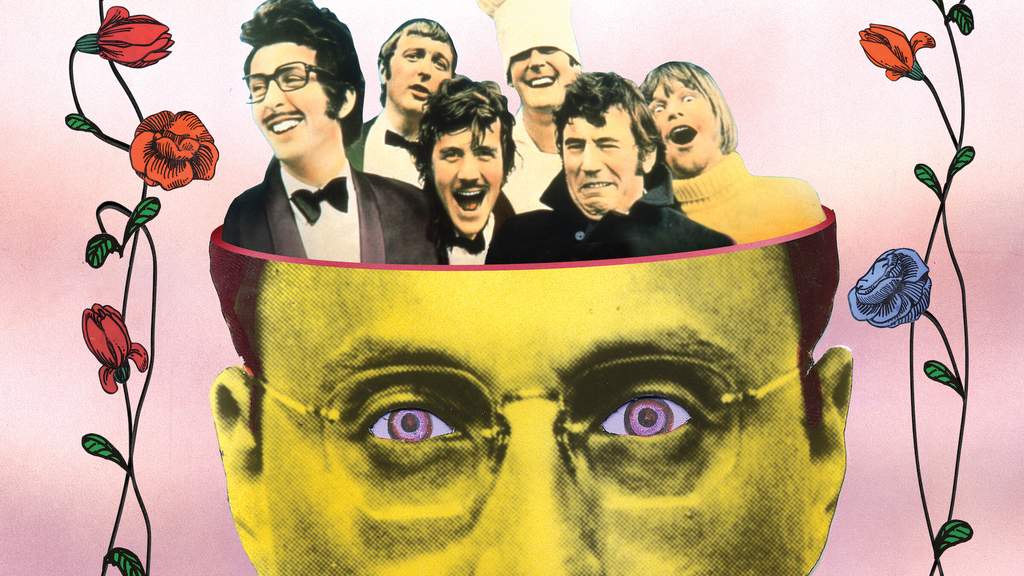
1969: Monty Python’s Flying Circus begins on the BBC. The group (Cleese, Chapman, Eric Idle, Michael Palin, Terry Jones and Terry Gilliam) rewrites the rules of television comedy. The films Monty Python and the Holy Grail (1975), Life of Brian (1979) and The Meaning of Life (1983) follow.
1975–1979: Co-creates Fawlty Towers with Connie Booth and stars in it. Just 12 episodes are enough to make Basil Fawlty one of the most iconic characters in British television comedy.
1988: Writes and stars in A Fish Called Wanda, alongside Jamie Lee Curtis, Kevin Kline and Michael Palin. He wins the BAFTA for Best Actor and is nominated for the Oscar for Best Original Screenplay.
1990s to today: Continues to work in film and television, with roles in the James Bond, Harry Potter and Shrek films, among others, and keeps returning to the stage with one-man shows about his life and career.
INFO ‘Last Time To See Me Before I Die’, Nicosia, Eleftheria Stadium, Tuesday 10 November, 7.30pm. Tickets: More.com
Read more:

