


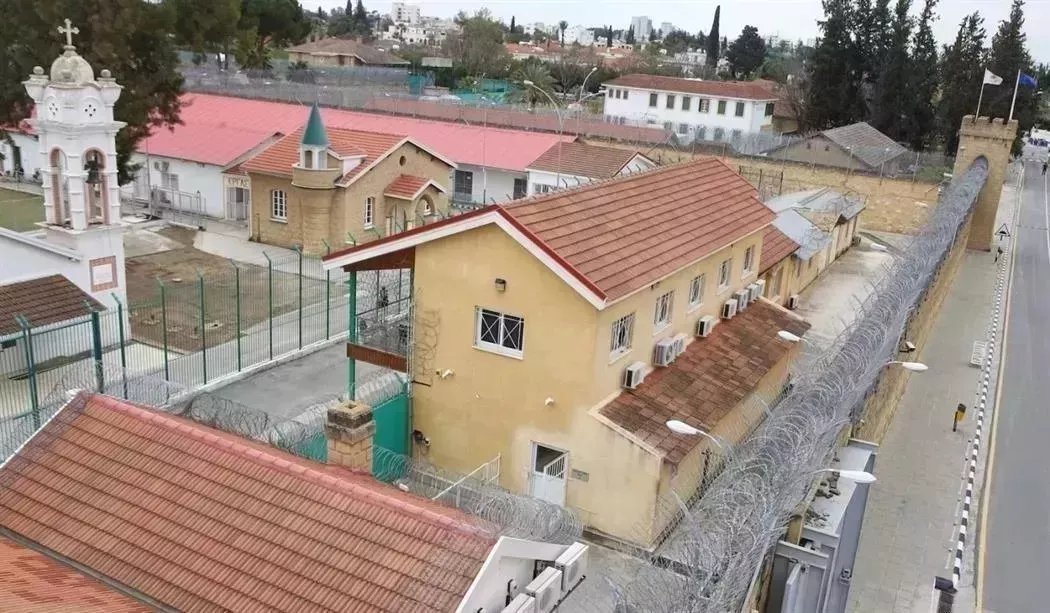
The Ministry of Justice and Public Order will ask parliament to extend, for a fourth time, the deadline for a 2021 law requiring a separate juvenile prison, as the prefabricated units planned near the Central Prisons will not be ready for about a year.
Young inmates aged 17 to 21 are currently held in a separate wing of the Central Prisons, but in the same complex as other prisoners, although contact between the two groups is limited. The Council of Europe’s Committee for the Prevention of Torture (CPT) has opposed holding juveniles inside a closed prison from the outset. Its view is that children in conflict with the law should be held in a separate, child-friendly facility, away from the negative influence of older inmates, particularly those serving long sentences.
Work on the facility is due to start soon, and the ministry hopes this will be the last extension.
Parliament members, led by those from AKEL, have already warned that they would find it hard to agree to another extension. However, because of the pressing need, the deadline is expected to be extended for another year.
The migrant detention centre in Menogeia was initially chosen to hold juveniles. However, the site is large, with a capacity of 160 to 180 people, and Justice Minister Costas Fytiris decided that, to meet urgent needs, it should become the central police holding centre, to resolve overcrowding in police station cells. With work to upgrade it under way, the ministry began looking for another site for juveniles.
The minister eventually decided the juvenile facility should be built on land near the prisons but outside the complex. A 360-inmate wing had been planned there, but the plans were dropped after the decision to build new prisons.
As Phileleftheros has reported, the juvenile prison will consist of prefabricated units with full amenities that meet standards set by international bodies, with the agreement of the Commissioner for the Protection of Children’s Rights. The idea is that the units can later be moved to another site without extra cost to the state.
The ministry has been grappling with the issue for some time. The choice of a new site and the approach to management and rehabilitation were the subject of several discussions at the House Legal Affairs Committee. Once the authorities settled on a model in which only the management would be in private hands, finding a site was all that remained.

