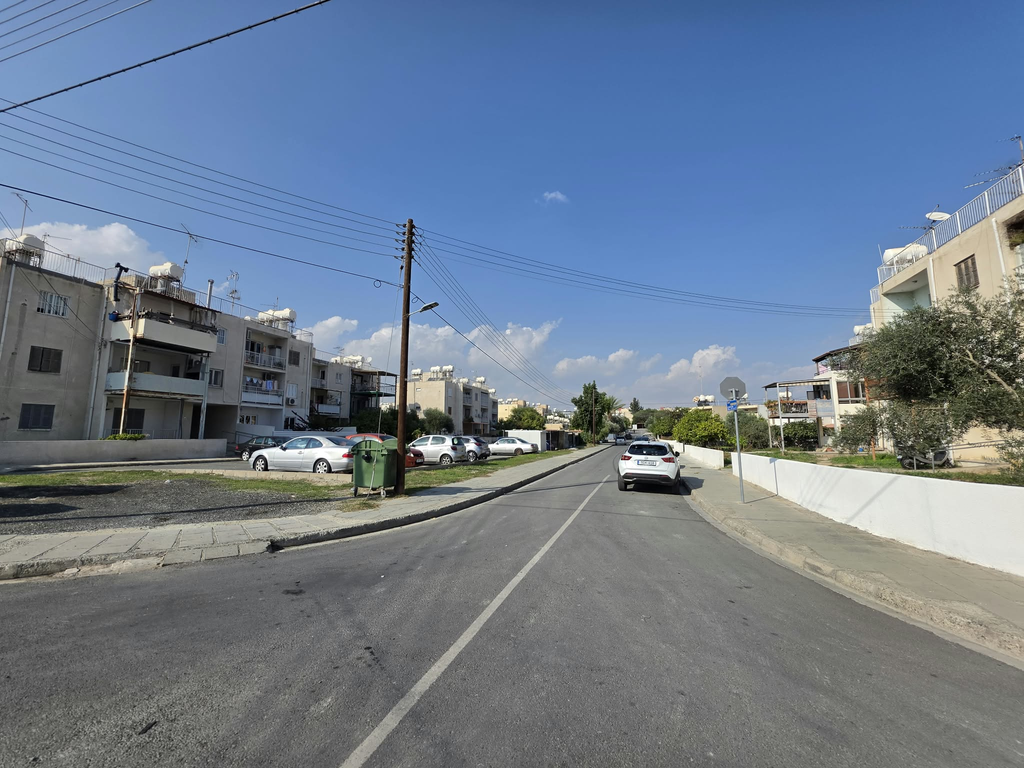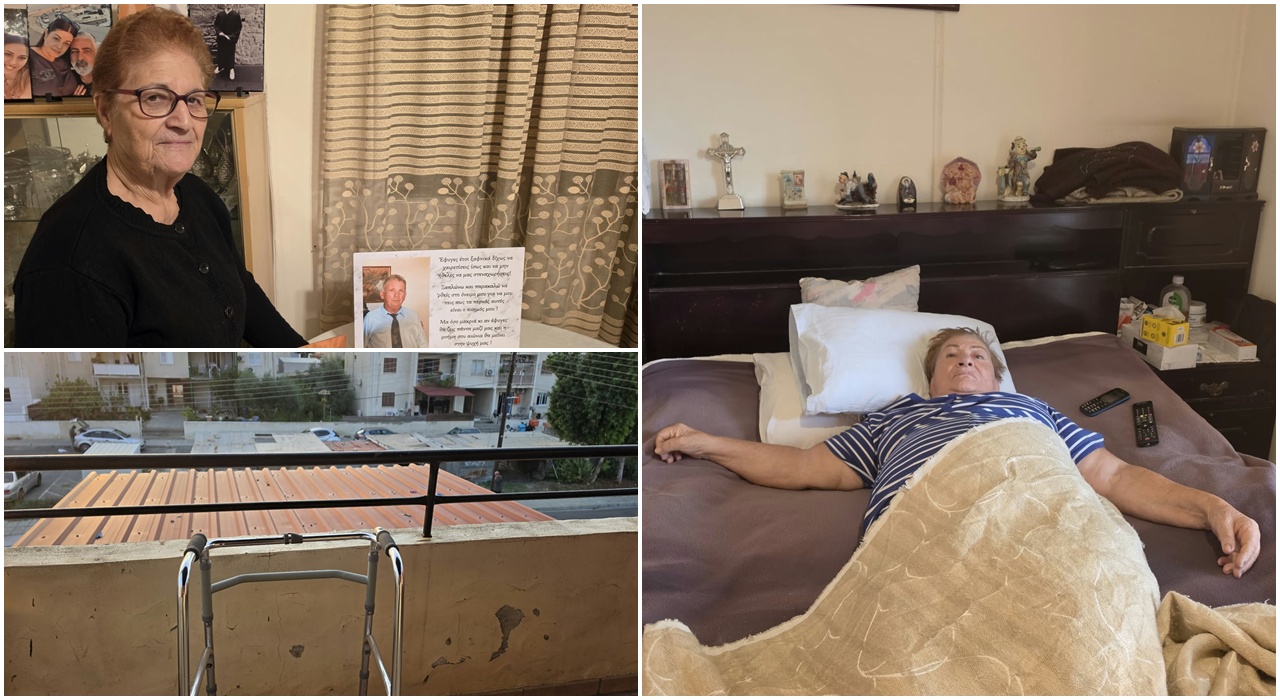
A 92-year-old woman on a Larnaca refugee estate has not come down from her flat in about ten years, one of many elderly residents confined to their homes in six blocks of flats that still have no lifts. Eight years ago a resident died because he could not be brought down in time, prompting an outcry and promises, but nothing was done.
Many of the people living on Komiton Street in the Agioi Anargyroi 2 estate, most of them pensioners, go out only in daylight if they can manage the stairs at all. Others cannot leave their flats. The ktiZO scheme now under way is moving very slowly, and many residents have not been properly informed about it.
Under ktiZO, the state pays 80 to 90 per cent of the value of the new flats, with refugee beneficiaries paying the rest, and also covers the engineer, Interior Minister Constantinos Ioannou has said. He described it as help given a second time, for safety reasons, when others have received none. Those who do not want to take part can take the value of the land and some assistance and leave, he said, adding that between 80,000 and 120,000 euros had been paid to about 30 to 40 beneficiaries who opted out.
The cases Phileleftheros recorded are not the only ones. There are dozens across all refugee estates, and the paper will report on them separately.
A wait for a fire service platform
Anastasia Georgiou Giangou, 76, from Agios Theodoros in the Karpasia peninsula, lost her husband, Giorgos, in 2018.
“It was 11 at night when he fell ill,” she recalled. “The ambulance came in time, but they couldn’t get him down because the staircase is narrow. The doctor phoned for help and they sent us two police officers.”
“Then they called the fire service to bring a platform. There wasn’t one at the Larnaca station, so they phoned Oroklini. It took more than 45 minutes to arrive, and they brought him down from the veranda.”
At the hospital, she said, “the doctor told us, ‘His brain filled with blood.’ He told us: ‘If you had brought him earlier, we would have operated to save him.’ It was half past midnight when my husband went into intensive care, and by 6 in the morning he was dead.”
“My husband was ill, but we still wanted him,” she said.
The family took the case to Phileleftheros at the time. Many more reports followed, along with meetings that promised immediate solutions.
“They told us then to fill in a form so they could put in a lift,” Giangou said. “Then we got a notice that we had been approved and it would go in within a month. After that they sent us a letter saying it was too expensive and that other quotes had been submitted.”
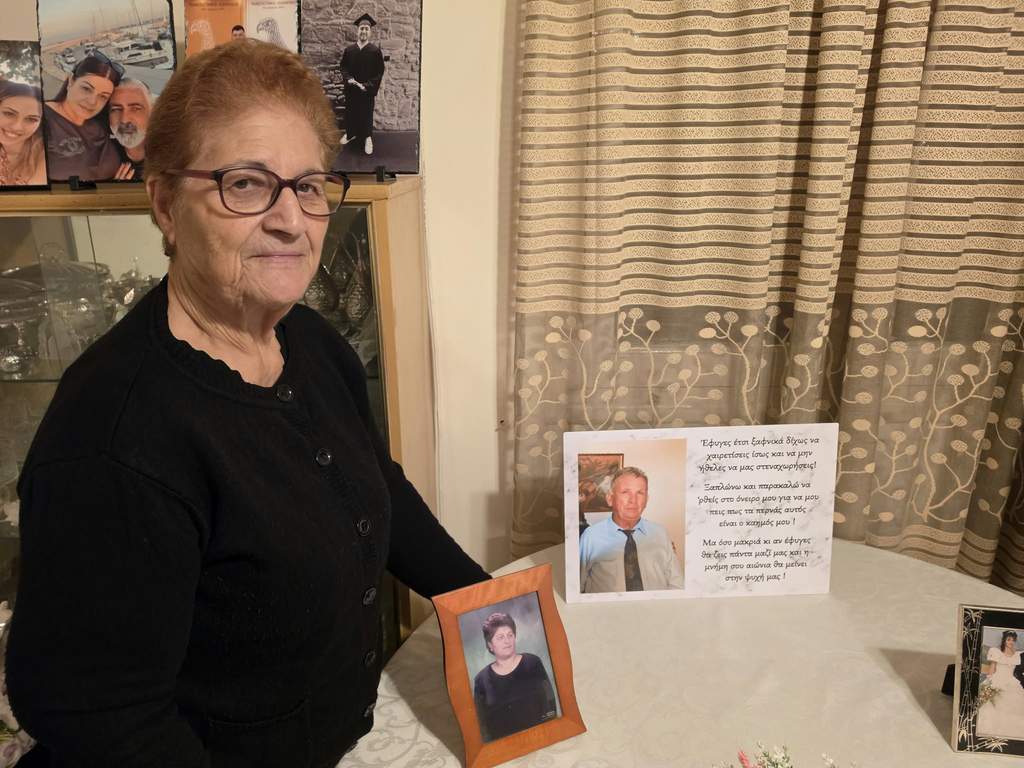
“Four or five years went by and I got another letter saying the lift had been approved. At that point one neighbour wouldn’t agree.”
“This is a big mistake by the government. Why do they ask the people on the ground floor if they want a lift? They don’t use it,” she said.
“In the end the neighbour agreed and they told us again that we had been approved. But later they said things had changed and we should wait. Now we’ve joined ktiZO and they’ve said they’ll put one in. We’re waiting…”
Giangou lives on the second floor. Every day, while it is light, she walks with her neighbour across the landing, who uses a walking stick. At nightfall both go back inside, because the lane leading to their building has no lighting.
The stairs are an ordeal for her because her knees need surgery.
“When I have shopping, luckily there’s a young lad from India downstairs, and as soon as he sees me he says, ‘Auntie, let me,’ and carries it up for me. When I need a gas bottle, my son comes. It’s a real struggle. I feel very let down,” she said. “They think we had nothing in our villages. But we did, and now we’ve been left hanging.”
Bedridden above her daughter’s flat
In the block opposite, Georgia Kourtellidou, 82, from occupied Kyrenia, has not left her flat for a year and has been bedridden for the past few months. She fell on the stairs while trying to get down to her daughter’s flat on the floor below.
“I fell and hurt my shoulder, it hurts a lot. An ambulance came and they couldn’t get me down,” she said, in tears. “I’m asking for a lift so I can come down. I want to go to my daughters and my sisters. Now I can’t go anywhere, my dear, I can’t take it any more…”
When she needs a doctor, “we go,” said her daughter, Katia Neofytou. “She has a kidney problem, and when they ask for tests a lab technician comes to the house. When the results come out, we go to the doctor to tell us what to do.”
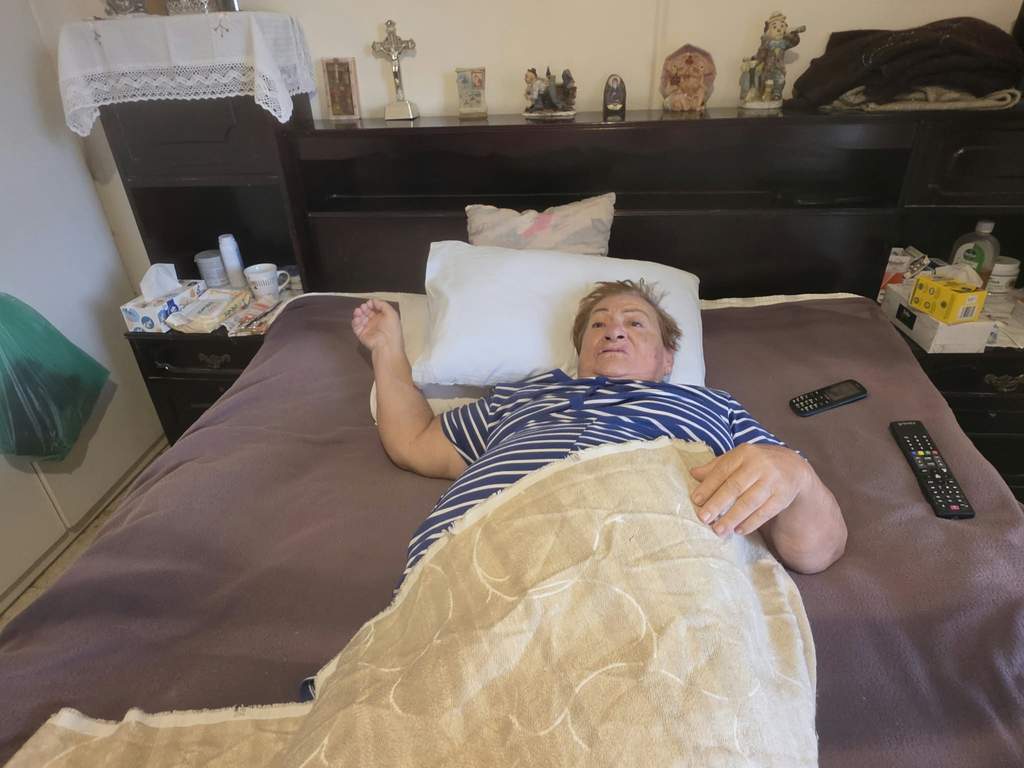
“My mum is depressed because she can’t come down. If something happens, how will we get her down?”
Residents of her mother’s building have no title deeds because it stands on Turkish Cypriot land. They had extended their balconies, which they were told ruled out a lift.
“Years ago they came to put in a lift, but we had extended the balconies and they told us they couldn’t. But when they put in lifts, they build balconies too. We already have the balconies, so their costs would be lower,” Neofytou said.
Asked why they had not joined ktiZO, she said that if the cost turned out higher, she and her mother would have to cover it. “Only three flats in the building are permanently occupied, and one woman isn’t interested in the scheme. If we had that money, we’d have done it ourselves, without waiting for the state.”
Carried down on a chair
In a neighbouring block, the 92-year-old lives with her daughter, who is also a pensioner. When she recently needed to see a doctor, she was carried down on a chair with a neighbour’s help.
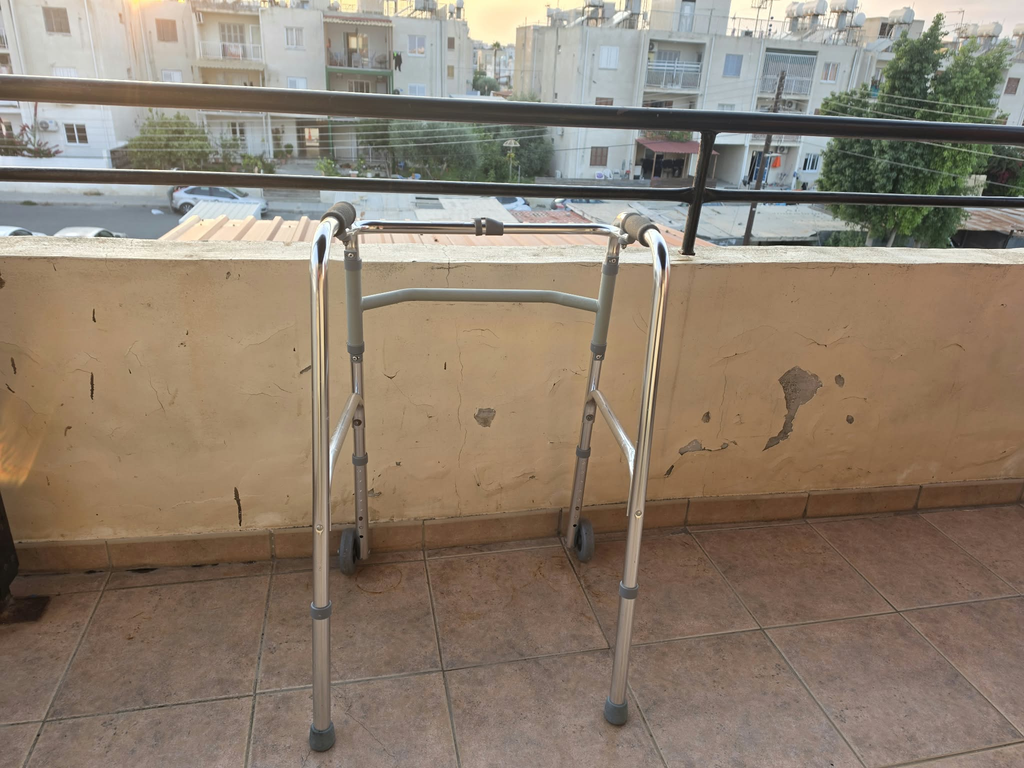
Each time Phileleftheros visited, she was sitting in the same armchair, always smiling. On the last visit her face was swollen, and her daughter was hoping she would not need a doctor. She said she had no complaints. “We’ve been through it, my girl,” she whispered, and said over and over: “Glory be to God, may Agia Thekla watch over everyone,” referring to the estate’s church.
The paper learned of the cases when the Larnaca 2030 Organisation, during a festival on the estate, held a serenade beneath the women’s balconies. Kourtellidou could not get out on to her balcony, but her daughter said she listened and applauded.