


Compensation claims by Turkish Cypriot property owners have increased over the past three years, while authorities warn that deteriorating buildings could cause serious injuries or deaths, according to a risk assessment submitted to parliament by the Turkish Cypriot Properties Management Service.
The claims concern both the use of Turkish Cypriot properties by Greek Cypriots and government expropriations of land for public infrastructure projects.
The service has classified these issues as high-risk, highlighting the financial and legal challenges facing the interior minister, who acts as custodian of Turkish Cypriot properties.
The assessment uses red to identify high risks, orange for medium risks and green for low risks.
Among the threats identified are compensation demands arising from expropriations, potential claims by Turkish Cypriot owners, judicial and legislative developments, rising building maintenance and restoration costs, and delays to projects or reforms that depend on third parties.
Structural problems raise fears of injuries and deaths
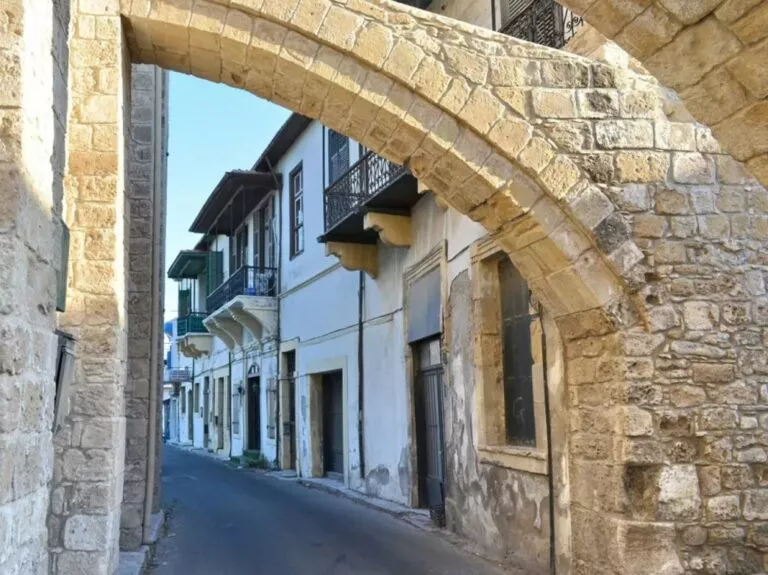
The service has also identified the structural condition of Turkish Cypriot buildings as a major financial risk.
Inspections are continuing, but the findings so far indicate that a significant proportion of the buildings examined require further structural assessment.
A similarly significant proportion have been classified as potentially dangerous and in need of immediate structural investigation.
The service warned that these findings increase financial exposure because detailed structural studies, repairs and reinforcement work could involve substantial costs.
Under a section addressing the condition and safety of vacant or older properties, the assessment also warns of risks to public safety.
Some buildings may be occupied illegally or have deteriorated because of age, creating potentially dangerous conditions for other people.
The service said these risks include possible injuries or loss of life, as well as legal and financial consequences for the authorities responsible for managing the properties.
Unpaid rents and outdated computer systems
The accumulation of unpaid debts to the Turkish Cypriot Properties Management Fund is classified as a medium-level risk.
According to the assessment, a substantial number of longstanding debts remain outstanding, affecting the fund’s liquidity and making revenue less predictable.
The service warned of potential financial consequences if the outstanding balances are not managed effectively.
Revising rental agreements and signing new contracts are expected to improve rent collection, although continued monitoring and targeted action will be needed to recover accumulated debts.
The service also identified serious weaknesses in its ageing computer system, which restricts its ability to manage information and monitor payments effectively.
Among the problems are the inability to maintain complete records of rental contracts and amendments, and difficulties extracting data on rent payments, outstanding debts and other financial reports.
These limitations undermine effective internal oversight.
Incomplete records create further risks
The assessment also identifies shortcomings in property and tenant records as a medium-level risk.
The service must regularly update information about tenants, property holders and the properties themselves, but its computer system is not connected to other relevant government departments.
These include the Department of Lands and Surveys, the Service for the Care and Rehabilitation of Displaced Persons and the Central Information Repository.
The lack of integration increases the risk of errors and delays when updating records or processing information.
Another weakness is the absence of comprehensive registers covering legal proceedings and requests for the return of Turkish Cypriot properties.
The service said such registers would help it monitor lawsuits against the interior minister in his capacity as custodian, reducing the risk of omissions, delays and incomplete information when decisions are taken.
Ageing properties threaten long-term viability
The long-term sustainability and preservation of Turkish Cypriot properties have also been classified as medium-level strategic risks.
The service warned that the age of many buildings, increasing maintenance and restoration requirements, and limited financial resources could affect its ability to preserve and make use of properties over time.
These concerns relate not only to maintaining property values but also to the custodian’s obligation to act in the interests of the owners.
However, the assessment also identifies improvements in the management framework.
Legislative amendments have been introduced to strengthen transparency, objectivity and efficiency in decision-making.
The service also highlighted the introduction of competitive bidding procedures for certain categories of higher-value commercial properties.
It said these measures support good administration and could help maximise revenue for the Turkish Cypriot Properties Management Fund.
Property management spending to reach €17 million in 2027
Spending on the management of Turkish Cypriot properties is expected to reach approximately €17 million in 2027.
The government will contribute €7.5 million, with the remaining funding coming from rental income generated by Turkish Cypriot properties.
A substantial portion of the budget, €4,278,129, will cover hourly paid workers carrying out maintenance projects.
Another €3,215,000 has been allocated to staff remuneration within the Turkish Cypriot Properties Management Service.
A further €4 million will be spent on maintaining and repairing homes occupied by displaced people.

