


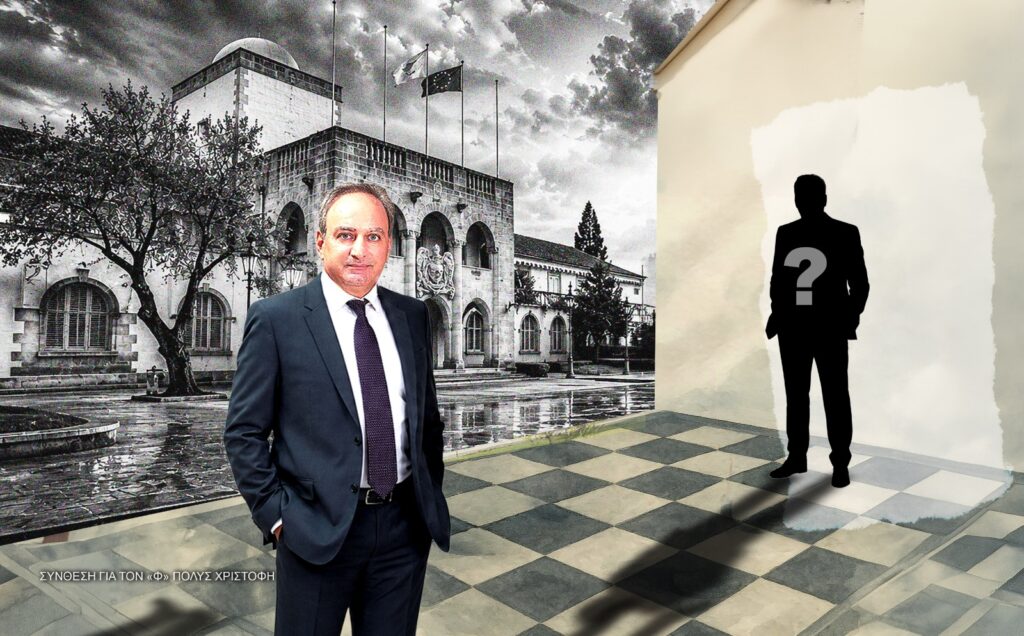
AKEL is formally launching preparations for Cyprus’ 2028 presidential election on Saturday, with party leader Stefanos Stefanou expected to outline a political platform aimed at building alliances with other parties before selecting a candidate by next spring.
Although several names have emerged as possible presidential contenders, the party is prioritising agreement on a common programme and potential partnerships over the choice of candidate.
Stefanou is expected to set out AKEL’s political priorities during a meeting of its Central Committee, opening an internal process that will eventually lead to the selection of the party’s presidential candidate.
Among those mentioned as possible contenders are Stefanou himself, former presidential candidate Andreas Mavroyiannis, Tasos Yiasemides, Tasos Christofides and Andreas Vyras.
However, none of these names is considered a settled choice, and the outcome of discussions with other political parties could significantly reshape the list of potential candidates.
Alliances take priority over candidates
AKEL is entering the presidential election process earlier than in previous campaigns, aiming to settle on its candidate by spring 2027.
Its main objective is to establish cooperation with one or preferably several other political parties, bringing them together behind a common candidate and a programme for what it describes as progressive political change.
Stefanou has advocated exploring possible partnerships since the parliamentary elections, including with parties that failed to secure representation in the House of Representatives.
AKEL wants to build a broader political alliance in which it would remain the main force but share responsibility for developing a joint programme with its partners.
The approach is also intended to challenge the argument made by parties on the right that such an alliance would simply represent AKEL’s return to power.
Instead, the party wants to present its presidential bid as a collective proposal for a change in government and policy direction.
EDEK, DIPA and Greens among potential partners
Cooperation with DISY and ELAM is ruled out.
The possibility of exploratory discussions with DIKO remains open, partly because the two parties have worked together in the past.
However, an alliance with DIKO is currently considered unlikely because of substantial political differences, particularly over economic policy, foreign affairs and Cyprus’ relationship with Israel.
AKEL’s main focus is expected to be on EDEK, DIPA and the Greens.
The party also intends to engage with ALMA and has already held a meeting with Direct Democracy.
A major complication is that EDEK, DIPA and the Greens are undergoing internal transitions, limiting their ability to make definitive decisions about electoral cooperation for the time being.
The outcome of these discussions could determine not only the shape of a possible alliance but also the profile of the presidential candidate it eventually supports.
Party candidate or another independent contender?
One of the main questions facing AKEL is whether it should nominate a party figure or follow a model similar to its approach in the 2023 presidential election.
The latter could involve supporting a candidate from outside the party, potentially someone with a centre-right political background.
Mavroyiannis, who previously ran for president with AKEL’s backing, is among the names being discussed, alongside several other possible contenders.
However, the party’s internal procedures are still at an early stage, and discussions about individual candidates are not expected to produce an immediate decision.
The names currently circulating are likely to be considered during the internal debate, but the leadership’s negotiations with potential partners could change the field considerably.
A successful agreement with other parties might result in a candidate who has not featured prominently in the speculation so far.
Cyprus problem, cost of living and foreign policy on agenda
Stefanou is expected to outline the principal areas of AKEL’s proposed governing programme during Saturday’s Central Committee meeting.
These include the Cyprus problem and the form of a potential settlement, economic policy, social welfare and everyday concerns, particularly the cost of living.
Energy policy and foreign affairs are also expected to feature prominently, against the backdrop of changing regional circumstances.
The Central Committee will establish the initial political framework, which will then be discussed by the party’s grassroots organisations.
A second and final round of meetings of AKEL’s collective decision-making bodies will follow before a nationwide party conference formally endorses its presidential election decisions.
AKEL sets out three priorities for 2028
Speaking to Philenews, AKEL spokesperson Haris Polykarpou said the party’s proposed political change was intended to extend beyond replacing individuals in government.
“For AKEL, progressive change has substance. It is not limited to individuals but also seeks changes in policies,” he said.
Polykarpou criticised the policies pursued by the current and previous administrations over the past 13 years, arguing that they had deepened social divisions and economic inequalities.
He said those policies had left major economic problems unresolved, contributed to Cyprus becoming involved in regional conflicts and allowed the Cyprus problem to remain stalled, deepening the island’s division.
These are AKEL’s political assessments, which the party intends to place at the centre of its proposed alternative programme.
Polykarpou said Saturday’s discussions would also establish a roadmap built around three priorities: completing the political framework for 2028, pursuing cooperation with parties that support progressive change, and selecting a presidential candidate to represent that common political platform.

