


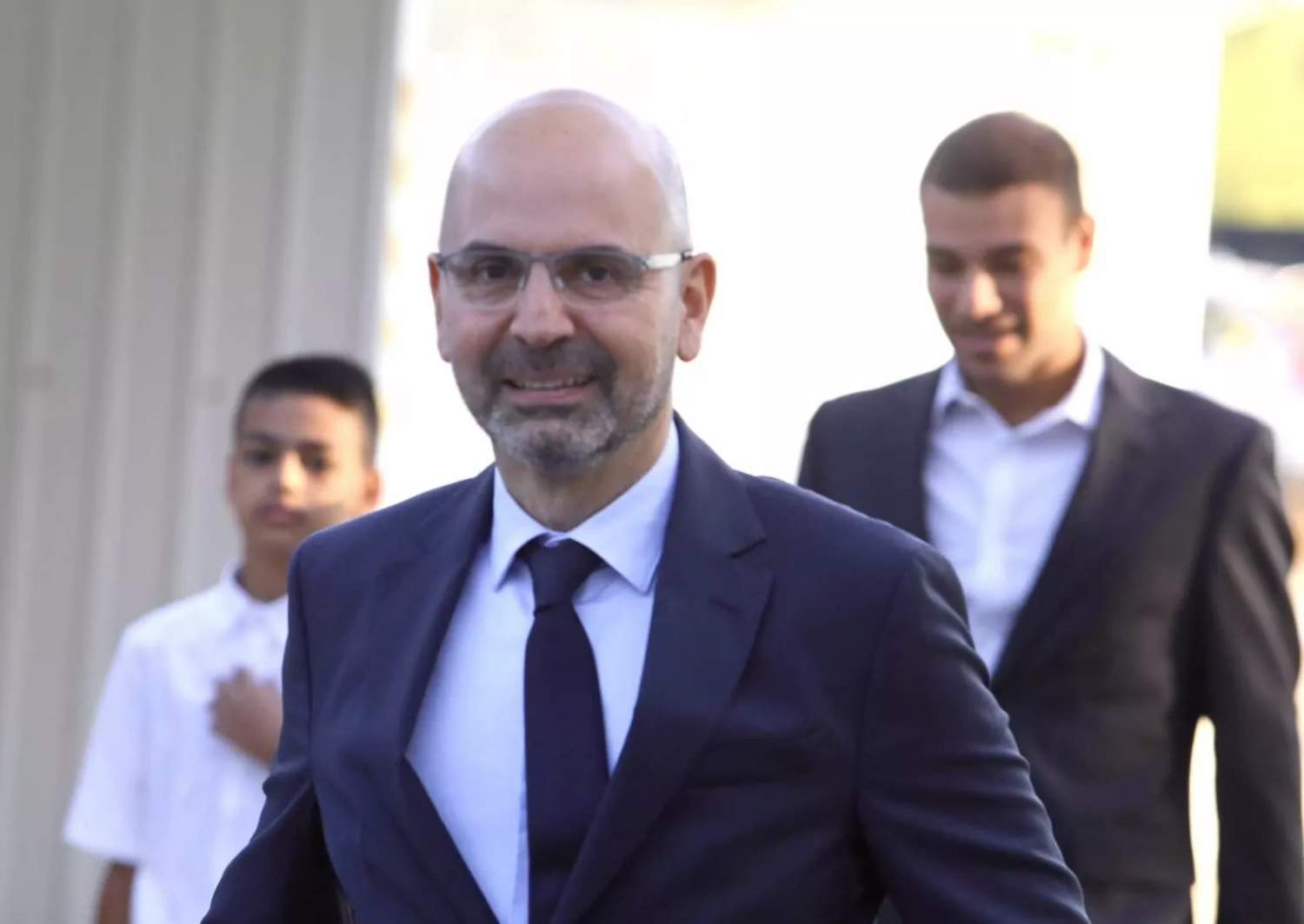
The Audit Office will use artificial intelligence to speed up its work and give auditors more time for on-site checks, Auditor General Andreas Papaconstantinou told the House Finance Committee on Friday.
Papaconstantinou was presenting the office’s budget for 2027, which comes to 12.06 million euros, up about 0.81 million euros or 7.2 per cent from about 11.26 million euros in 2026. It is the first Audit Office budget submitted directly to parliament and stays within the spending ceiling set by the Finance Ministry under the relevant law. Staff costs make up 82 per cent of it, consultancy services 7.5 per cent and software purchases 5 per cent.
He told the committee that a large co-funded AI project, AudifAI, was planned. AI would carry out an initial objective assessment and identify so-called red flags, which he said would speed up the work further.
The office has submitted 31 reports and five memoranda so far this year and has 23 reports in progress. It expects to issue 45 to 50 reports in total by the end of 2026 and may publish as many as two a week, he said.
The budget focuses on four pillars, among them improving how the office operates, making better use of its staff’s knowledge and experience, and completing audits faster and to a higher standard, with AI as an important tool for carrying out audits and preparing reports. According to a memo submitted to parliament, technology alone is not enough, and the budget includes funds for staff training in Cyprus and abroad so that audits identify major risks in time, help correct weaknesses, strengthen accountability and lead to better management of public resources.
Assistant Auditor General
ALMA parliament member Odysseas Michaelides questioned why the office needed a director’s post when it already had an Assistant Auditor General “who is paid 100,000 euros a year and has no duties”. He also said the budget provided for seven permanent posts and described the increase in consultancy services as large.
Papaconstantinou said the assistant was part of the management team and that efforts were being made to make use of him. “I won’t say anything more, he certainly must work, but let’s leave it there,” he said.
Michaelides pressed the point, saying the assistant did not work, merely took part in reports and had no duties, and that another director had to be hired because he could not be managed. Papaconstantinou said he did not endorse those remarks, but added that the assistant could not carry out a director’s duties, only those of an assistant auditor general, and that the post being sought was for a director’s work.
Michaelides also noted that Maria Papa, the former head of civil defence, had been seconded to the office on the A16 salary scale, and asked why she had not been given duties. Papaconstantinou said he had discussed the matter with her, which was why he was raising it publicly, and that if she could not be used, the office would consider sending her back.
Posts, outsourcing and savings
DISY parliament member Savia Orphanidou raised concerns about engineer posts in the budget under which staff would move from the A9 to the A11 scale within five years. She said the rest of the public service took a different approach, warning that “we may be opening Pandora’s box and setting precedents for all public sector posts”.
The Finance Ministry’s personnel directorate said the ministry had included a note on the matter, which had been sent to parliament. Papaconstantinou said the office had weighed concerns about the posts and the practice in the wider public sector. However, it took into account that auditors hold chartered accountant qualifications and how many years it takes them to obtain these alongside their degree, and decided to equalise the time component to avoid unfairness. He said the same applied at the Transmission System Operator of Cyprus (TSOC), adding that the staff were auditors and that this was the reasoning.
AKEL parliament member Giorgos Koukoumas said it would be better to create additional permanent posts than to buy in services. Papaconstantinou said the office also wanted expertise in-house, but that specialised areas such as the systems of the General Health System (GHS) or Ippodamos required outside expertise.
Koukoumas also asked whether, and by how much, on-site audits had increased to identify weaknesses in services that operate around the clock. Papaconstantinou said the more on-site audits the better, adding that they also worked better for staff because they could form their own view and the audit ran more smoothly.
Christiana Erotokritou of DIKO, who chairs the Finance Committee, asked whether 5 per cent for new software was disproportionately small for the office’s audit needs and whether savings could be made anywhere. Papaconstantinou said 80 per cent of the budget went on staff costs, so there would be no savings there, but there would be savings next year once the office’s energy upgrade was completed.
ELAM parliament member Andreas Papacharalambous asked about audits of the District Local Government Organisations (DLGOs) and the new structures created by local government reform, and whether the office would have to redeploy staff to cope. Papaconstantinou said there was concern about the new structures after the reform and that considerable time had been spent on Paphos municipality and the issues that arose with its suspended mayor. He added that the overall indications were encouraging, but there were issues the office would look into.

