


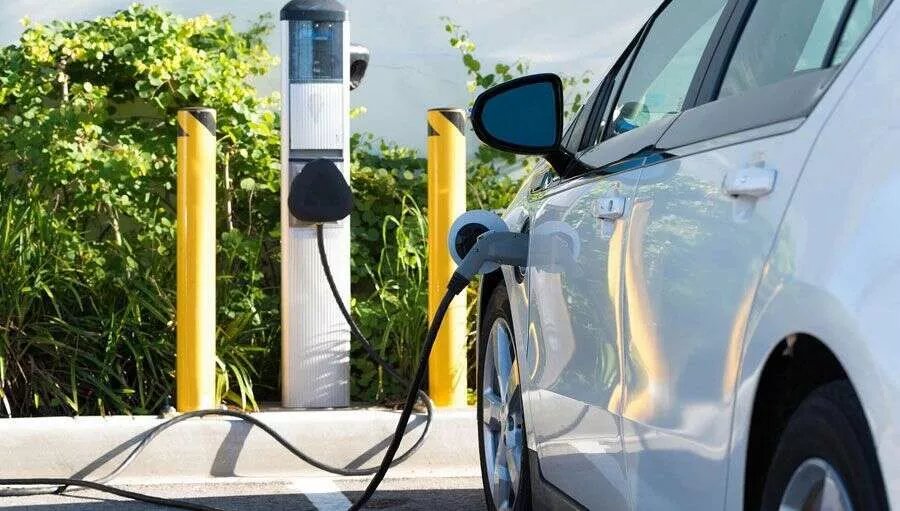
The Transport Ministry plans to install 94 fast charging points for electric vehicles by 2028 at an estimated cost of 10 million euros, aiming to cover the entire road network. The plan includes 76 points for light vehicles, each with a capacity of 150 kW, and 18 for heavy vehicles, of which 12 will have 350 kW and six 200 kW.
Transport Minister Evanthia Tsolaki set out the plan in a reply dated 7 October 2026 to Larnaca parliament member Prodromos Alambritis.
The points will be spread across ten charging sites for light vehicles and three for heavy vehicles. Besides the urban centres of Nicosia, Larnaca and Limassol, the sites selected are Alambra, Kofinou, Evrychou, Saittas, Mandria in Paphos, Polis Chrysochous and Paralimni.
Sixteen light-vehicle points are scheduled for 2026, followed by another 48 light-vehicle points and 12 heavy-vehicle points in 2027. The rest will be installed in 2028. Funding for the 2026 and 2027 infrastructure has been included in the budget of the Electrical and Mechanical Services Department, the minister said.
Existing network
There are currently 384 publicly accessible charging points at 221 stations in Cyprus, according to the Electrical and Mechanical Services Department. Of the stations, 76 are in Nicosia, 57 in Limassol, 32 in Paphos, 29 in Larnaca and 27 in Famagusta.
Ten fast charging stations have already been installed in publicly accessible places under the Recovery and Resilience Plan, at a total cost of 840,660 euros including VAT and five years’ maintenance. Five are in the car parks of the general hospitals in Nicosia, Larnaca, Limassol, Kyperounta and Famagusta. The others are at Troodos Square, the Choirokoitia archaeological site, Trimiklini, the ‘Tombs of the Kings’ bus station in Paphos and the Polis Chrysochous bus station.
A separate 100 kW fast charging station, able to serve two vehicles at once, was installed at the Kato Pyrgos fishing shelter as part of efforts to revitalise Tillyria and turn Kato Pyrgos into a ‘green community’. It cost 77,000 euros, including VAT and five years’ maintenance.
Under the ‘Electromobility with 1000’ grant scheme, 212 charging points were installed between 2022 and 2026 in publicly accessible places, at businesses and at local authorities.
Tsolaki said promoting electric vehicles also requires private charging points at homes and businesses, which can use energy from photovoltaic systems. She left open the possibility of further infrastructure, depending on needs and market developments.
Information from Cyprus News Agency

