


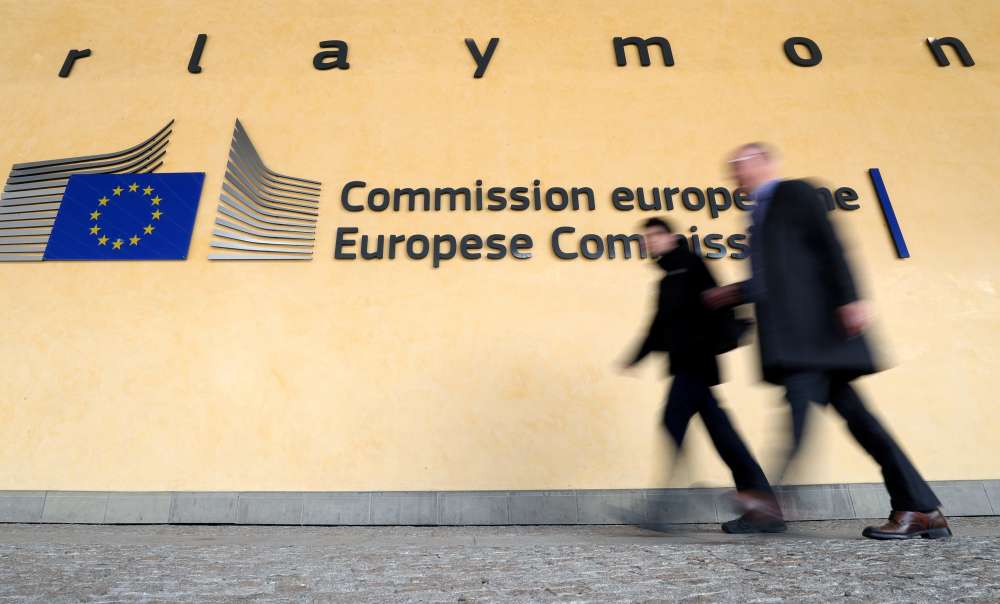
European leaders left the first day of their Brussels summit without a breakthrough on the EU’s next long-term budget, exposing deep divisions over spending, energy costs and how aggressively the bloc should defend its industries against China.
The meeting on Thursday was supposed to move the European Union closer to a deal on its 2028–2034 budget. Instead, national leaders stuck to their competing demands, leaving European Council President António Costa to take charge of negotiations and prepare a fresh compromise in the coming weeks.
The impasse threatens the ambition of securing an agreement by the end of the year, a deadline intended to leave enough time for legislation to be completed before the next budget cycle begins in January 2028. Euronews reported that several leaders openly questioned whether that timetable remained realistic.
A budget nobody likes
Essentially the central fight is over how much the EU should spend and who should pay.
Ireland, which holds the rotating presidency of the Council of the EU, has put forward a negotiating proposal worth approximately €1.62 trillion. That is €141 billion below the European Commission’s original proposal, with cuts affecting several areas of future EU investment.
The plan has satisfied neither camp. The fiscally conservative member states want a smaller budget and tighter spending discipline, while the so-called Friends of Cohesion, a group of 17 countries, argue that reductions risk undermining support for agriculture and less-developed regions.
Germany’s Chancellor Friedrich Merz called for substantial cuts, arguing that member states could not afford the contributions implied by a larger common budget. Meanwhile, European Commission officials have warned that reducing the resources available to the bloc could undermine its capacity to meet new strategic priorities.
The dispute extends beyond the overall spending ceiling to the question of how the EU should raise revenue. Proposals for new European-level taxes remain contentious, complicating efforts to balance the books.
Costa now faces the task of bridging those differences before a special budget summit scheduled for November 26.
Cyprus makes its case on energy and EU funding
Cyprus President Nikos Christodoulides used the Brussels summit to press for concessions on energy costs and protect funding for agriculture and poorer regions, positioning Nicosia as a supporter of EU reform without sacrificing existing priorities.
Arriving on Thursday, Christodoulides called for greater flexibility in national measures to ease energy bills and a further suspension of the EU’s emissions-trading system, arguing that households and businesses needed immediate relief. He also urged leaders to reach a political agreement on the EU’s 2028–2034 budget by the end of the year, warning that delays would send a negative signal to citizens and international partners.
On the budget, he welcomed the latest negotiating proposal but made clear that increased spending on defence, competitiveness and migration should not come at the expense of the Common Agricultural Policy or cohesion funding.
Christodoulides also raised the strategic importance of the Greece–Cyprus electricity interconnector, amid tensions with Turkey, and offered Cyprus as a potential operational hub for an EU mission supporting Lebanon. On the domestic front, he pointed to December as a potential milestone for decisions on Cyprus’s accession to the Schengen area.
Energy costs put pressure on Brussels
The budget battle unfolded against mounting pressure on governments to tackle soaring energy prices.
Higher oil and gas costs, driven in part by instability in the Middle East, have intensified concerns about household bills and industrial competitiveness just as European businesses face growing international competition.
Italy and Greece have pushed for temporary, targeted relief measures and greater fiscal flexibility, but governments remain divided over how far public spending should go to cushion the shock without encouraging additional fossil-fuel consumption or undermining the green transition.
The Commission has signalled willingness to consider temporary state-aid support for exposed industries and measures to improve refinery capacity. Leaders also discussed ways to reduce energy-price volatility while preserving incentives for investment in cleaner energy.
China becomes a competitiveness test
Trade with China provided another test of the bloc’s ability to act collectively.
The EU’s goods trade deficit with Beijing reached approximately €360 billion in 2025, fuelling calls for stronger protection against imports that European industries consider unfairly competitive.
A recent agreement on Chinese hybrid-car exports has offered a potential opening for negotiations, but leaders are pressing the Commission to pursue further results and consider additional trade-defence measures.
The debate reflects a broader tension in European economic policy since leaders want to strengthen domestic manufacturing and reduce strategic dependencies, but tougher trade restrictions could risk retaliation and further strain commercial relations with Beijing.
The summit’s economic discussions also highlighted the connection between competitiveness and the next EU budget since governments must decide how to finance priorities such as research, industrial investment and security while disagreeing over the size of the common spending pot.
The political stakes
Thursday’s discussions exposed the limits of the EU’s consensus-driven approach at a time when leaders face pressure to deliver faster, more tangible results.
The European Parliament has also signalled that it will not simply endorse a budget negotiated by national governments with President Roberta Metsola insisting that lawmakers’ priorities must be taken seriously, adding another institutional hurdle to an already difficult negotiation.
The summit continues Friday, with Ukraine, European defence and security, migration and the Middle East on the agenda.
(Sources: European Parliament, European Council, Reuters, Euronews)
Read more:

