


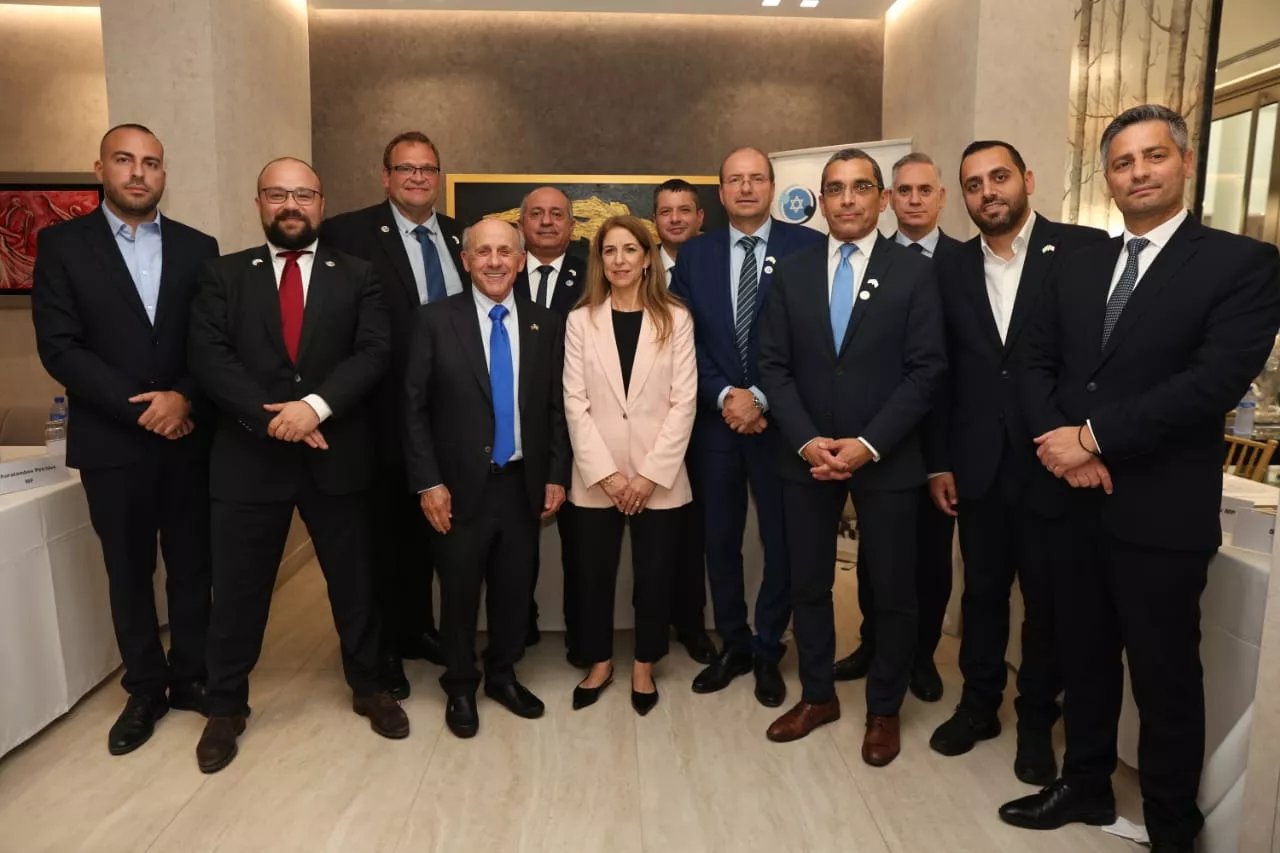
AKEL accused DISY, DIKO and ELAM of turning parliament into a lobby for Israel’s interests, after the three parties formed a parliamentary group in cooperation with the Israel Allies Foundation. DISY hit back, saying Cyprus’s international partnerships did not need the left-wing party’s permission.
For AKEL, any Cypriot attempt to cooperate with Israel or Jewish organisations is a casus belli. Its reaction to the right-wing alliance of government and parliament over cooperation with Israel was to be expected, as were the strong tone and language of its statement, which tied every such move to support for the Netanyahu government.
AKEL said the formation of the group and the creation of a Cypriot branch of Transatlantic Friends of Israel (TFI) were extremely provocative. In effect, it said, a lobby promoting a foreign country’s interests was being organised inside parliament, which it described as unprecedented in Cyprus.
The party said that while even Israel’s traditional Western allies were imposing sanctions on members of the Netanyahu government and pushing measures against illegal settlements, the Christodoulides government and the DISY, DIKO and ELAM alliance were stepping up political support for Israel.
No permission needed from AKEL
DISY took the criticism personally and replied in an equally strong tone. It said strengthening ties with Israel was a strategic choice and backed its parliament members’ participation in such initiatives. It said DISY would not apologise for seeking a stronger Cyprus, adding that it was AKEL that should apologise for wanting Cyprus isolated because it could not stand the country’s Western orientation.
Responding to AKEL’s description of a “foreign interests lobby”, DISY said a country under Turkish occupation needed strong international support and a presence where decisions affecting it were made.
The Palestinians
AKEL, which leads protests against Israel and in support of the Palestinians, said Cyprus could not seek justice for its own people while becoming politically complicit in injustice against another people.
DISY rejected what it called the false dilemma that supporting the Palestinian people required limiting international cooperation. “Should we find ourselves on the same side as Hamas, Hezbollah, Iran and Turkey?” it asked AKEL. Cyprus’s security and international standing were too serious to be subordinated to AKEL’s ideological obsessions, DISY said.
The Turkey comparison
AKEL asked how Cyprus could credibly demand pressure on Turkey while politically supporting “another occupying and settler state”. Occupation, settlement and breaches of international law could not be judged according to who committed them, it said, adding that consistently defending international law was a matter of principle and a condition of credibility in the struggle for freedom and reunification.
In a further statement responding to DISY, AKEL asked how hard it was for DISY to say even a word in support of international law when Israel’s interests were at stake. It also asked whether DISY, in accusing AKEL of ideological obsessions for condemning what it called Israel’s genocidal policy, would say the same of the United Nations and of countries such as France, Spain and Canada, which it said had found the courage to condemn what was happening in Palestine.
Solidarity against Turkish threats
In Israel, the setting up of parliamentary cooperation groups with the Israel Allies Foundation in Cyprus and Greece has been presented as strengthening trilateral cooperation and as a response to Turkish threats.
The Jerusalem Post quoted the foundation’s European executive director, Leo van Doesburg, as saying Turkish threats should be met with solidarity, not silence, and that Ankara had no veto over the partners’ cooperation or security. He said the new groups would help turn commitments to cooperation into parliamentary action.
The foundation’s president, Josh Reinstein, described the initiatives as a bridge between lawmakers who believe that the security of Israel and of the free world depends on strong alliances based on shared Judeo-Christian values.

