


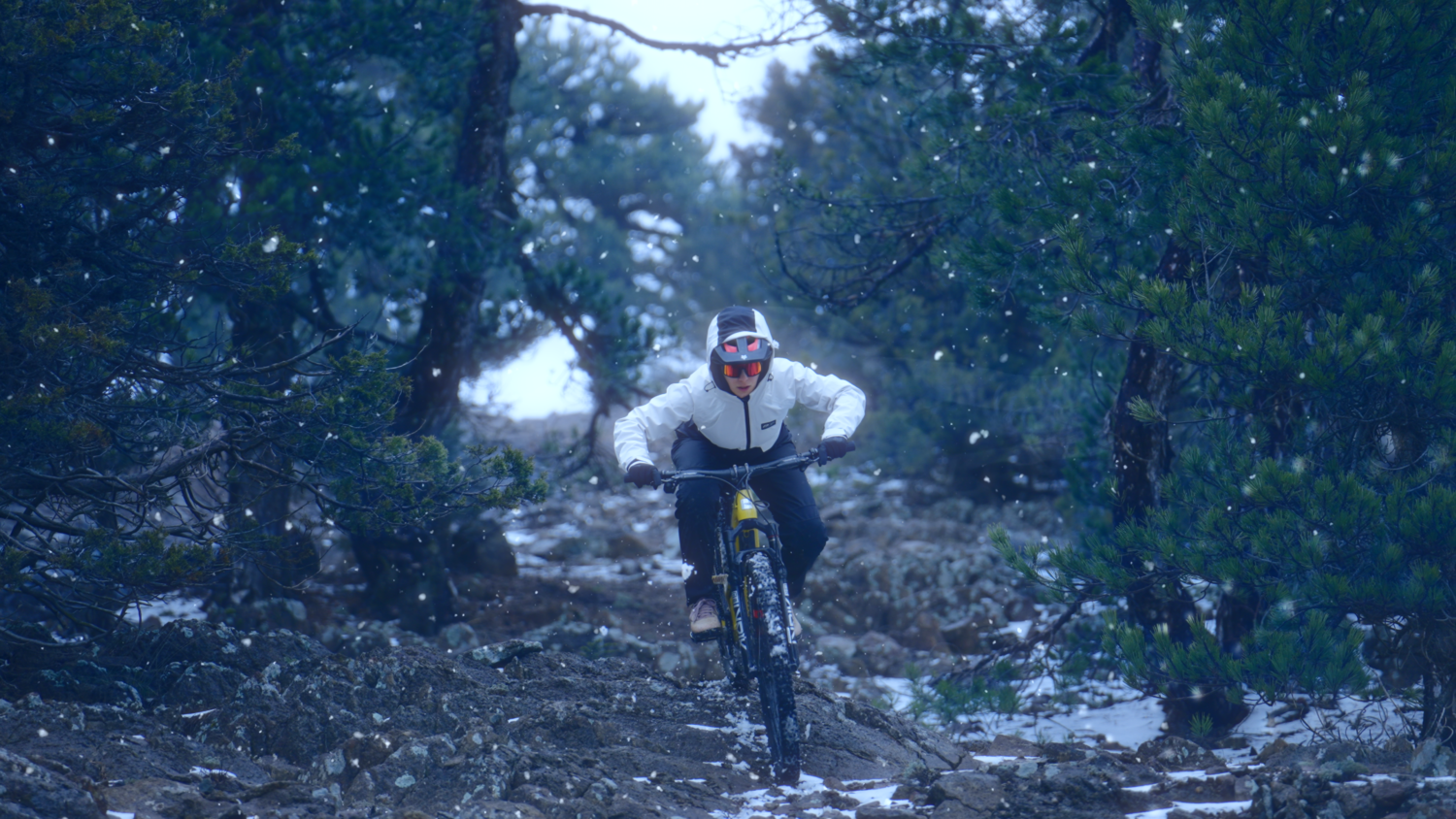
Savvina Koulle was sliding across the ice with little control over where she would end up.
When she finally came to a stop during the Mountain of Hell race, she realised she was all right. She went back for her bike.
“Giving up never crossed my mind. My only thought was to get back up, get on my bike and finish the race,” the Cypriot mountain biker says.
Koulle did more than finish. She went on to take first place in the women’s E-Bike category at Mountain of Hell, one of the world’s most demanding mass-start mountain bike races.
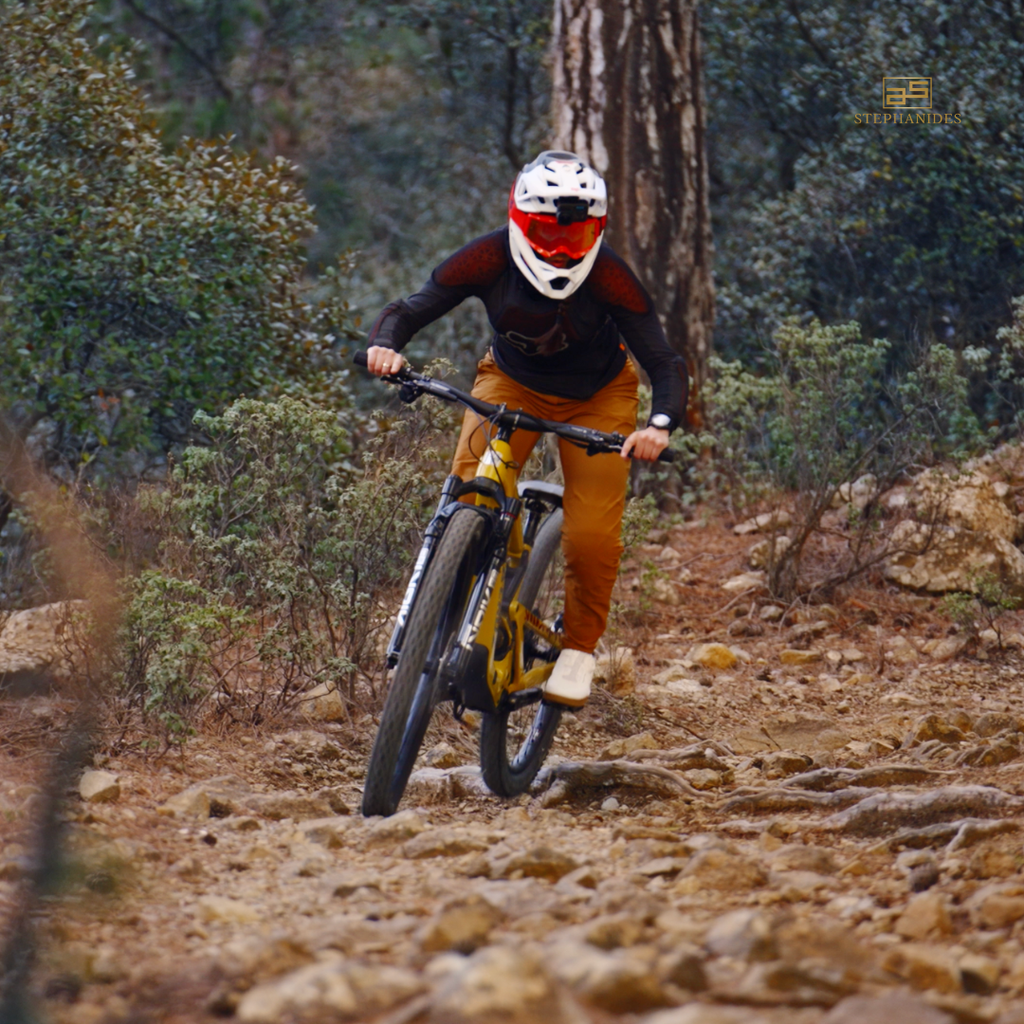
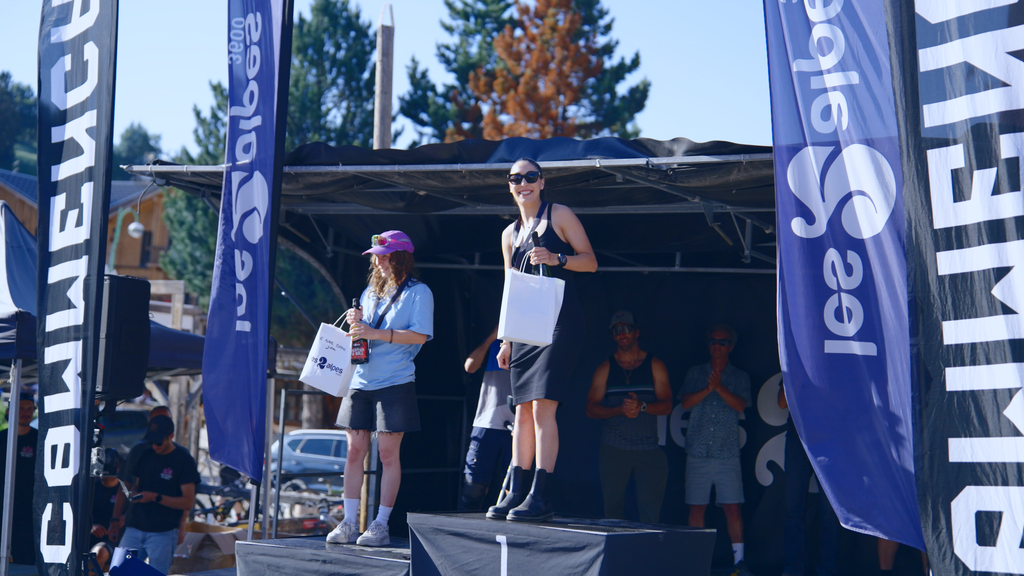
It was a result she would repeat a year later. In 2025, Koulle became the first woman from Cyprus or Greece to compete in Mountain of Hell, winning the women’s E-Bike category that year and again in 2026.
But for Koulle, the moment on the ice has come to represent something larger than a race result.
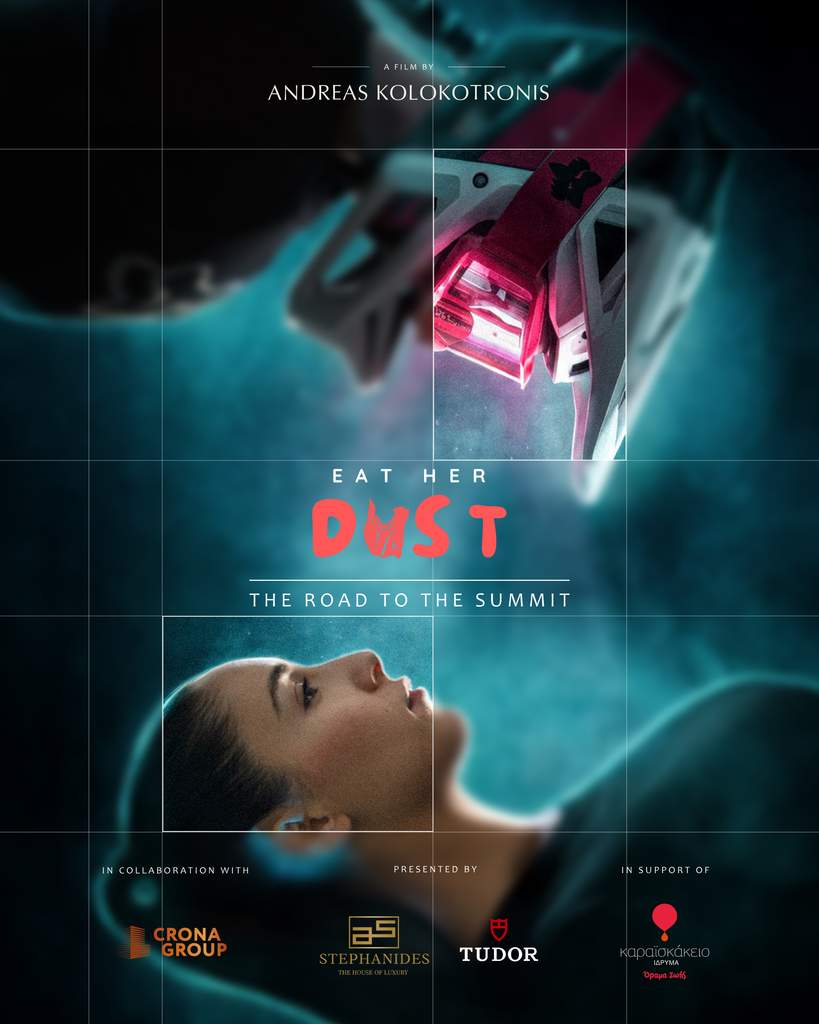
That fall — and the instinct to get back up — lies at the heart of Everybody Falls: The Road to the Summit, a documentary following her journey and carrying a message she has increasingly sought to take beyond mountain biking.
“Everybody falls. What defines us is who gets back up.”
The documentary will premiere on 11 November at Premier Cinemas at Nicosia Mall, with all net proceeds going to the Karaiskakio Foundation.
For Koulle, however, getting to that point began long before Mountain of Hell.
Learning what fear means
Nature and adrenaline were what first drew her towards mountain biking.
“I’ve always loved nature and adrenaline, so mountain biking gave me exactly what I was looking for,” she says. “I really enjoyed enduro and downhill, and the more I rode, the more I wanted to challenge myself.”
Fear was part of the process from the beginning.
Rather than seeing it as something that had to disappear, Koulle gradually learned to understand it through training.
“Something that seemed very difficult would become easier with practice, and that gave me confidence to keep going,” she says.
“I still feel fear, but I’ve learned to understand it better and recognise when I need more practice before trying something.”
That approach eventually brought her to Mountain of Hell.
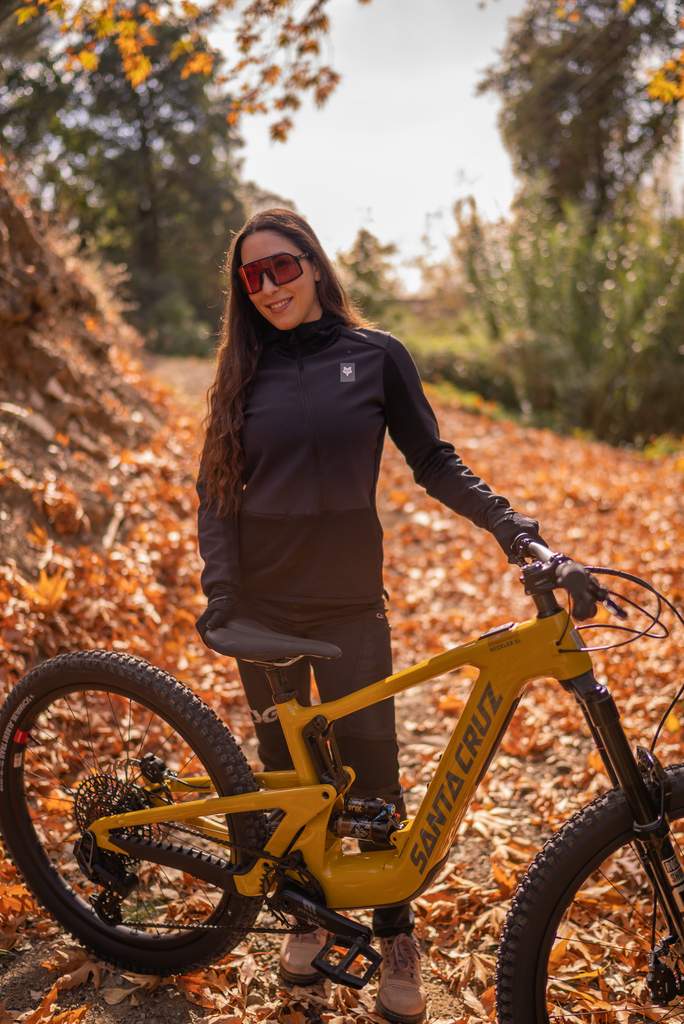
The race offered precisely the combination that had attracted her to the sport in the first place: intensity, uncertainty and the possibility of testing how far preparation could take her.
“I wanted to challenge myself even more and see what I could do with the right preparation,” she says.
“Mountain of Hell had everything I loved about the sport, but on a much bigger scale. Just thinking about the race made me excited and nervous at the same time.”
Her objective going into it was straightforward.
“My main goal was to get there, give my best and cross the finish line.”
There was another dimension too. As the first woman from Cyprus or Greece to take part, representing Cyprus gave the experience additional meaning.
Koulle also hoped that her participation could encourage other women to consider a sport in which female riders remain a small minority.
“I hoped that seeing me take part would encourage other women to try mountain biking and give themselves a chance to discover what they can do.”
‘It can make it harder to feel that you belong’
“There are very few women doing downhill in Cyprus, so I didn’t see many women around me in the sport,” she says.
“That can make it harder to feel that you belong, especially when you are just starting.”
Rather than simply accepting that reality, she says it became part of her motivation to change it.
It was one of the reasons behind Eat Her Dust, the platform she created to share her own experience and encourage more women to try mountain biking.
She also organises mountain biking days and events, particularly for women, aimed at giving people the opportunity to try the sport, build confidence and push themselves beyond what they might initially think possible.
The response she values most is not necessarily tied to races or podiums.
“When someone tells me that something I shared encouraged them to start riding or helped them believe in themselves enough to achieve a goal, it means so much to me,” Koulle says.
“It could be a woman, a child or anyone. Those messages are what keep me going.”
That attempt to make mountain biking feel more accessible sits alongside her work as a content creator and her presentations to young people in schools.
The message remains much the same: mistakes and setbacks are not the end of the process.
“Making mistakes is part of learning, and we all need the chance to try again.”
Leaving the nine-to-five behind
The race results are the most visible part of Koulle’s story, but she points to a quieter decision as one of the most defining chapters of her life.
She left her nine-to-five job and moved from the city centre to Platres.
It was a decision to give both mountain biking and content creation a larger place in her everyday life.
“My whole routine changed,” she says. “I had to organise my work and training differently, and nature became part of my everyday life.”
Living closer to the mountains gave her more opportunities to ride and allowed her to approach the sport more seriously.
But she describes the move as more than a logistical decision.
“It also made me think more about how I wanted to spend my time and what was important to me.”
The change is largely invisible in the images people see from races.
“People usually see the races and the results, but those changes were a big part of what made all of this possible,” she says. “For me, choosing to build that life was a very important personal decision.”
It also meant accepting uncertainty.
Koulle does not present resilience as an absence of doubt, or as an ability to simply push through every obstacle.
“I still have doubts, and I don’t always know what to do next,” she says.
Instead, she tries to stop one mistake or difficult day from defining everything that follows.
“I try to remember that one bad day or one mistake doesn’t mean everything has gone wrong.”
The same thinking now runs through her training, work and the projects she is developing.
“Things don’t always go as planned, and sometimes I need to change my approach or ask for help.”
Everybody falls
That philosophy eventually became Everybody Falls.
The project takes Koulle’s experience at Mountain of Hell and turns it into a broader story about setbacks, uncertainty and starting again.
The documentary, follows the journey towards the race, but Koulle does not see its message as being limited to people who ride bikes.
“I hope people watching it will find something they can relate to in their own lives,” she says.
The initiative also has a charitable purpose, with all net proceeds from the documentary going towards the work of the Karaiskakio Foundation.
For Koulle, the connection between the documentary’s message and the race itself could hardly be more literal.
During that icy descent at Mountain of Hell, there was no carefully formulated philosophy running through her mind. There was the fall, the uncertainty of the slide and, once she realised she was unhurt, a bike waiting further back on the mountain.
She went to get it. “I had worked so hard to be there, and I really wanted to cross that finish line.”
The result was a first-place finish. But the lesson she carried away from the mountain was simpler than the result: Get back up and try again.
Read more:

