


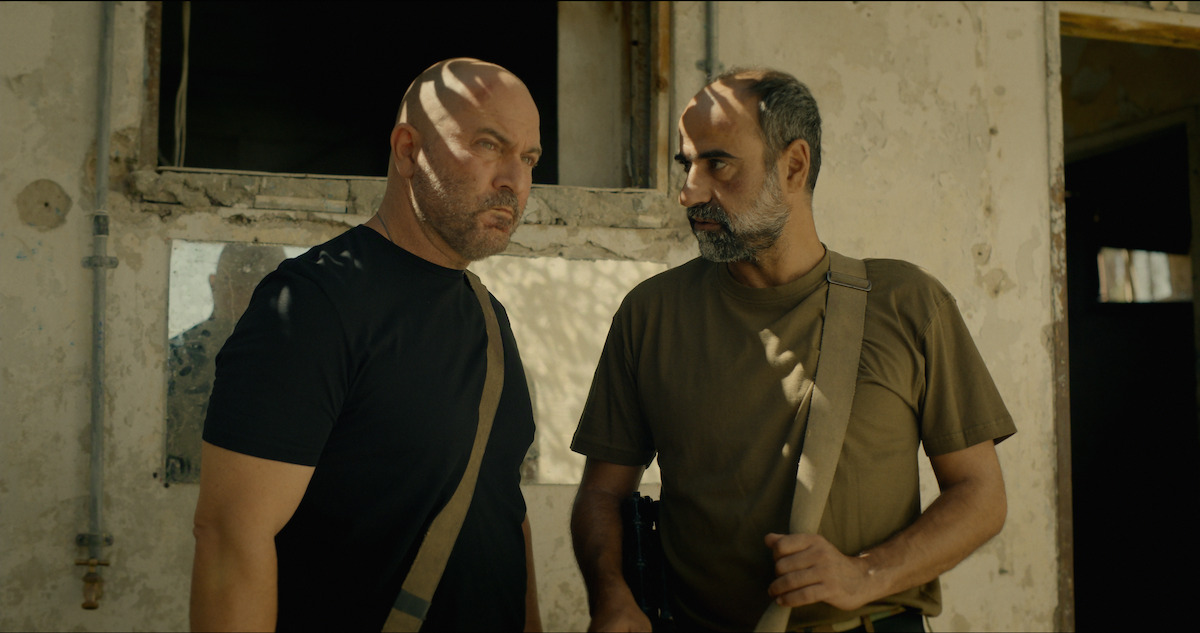
The producer of Fauda οn the season that had to be rewritten after October 7, the testimonies behind the fiction, the responsibility owed to victims’ families, and the response to the series far beyond Israel’s borders – even in Arab countries.
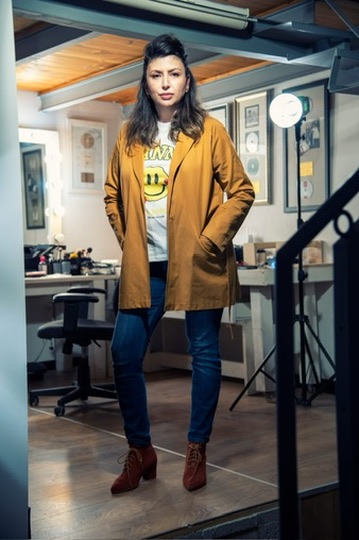
Before they could rewrite Fauda, Liat Benasuly Amit recalls, they first had to find a way to work again. She begins her account with the period immediately after October 7. “For the first three months, we basically didn’t work. We were numb.”
Television had been pushed aside. Members of the production team and artists traveled south, seeking ways to help. At that stage, there was no discussion about how what had happened might somehow be incorporated into a television series.
“We said: this is not the time to talk about television.”
Around six months before the attack, the producer of the Israeli television phenomenon recounts, the team had already mapped out the direction of the fifth season. The material was not yet ready to shoot, but broadly speaking they believed they had found their story.
“We thought we had our fifth season,” she says.
When they eventually returned to the writers’ room, however, they realised that certainty no longer existed. In its place was another: October 7 could not simply be ignored.
They approached Yes Studios, where the series is developed in Israel before reaching Netflix. The discussion was not about making a few adjustments to the plot. It was about reconsidering the starting point of the entire season.
“We threw everything away and started again.”
TELEVISION, NOT HASBARA
What followed was a year of work. Liat Benasuly Amit does not hesitate when I ask whether this was the most important season of Fauda, and, more specifically, what came first for the production: entertainment, testimony, or the desire to help the outside world understand the Israeli experience of that day.
“We make television. We don’t do hasbara,” she replies, drawing a clear distinction between creating a television series and engaging in advocacy on Israel’s behalf. “But it was important for us to tell our story. We felt this was the most important story we had to tell.”
For her and the rest of the creative team, part of the urgency stemmed from how quickly the international conversation had shifted toward Israel’s actions in Gaza. They felt their own experience was being forgotten before it had even been understood.
“All of us know someone who was there,” she says.
The gap between what they themselves were living through and what was reaching audiences abroad only reinforced their sense that the story had to be told.
And she is keen to make one thing clear again. “I am not defending this government. This government in particular, no. You will not hear that from me,” she stresses.
What she describes is a responsibility they felt as Israelis and as human beings, not as spokespeople for a political position. Their job, she insists, was to create.
“In culture, you don’t tell people what to think. You want them to feel what you feel.” That, she says, is how she understands the role of art.
She also details responses from individuals who are neither Israeli nor Jewish and lack any specific ties to Israel or the Jewish people.
“People tell us: ‘We didn’t know this happened. We had no idea.’”
For Liat Benasuly Amit, reactions like these confirm how important it was to tell the story.
And Fauda already possessed something particularly valuable: characters with whom viewers in very different countries had formed a bond. The creators wanted to convey their experience through those characters. They were not, she explains, beginning an entirely new relationship with their audience.
BACK TO OCTOBER 7
Returning to the day of the attack itself, however, was not initially part of the production’s plan. The new storyline was set two years after October 7. Then the head writer suggested going back. “No, no. It’s too difficult. Nobody wants to watch that,” she recalls as their initial reaction.
The idea of asking Israeli viewers to relive their trauma made the decision especially difficult.
She speaks of the exhaustion that trauma produces. But the discussion could not end with that initial refusal. The more they talked, she says, the more necessary a return to October 7 felt. Eventually they concluded that telling the story of that day was too important to avoid. That decision produced two episodes in the season that return directly to October 7.
“I am very proud that we made that decision,” she says. And her account brings together two very different relationships with the same story: the person abroad who says they had no idea what happened, and the person in Israel who cannot bear to return to what they lived through.
The need to convey the Israeli experience to audiences overseas existed alongside concern for viewers at home. Deciding to make the episodes did not make the process any easier.
NONE OF THEM — AND ALL OF THEM
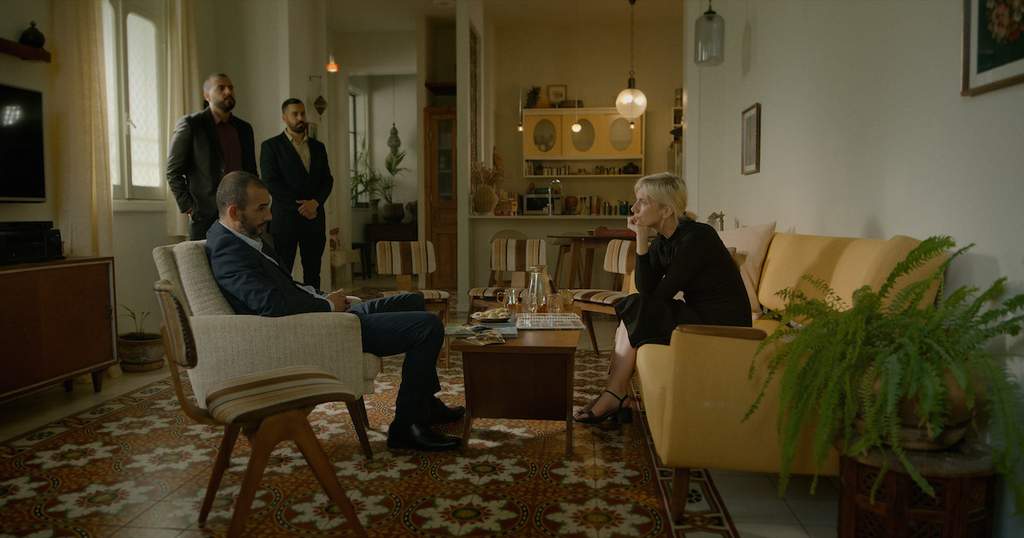
In episodes seven and eight, which deal directly with October 7, the difficulty was not only what to show, but whose story to tell.
I ask where they drew the line between testimony and television drama. “We discussed it constantly,” she acknowledges.
And in the end? They did not take the experience of one woman or one family and turn it directly into a script. Instead, she explains, they listened to perhaps more than a thousand stories and combined elements from them. In one sentence: “It is all true, but it is all fiction.”
The stories in the series were therefore constructed from real events without reproducing individual lives one by one. “We didn’t want any family in Israel to feel that we had taken their story. It is something so personal.” Fidelity to what happened and respect for individual privacy were the two principles they tried to hold together.
“So we took elements from all those stories,” the producer of Fauda continues.
One detail from one account, another from the next. The final narrative does not correspond to the experience of one particular family, yet, she stresses, it remains rooted in real events.
Indeed, she adds, far worse things happened in reality.
Having seen the series, as well as material from the actual events that was never made public, I can not only confirm what she says, but add that “far worse” borders on euphemism in this case.
THE HOSTAGES
When it came to the hostages, there was an additional difficulty: while the season was being written, nobody knew how the real-life story would end. The team was frequently asked why the subject had not been addressed more directly. Explaining their thinking at the time, Benasuly Amit says: “As long as the hostages were still there, we said we couldn’t touch it. It was too sensitive and too important.”
They did not know whether the hostages would have returned by the time the series reached the screen, or what might have happened to them. Nor does she present how the issue was handled as beyond criticism. “I hope we dealt with it sensitively and responsibly,” she says. The question of what comes next remains. Will Fauda continue on television? Could there be a film? Or does the fifth season close the circle?
The Israeli producer is not announcing a sixth season or a movie.
“Right now, I don’t know. We are discussing it among ourselves.”
The desire to continue is there, she says, but no more than that.
For any future season, the central criterion would still be the same: the story itself.
“There has to be a story we want to tell.”
ARAB AUDIENCES AND ISRAELI PAIN
I ask Liat Benasuly Amit about the response in Arab countries, particularly Lebanon, where the series topped Netflix. It also ranks highly in several other Arab countries.
How does such a deeply personal portrayal of Israeli pain attract Arab viewers?
She replies that she thinks the initial attraction comes from curiosity. “Then they see the drama, they see the characters they love, and they go with the story.”
She is fascinated by television’s ability to create that kind of connection. And she does not equate relations between governments with the feelings of ordinary people. “I’m not sure the Lebanese hate us. And I don’t think Israelis hate the Lebanese either.”
What moved her even more, however, was the response in Europe. She describes the hostile climate towards Israel and the concern that this might drive viewers away. “I thought that perhaps after October 7 they wouldn’t want to watch it anymore.” The series was Israeli. Its creators were Israeli. Its perspective was Israeli. That made its continuing reception abroad especially significant to her.
Why? “A good, truthful story that comes from the heart resonates everywhere,” she tells me.
When I raise criticism that Palestinian characters in this season are portrayed with fewer shades of complexity than in earlier seasons, she responds candidly. “They may be right.”
“We are not saying that October 7 did not affect us as Israelis,” she adds, acknowledging the difficulty of portraying the same degree of complexity that the series had sought in its first four seasons. “I can understand that criticism,” she repeats.
At the same time, she points out that Fauda has always portrayed Palestinian characters as human beings with emotions, people who love their wives and have lives of their own. She believes that remains true in Fauda. For example, she mentions a character who married in France and started a new life.
“But there is also the past,” she adds. And her answer makes no attempt to distance itself from the shared experience, the collective trauma inflicted on her country by the October 7 atrocities. “We don’t apologise for that,” she says. “We are Israelis.”

