


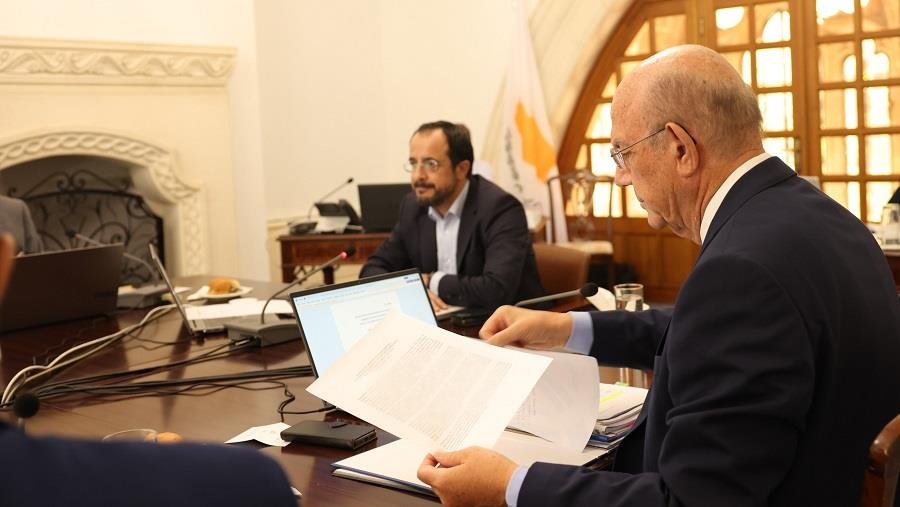
Cyprus’s 2027 state budget forecasts a fiscal surplus despite pressure from the wars in Ukraine and the Middle East. It is ready to go before Cabinet on Wednesday, 16 September, when Finance Minister Makis Keravnos will submit it for approval. The government aims to bring the budget before the House plenary by 2 October. If the timetable holds, debate would open on 12 October with the minister’s traditional presentation.
The budget follows the roadmap set out in the Strategic Fiscal Policy Framework 2027-2029, which prioritises fiscal stability, strengthening the economy’s resilience, and growth. It arrives at a time marked by prolonged uncertainty from geopolitical tensions, along with challenges linked to energy security and digital transformation.
Fiscal stability
The wars have forced the government’s economic team to narrow its focus to the short term, aiming to limit the impact on the Cypriot economy. Stability remains the top priority of the fiscal strategy, even though state finances are in surplus.
According to the Fiscal Policy Plan’s forecasts for 2027-2029, economic growth may reach 2.9%, harmonised inflation 2.5%, unemployment 4.5%, and the fiscal balance a surplus of 2.8%. Public debt is forecast to fall to 46.8% of GDP.
Revenue
State revenue is expected to reach €16.9 billion in 2027, up 2.6%, with the bulk coming from consumption taxes and VAT, as well as income and wealth taxation. The pace of revenue growth is expected to slow, though final figures will only be confirmed after the Cabinet meeting.
Projected 2027 revenue:
- Taxes on production and exports: €5.25 billion
- Taxes on income and wealth: €4.35 billion
- Social insurance contributions: €5.3 billion
- Income from interest, dividends and shares: €169 million
- Other revenue (services, EU funds): €1.8 billion
- Total: €16.9 billion
Figures are drawn from the Strategic Fiscal Policy Framework 2027-2029. Slight variations are possible in the final budget proposal.
Expenditure
General government expenditure is set to rise by about €200 million in 2027, reaching €15.8 billion, based on the strategic framework rather than the final budget text. Social benefits remain the largest item of state spending, followed by the state payroll at around €4.4 billion.
Projected 2027 expenditure:
- State payroll: €4.4 billion
- Intermediate consumption (electricity, fuel, consumables, building maintenance, etc.): €1.8 billion
- Social benefits: €6.3 billion
- Interest payments: €524 million
- Subsidies: €125 million
- Gross fixed capital investment (roads, infrastructure, schools, equipment): €1.4 billion
- Other: €1.4 billion
- Total: €15.8 billion
As set out in the Strategic Fiscal Policy Framework 2027-2029. Slight variations are possible in the final budget proposal.
Ministry spending ceilings
Ministries had their 2027 spending limits set last May, before the budget was drawn up, to keep expenditure under control and within the state’s fiscal capacity. The Finance Ministry again issued strict guidance, telling ministries not to proceed with policies or commitments not already defined in the Strategic Fiscal Policy Framework, and warning that any deviation from the ceilings would put the fiscal targets at risk.
2027 ministry spending ceilings:
- Finance Ministry: €1.98 billion
- Education Ministry: €1.7 billion
- Health Ministry: €1.5 billion
- Labour Ministry: €998 million
- Defence Ministry: €889 million
- Deputy Ministry of Social Welfare: €667 million
- Transport and Works Ministry: €599 million
- Justice Ministry: €577 million
- Agriculture Ministry: €532 million
Source: Strategic Fiscal Policy Framework 2027-2029. Slight variations are possible in the final budget proposal.
The big bets
Speeding up state modernisation is among the Christodoulides government’s biggest priorities as it seeks to close out its term. Planned reforms include:
- Redesigning the management of immovable property
- Simplifying and speeding up building permits
- Local government
- The justice system
- Anti-corruption efforts
- Civil protection
Modernising the state machinery and the wider public sector is also seen as critical, with the focus mainly on containing the state payroll while implementing the government’s decision to fill permanent public-service positions to meet its ongoing staffing needs. To achieve this, the Strategic Framework calls for a study of the state payroll, an assessment of the public sector’s existing structure, and the adoption of best practices used in other countries.

