


An internationally acclaimed figure of world cinema and theatre, Fanny Ardant speaks with disarming candour, insisting she will never mistrust innocence.
It is no easy task to compress her almost mythical career into a brief introduction. She inspired and captivated François Truffaut; she has worked with directors such as Michelangelo Antonioni, Franco Zeffirelli, Alain Resnais, Ettore Scola, Sydney Pollack, François Ozon, Anne Fontaine, Claude Lelouch and Roman Polanski; she has portrayed Maria Callas both on screen and on stage; she has been honoured with a César Award, a Silver Bear and numerous other distinctions. Celebrated, admired and revered, she now encounters something more stripped back in Cassandra, Michael Jarrell’s spoken opera — a lone voice in the desert.
Nine years after her unforgettable appearance at Paphos Castle — etched in the memory of those who witnessed it — Ardant returns to Cyprus to meet audiences once more, embracing a complex and tragic role she describes as a forest both familiar and dangerous, and like returning to a great love. The arrival of the emblematic French actress in Limassol forms part of the 3rd Cyprus International Theatre Festival. An open discussion will follow the performance.
You have returned to Cassandre repeatedly over the years. What happens to a text when you encounter it again and again?
It is like a love affair outside marriage.
When I first heard Cassandre by Michael Jarrell one day on classical radio in Paris, I loved it immediately. I knew I wanted to speak those words with that music. I realised I must never abandon the desire to perform Cassandra.
I presented it at the Festival d’Avignon with director Hervé Loichemol, in Paris, in Athens. I performed it in concert version, as an oratorio, with different orchestras. And each time I felt the same love in speaking those words.
The text does not change. It retains the same strength. And I keep the same joy and the same desire to tell it.
What I love, I love forever. And when I am invited to return to it, if I am free, I always say yes.
Many artists resist repetition. Do you see returning to a role as a risk, or as a deeper form of discovery?
I have an obsessive nature. I am always searching for the same things. Sometimes I find them, sometimes I do not.
I often say that my only luxury in life is to do what I love. I am not professional enough to perform a role I do not love. I prefer to remain in the dark, waiting for the light.
Returning to a role you have already played is like walking back, with excitement, into a forest you once knew — still mysterious, perhaps hiding new dangers.
Cassandra speaks the truth without hope of being believed. What kind of freedom exists when hope disappears?
I believe truth is always a voice in the desert. Truth does not belong to power, to money, or to the law of the strongest. It belongs to the one who seeks it.
It is a difficult path, filled with questions and doubts. Sometimes truth does not offer solutions.
Freedom belongs to those who refuse fanaticism, violence, and the fear of being different — the fear of not being accepted by society. Freedom always has a price. It is not given. It must be taken.
What does it mean, in today’s world, to embody a voice that is clear yet unwelcome?
It is always a choice whether to belong to a particular society with its rules and its way of thinking.
Belonging can mean stopping thinking, saying yes to new forces, shouting with the majority, accepting privileges: money, fame, power.
Choosing to say no brings fragility — but also freedom. Resistance always has a cost. You must accept saying goodbye to many things you once loved.
I remember a sentence by Victor Hugo: “Ceux qui vivent, ce sont ceux qui luttent.” Those who truly live are those who fight.
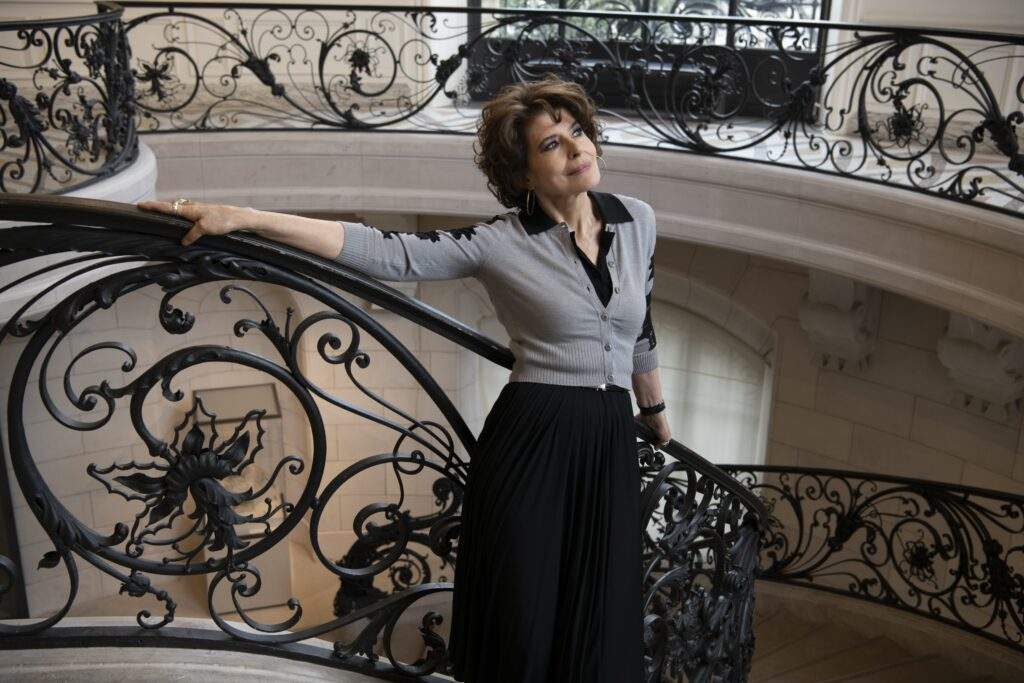
Performing a work rooted in Greek myth before a Greek-speaking audience, does that alter the emotional exchange?
It feels like a family celebration. Every member of the family knows the others — their flaws and their virtues. There are quarrels and laughter, intimacy and passionate arguments, melancholy for lost battles, and at the same time a bold conviction that Greek civilisation has given the world an eternal light.
Cassandra confronts power and pays the price. Has speaking your own truth ever demanded a similar cost?
Yes. Telling your truth always carries risk. It always has a cost. But it also gives the profound joy of freedom — and that is priceless.
As a child, I struggled with authority. I completed my university studies with a thesis titled “Surrealism and Anarchy.” Yet I grew up in a family where authority was intelligent and benevolent.
Like all precious things, freedom has a price. It must be conquered; it is never simply granted.
When the curtain falls, what do you hope the audience carries away?
A strong love for life — and the desire to resist the injunction of Surveiller et Punir.
How does solitude on stage differ from solitude in front of a camera?
Solitude on stage is like the solitude of a bull in the arena.
Solitude in cinema is like a tree in a forest, dancing in the same wind as the other trees, yet with its own music.
You have often portrayed women who refuse permission. Is that a moral position, an instinct, or something else?
It is instinct.
To ask for permission is already to accept submission to a higher authority — to a judgement superior to your own. It is to limit your possibilities, to close the door to adventure, to place your life on rails.
To ask for permission is to say yes to every order, and to risk losing your faith — or your moral compass.
Jean de La Fontaine tells the truth of this instinct in The Wolf and the Dog. It is up to you whether you choose to be the dog or the wolf.
What do you distrust more: consensus or innocence?
I do not see the link between them.
If by innocence you mean the innocence of Prince Myshkin in Dostoevsky’s The Idiot, then I understand. His innocence is full of generosity — the offered hand, love for humanity without hierarchy, forgiveness, compassion for weakness.
In that case, I will never mistrust innocence.
As for consensus, I find it a rather snobbish behaviour.
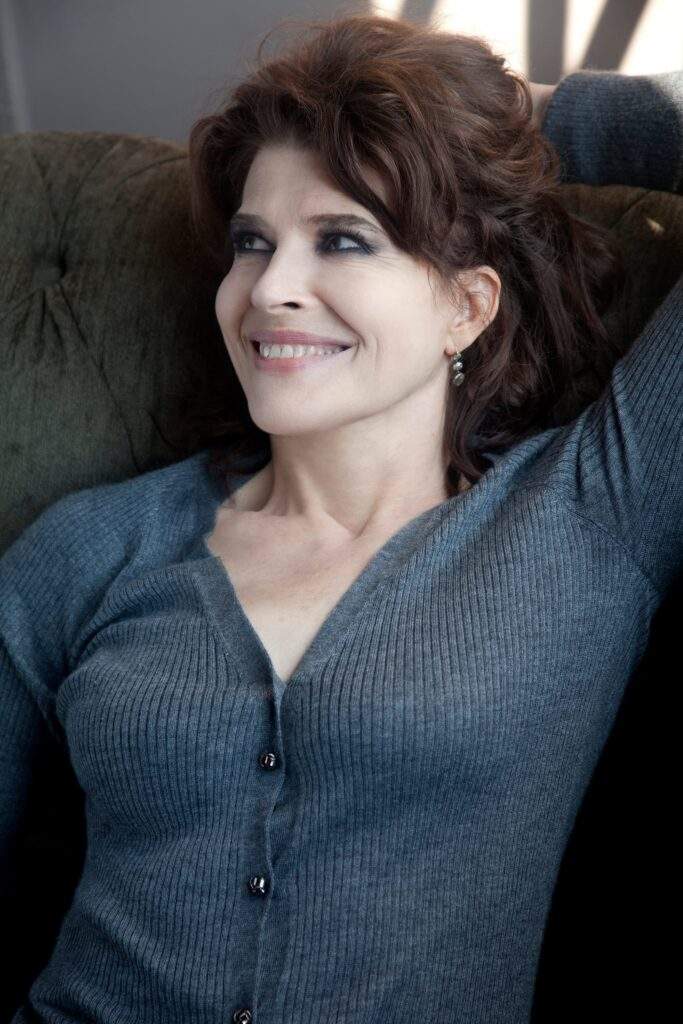
Has cinema taught you more about desire or about power?
Cinema taught me passion. I first learned it in theatre, on stage, when I began as an actress.
Have you read Letters to a Young Poet by Rainer Maria Rilke? He writes to the young poet: “You ask whether you are right to have the passion to become a poet. Ask yourself the only question that gives the answer: are you ready to die for this passion? If the answer is yes, then throw yourself into it and never ask again.”
I have loved all the actors, directors, technicians and producers who carried that passion — something that cannot be fully explained, but can be sensed and lived.
When the lights go out and filming ends, you feel a deep loneliness. Yet inside you remain all those days lived with passion — and you never forget them.
Does beauty still possess disruptive power, or has it been neutralised?
Beauty is not objective. It is entirely subjective.
Beauty only has power over the one who is completely lost before it and ready to follow its commands — if beauty even wishes to command. Perhaps it does not care for power at all.
And you forget the power of charm, which does not affect everyone in the same way.
So your question is difficult to answer.
As we grow older, do our choices become simpler or more complex?
Age simplifies everything.
You know that you will die — sooner or later. You no longer wish to waste time on what you do not love. You move towards adventures with strangers who speak other languages. You prefer insolence, freedom, risk, adventurers, outsiders.
Money, power, career — these no longer interest you. You seek only a new music you have never heard before.
It is like in a casino: “Les jeux sont faits, Mesdames et Messieurs.”
Info: The spoken opera Cassandra will be presented on Sunday, 8 March at 7pm at the Pattichion Municipal Theatre, Limassol. Tickets are available via SoldOut Tickets.
Media sponsor: Phileleftheros.

