


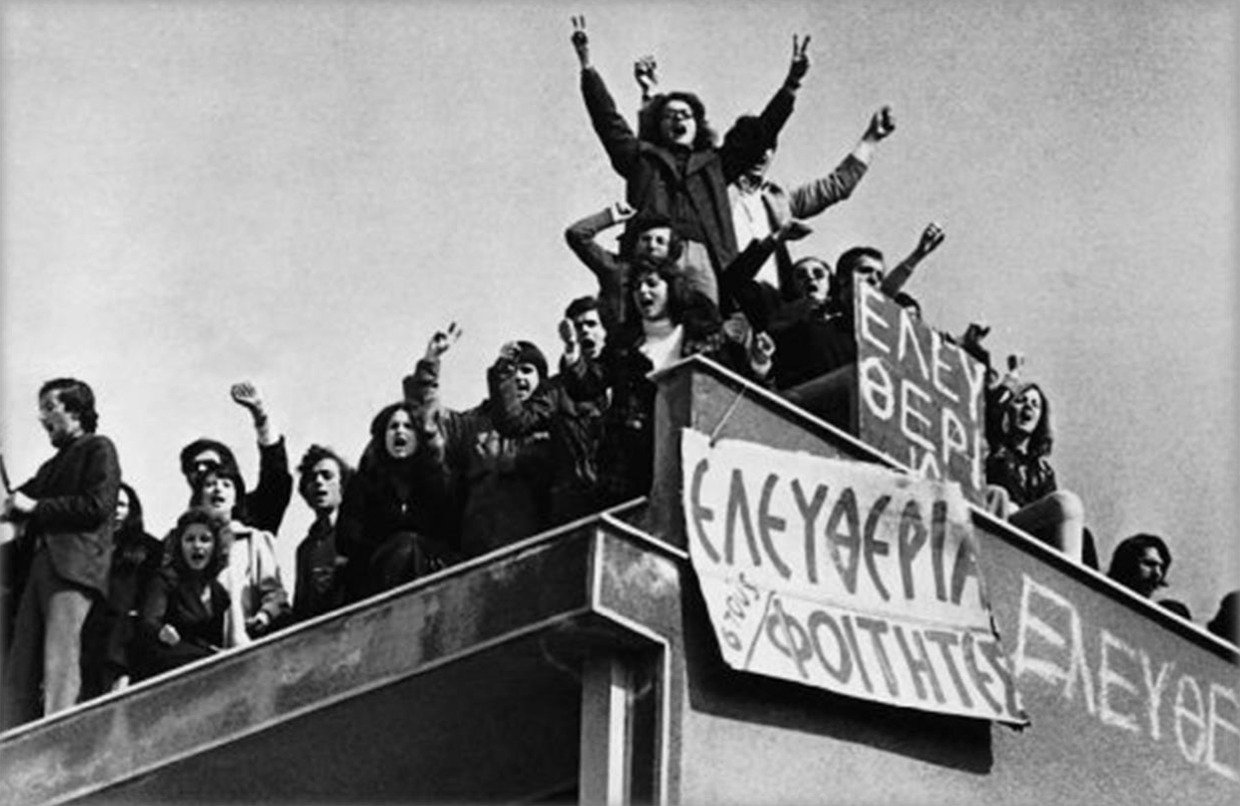
History that can be lived experience. For instance, many of us lived through the Athens Polytechnic uprising, the betrayal of Cyprus by the Greek junta’s military coup, and the subsequent Turkish invasion and occupation of Cyprus.
So we remember, we feel, we hope, we’re disappointed. We learn…
Much has been written about that critical, pivotal, fateful summer of 1974—the Turkish invasion of Cyprus, the fall of the dictatorship, and the restoration of democracy have occupied journalists and historians for decades.
These past few days, Metaichmio publishers in Greece released a hefty 878-page volume titled “Classified KYP Documents on Cyprus, July-August 1974. Annotated.” (KYP being the Greek secret services.)
It contains intelligence bulletins, rare documents, and material from the personal archive of journalist-researcher Alexis Papachelas, who provides the book’s foreword.
Tassos Sakellaropoulos*, who writes the introduction and commentary, is one of the leading historians of a younger generation who’ve been able to study this period in depth—dispassionately, without the ideological blinkers of the past.
As journalist-researcher Alexis Papachelas writes in the foreword, he analyses figures and situations from the seven-year dictatorship in vivid fashion, whilst simultaneously placing them within a broader historical framework concerning the army’s role in post-war Greece.
In the first part of this book, Tassos Sakellaropoulos examines documents declassified in November 2024 by the National Intelligence Service relating to the Turkish invasion of Cyprus and what preceded it.
Worth noting here (Papachelas points out, and this is particularly interesting) that the service leadership’s decision is commendable and opens a new chapter in how the modern Greek state—especially the security and defence services—confronts the past.
And let’s remember, he adds, that despite the extensive and systematic work done by the Hellenic Parliament and its Foundation on the Cyprus file, the bulk of Greek diplomatic archives from the 1974 crisis period remains classified.
Perhaps the time has come to declassify this material too, so it can be entrusted to researchers like Tassos Sakellaropoulos, who’ll be able to give us the final, complete picture of what actually happened back then.
*(I’m grateful to communications and strategy consultant and publisher of the #FACT news and culture newsletter, Vivian Efthymiοpoulou, for introducing me to him. I often host him on ERT’s First Programme—we’ve become friends, and I’m all the richer for it.)
To the question hanging over this column today, one answer—basically the first answer—is this: if we all read distinguished scholars and sought out reliable, documented information, our “behaviour” as citizens today would be rather different.
More mature, free of fanaticism and obsessions, more capable of making our own decisions. Instead of chasing after—and voting for, even reading—charlatans.

