


“War photographers are not meant to reach 90”, British photojournalist Don McCullin tells the Guardian in an interview. For seven decades, his lens captured moments from wars, famines and natural disasters.
During his career, he was taken prisoner, escaped snipers, mortars and other perils. How does it feel to be a survivor? “Uncomfortable,” he answers. It’s no wonder he finds solace in his studio, composing images of nature around his Somerset home.
Don McCullin is proud to have lived an adventurous life, yet he says the honours – including his knighthood in 2017 – make him feel uneasy. “I feel as if I’ve been over-rewarded, and I definitely feel uncomfortable about that, because it’s been at the expense of other people’s lives.”
He is filled with despair that, at the end of the day, the human pain and atrocities he captured in his photographs changed absolutely nothing. “Look at Ukraine. Look at Gaza. I haven’t changed a solitary thing. I mean it. I feel as if I’ve been riding on other people’s pain over the last 60 years, and their pain hasn’t helped prevent this kind of tragedy. We’ve learned nothing.”
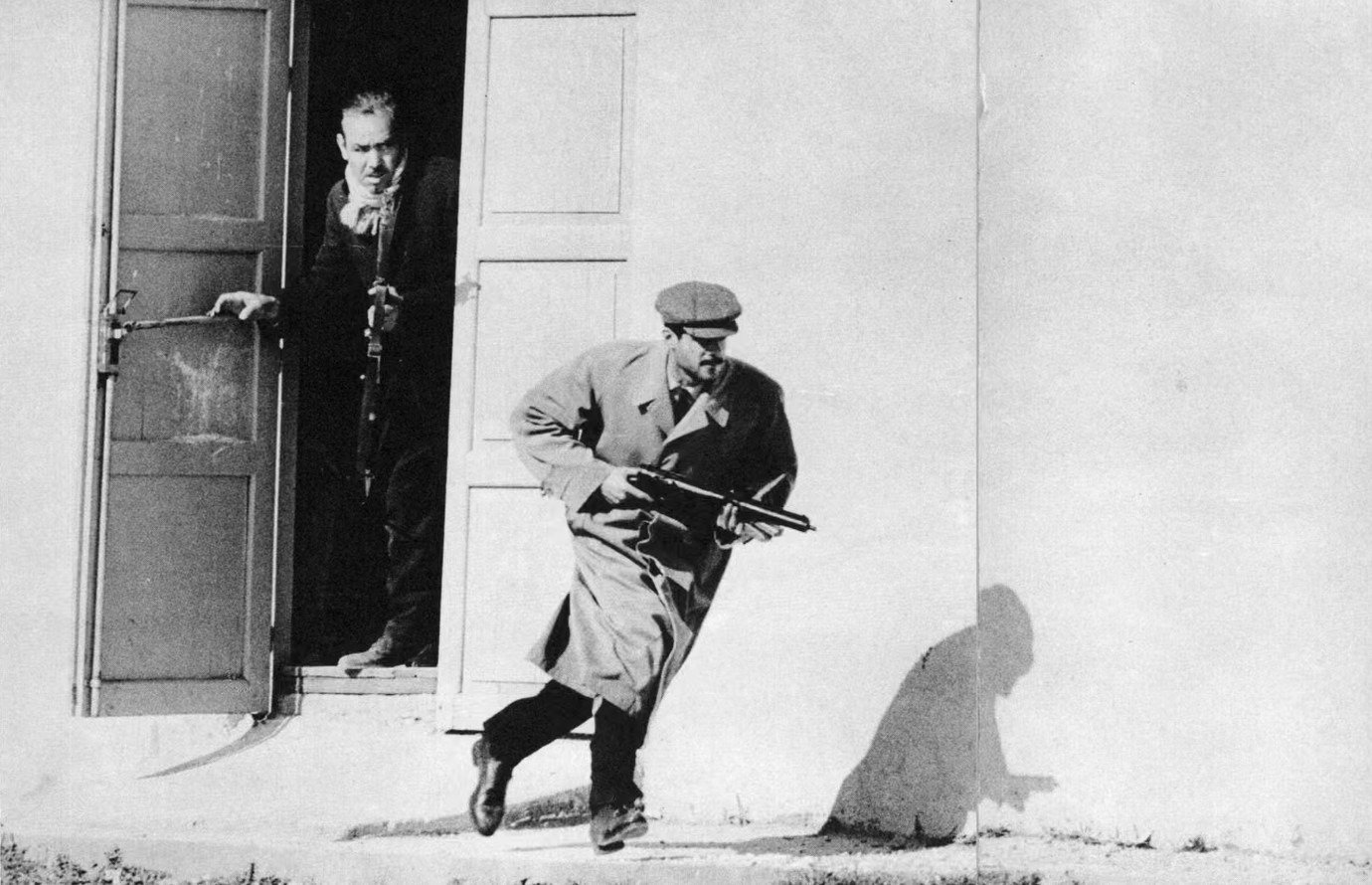
In his interview, McCullin recounts his life through a series of his great photographs. In fact, as he mentions, his first international assignment was in Cyprus in 1964, during the intercommunal troubles. The photographs he took on the island represent his first war images.
In the first photograph, as he explains, a Turkish gunman is seen in a Turkish Cypriot neighbourhood of Limassol. “I went into the Observer newspaper – I had a contract with them for two days a week for 15 guineas – and the editor said: “Would you consider going to cover the civil war in Cyprus?” I felt as if I was levitating. On my first day in Limassol, I took this picture, by the side of a cinema. It looks like a Hollywood still: the man is far too well dressed. In the evening, when the battle stopped, I had nowhere to stay, and the Turkish police said I could sleep in a cell block. That was my baptism in war,” he says.
Indeed, popular is also the photograph below, a scene that took place in a village west of Morphou. It depicts the reaction of a Turkish Cypriot woman who learns that her husband has been killed. For this photograph, McCullin was awarded his first major distinction, the 1964 World Press Photo Award.

“I felt I had chosen the right thing to do, because I found what I was photographing so outrageous that I couldn’t wait to get back to England and see my pictures published, to show the world how wrong it was. When you’re young and ambitious, you haven’t really worked it all out. You’re drawn to this tragedy, but it doesn’t belong to you – you’re imposing yourself upon the situation. You’re not welcome or invited and you’re stealing in a way. You’re stealing other people’s emotional tragedies. You’re stealing images of people, dead, who haven’t given you consent. I was aware it wasn’t totally right, and I believe it to this day. That’s why I come back here and do the English landscape. I feel as if I have to release myself from my guilt, which I still carry”.
One of his most famous photographs depicts a homeless Irish man in 1969. “There are social wars on your doorstep. People used to write me letters, saying, “I want to be a war photographer.” I’d say: “Help yourself – it’s in your cities.” This man slept by a fire in Spitalfields market, very close to the City of London, which generates billions and billions of pounds for the people who own it. You couldn’t have more of a contrast. One side is everything, and the other side is nothing. I call this picture Neptune, because he looks like the sea god. I thought he was one of the most handsome men I had ever seen”.

For McCullin, however, the most horrific photograph he took comes from the war that broke out after Biafra’s secession from Nigeria in 1967. He encountered images that, as he says, haunted him more than anything else — at a hospital for war orphans, where hundreds were dying of hunger.
“This is possibly the most atrocious picture I’ve ever taken in my life. There were 600 children dying in this camp. They were dropping down and dying in front of me. When they see white people, they think you’re an aid worker coming to bring them food. So you can understand my guilt, can’t you? It was not kind of me to be there, really”.

“That boy is holding a tin of corned beef, which he had completely licked dry to get every gram. I gave him a barley sugar sweet, which I had in my pocket, and he went away, licking it. I went off and spoke to a Médecins Sans Frontières doctor, and I felt someone take hold of my hand. It was the boy. It made me feel so bloody guilty. I haven’t printed that picture for nearly 30 years now. I don’t want to see it coming up in the dark room. I even feel guilty that these pictures – I have about 70,000 negatives – are in the house.”
(information from The Guardian/ photos source: Don McCullin)

