Interview with Andreas Bimbishis and Stelios Marathovouniotis
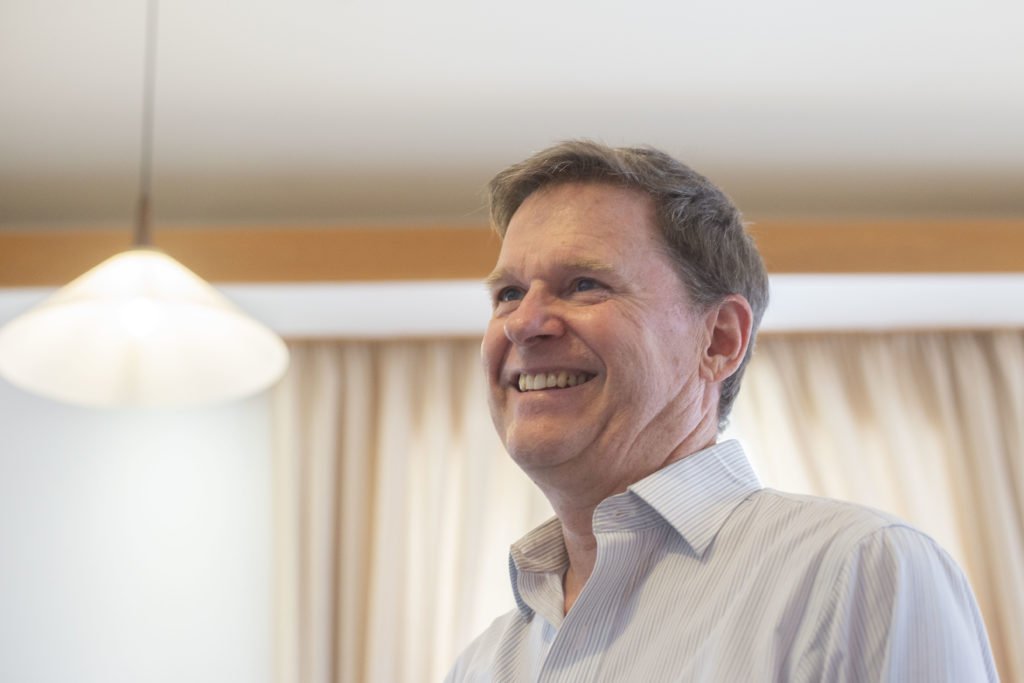
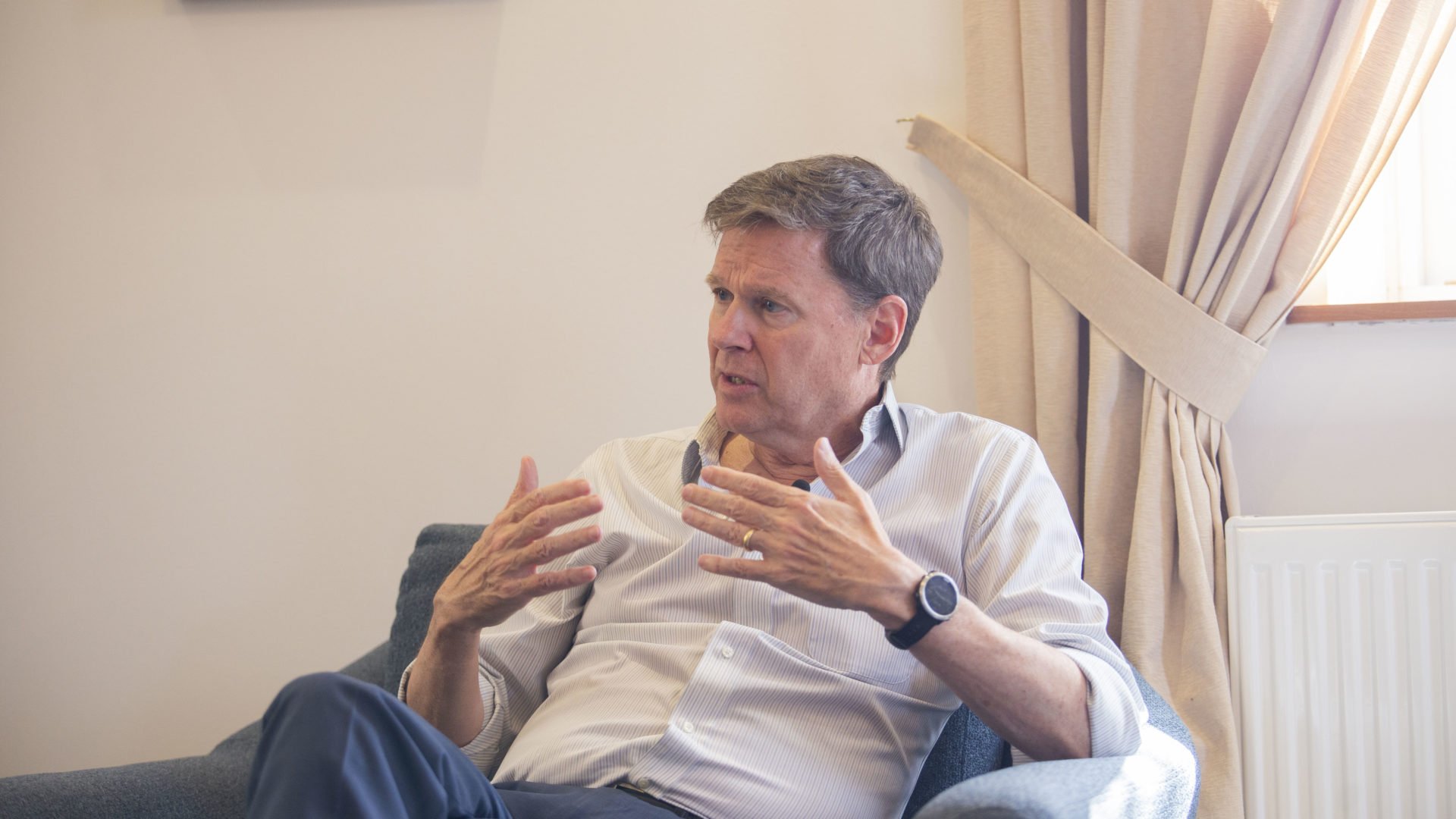
“There’s no scenario where the north becomes an independent country recognised by the international community – that’s just not going to happen,” Colin Stewart stresses, as he gets ready to complete his four-year term in Cyprus in a few days.
Speaking to Phileleftheros and in-cyprus on the occasion of completing his tenure on the island as Special Representative of the UN Secretary-General, Stewart adds a warning about the dangers of non-solution: “The north is gradually becoming a de facto territory with a status similar to Turkey.” He underlines that the worst fear of Greek Cypriots is to have a Turkish border across the island.
He expresses optimism that Turkish Cypriots will return to discussions for a bizonal, bicommunal federation solution and adds that the work done until 2017 has not been wasted. What he has observed after four years on the island is the lack of trust between the two sides and the unwillingness to compromise.
– Your term here in Cyprus is ending, along with your service at the United Nations. What do you take away both from your service in general and specifically from your presence here?
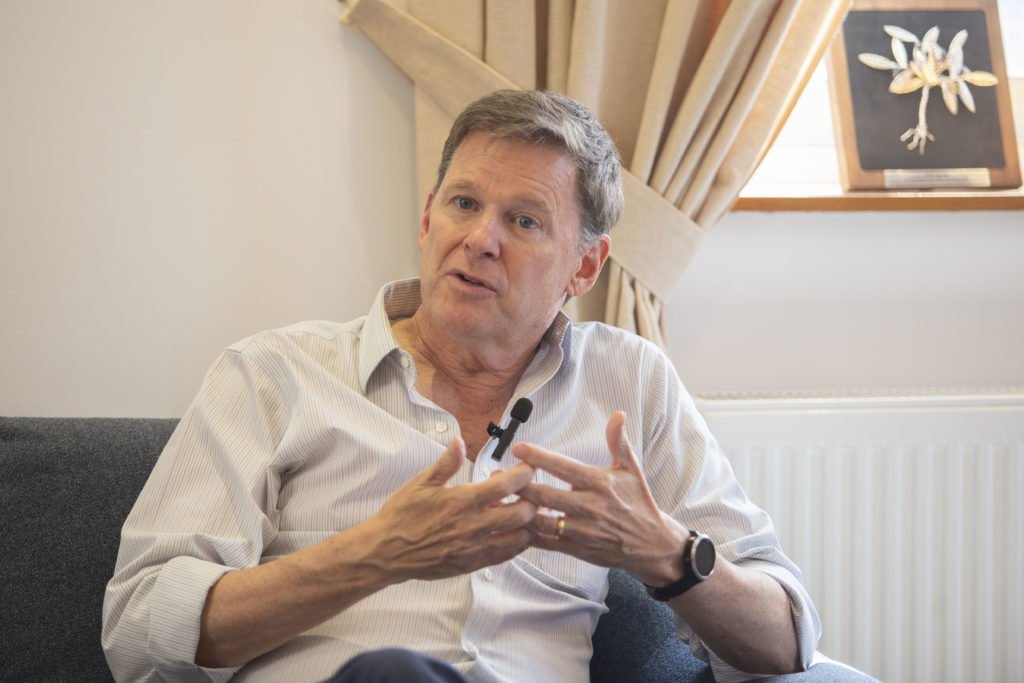
I think what I remember the most is that it’s the people that suffer when the politicians cannot find solutions. And you look around the world, it’s always the ordinary people that suffer. Political leaders make political calculations about what they are willing to agree to and what they’re not willing to agree to. In some cases, the public gets caught up in the conflict and adopts many of the hardline views, and I’m pleased to say that that’s not the problem in Cyprus.
I don’t see problems between ordinary Cypriots. Millions of people cross the crossing points every year and you never hear about incidents between the people. I know many Greek Cypriots and Turkish Cypriots who have relations and cross. You feel that there’s no animosity, even if they might disagree on some political matters.
But in other places, it’s really extreme. One of the things that strikes me about Israel-Palestine is that neither side can acknowledge the legitimate suffering of the other. There’s something wrong if you look at a child who’s been killed, and you don’t feel some sympathy for that, regardless of whose child it is. Innocent people on both sides have died, and continue to die.
In Cyprus, it’s also true that people suffered on both sides. And I think there is some work to be done – have more dialogue about the past because I believe that the grievances of the past, which are legitimate…
What I’ve noticed in Cyprus is that on both sides, there’s a strong feeling that we’re right, and the other side is wrong. And when this feeling provides the framework for the leaders, then the leaders have great difficulty making compromises, and there is no solution. There’s no negotiated agreement anywhere in the world where both sides didn’t make a bit of compromise to find something. It’s not the best, but it’s something we can both live with. This is the only way you find political solutions. And what I see in Cyprus is the leaders very hesitant to make any compromises.
My explanation for this is because of this culture that if we are the victims, we are the ones who suffered and we’re right, and they’re wrong. And I am saying this from both sides – I see it on both sides, and therefore, they don’t allow the leaders to make the necessary deal to solve the problem.
– How do you think these kinds of attitudes can change? Is it a matter of changing the history books or media narratives? What can be done in practice?
I think all of the above. The Security Council back in 2017 called upon both sides to review the school textbooks because the historic narratives perpetuate the animosity. I don’t know what the true historical narrative is – that’s not my job, but there are experts, there are academics who can sit and do this work together, and it could be done. It has not been done. It’s been ignored.
I’d like to see some kind of a public process where you just listen to each other’s stories because anytime anybody – an older woman, Greek Cypriot or Turkish Cypriot – tells the story of what they went through, everybody who listens is automatically moved because this you can’t argue – this is somebody’s real experience. And I’ve seen myself – we do a lot of work bringing members of the community together. This is what we do to try to create conditions for a solution. And I’ve seen many examples of people telling each other their stories and creating a bond between them.
Because they recognise that we have both suffered. And so I think there’s room for some kind of a public dialogue. You don’t have to agree on all aspects of history. But I think hearing the other perspective calms things down, and I believe it’s a big obstacle to the Cyprus issue solution – this rigidity, this unwillingness to compromise.
We will continue doing everything that we can – a peacekeeping mission keeps things calm in the buffer zone and good offices mission tries to bring the parties together. We do this by communal work – everybody’s trying to create conditions so that the Cypriots can solve it. It’s not the UN that can solve the Cyprus problem, but in order to give them more space to do that, I think we need to also look at this whole area of greater dialogue and greater understanding of each other’s lived experiences and try to tone down some of the narratives.
I’m amazed – I’m a foreigner, I don’t have any background in Cyprus before I came here, but I’m amazed that when I speak to people on both sides, I realize how they really don’t understand each other’s perspective as humans. Yes, they have a lot in common, and they get along fine. But in terms of understanding of political developments, there’s this great distrust.
Anytime an issue comes up, the smallest issue, the immediate reaction is to suspect. Oh, they’re trying to do this for this reason, maybe there’s some ulterior reason behind that. From past experiences, it’s not all imaginary. There are valid reasons to be aggrieved or to be distrustful, but it’s so blown up that it becomes an obstacle.
And so I think Cyprus has to look at this because even if – imagine tomorrow we get lucky and we get negotiations to start and we reach an agreement. And if this reconciliation hasn’t happened, how are you going to implement the agreement? How are you tomorrow going to remove the green line and everybody start moving around? And when there’s still this distrust? How are you going to have any kind of unified government or how will an agreement be sustainable? From every perspective, this societal reconciliation, I think, is very important.
– There’s also a paradox in the Cyprus issue. While in the past we had leaders meeting and talking, the people on both sides didn’t have this. Now that people are meeting and talking, we don’t have talks between the leaders. Can this change?
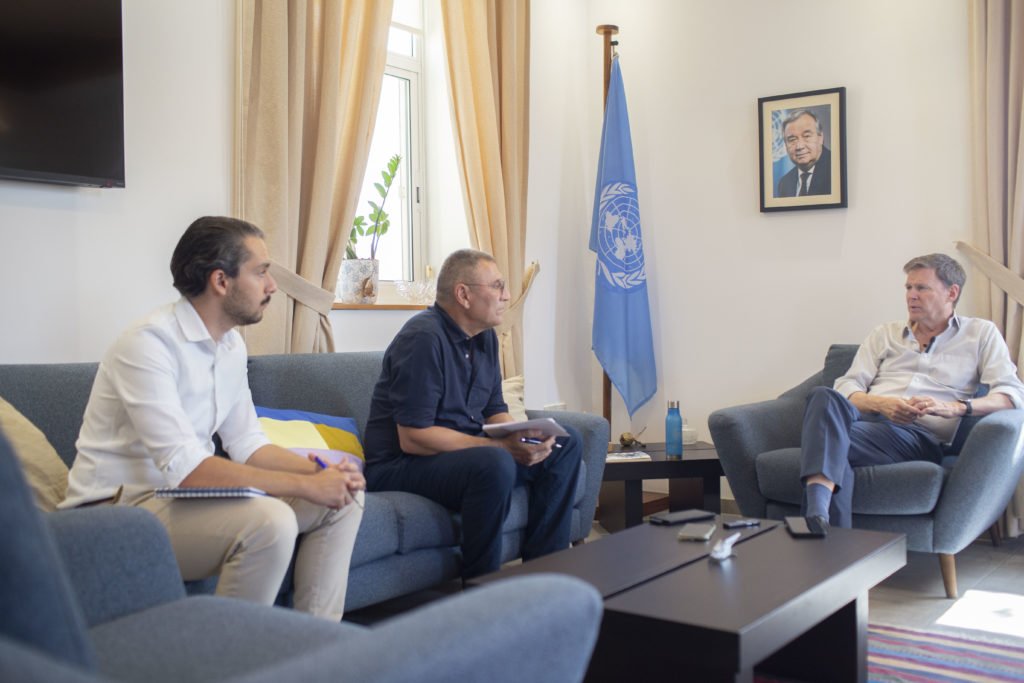
I think the reason that the leaders have difficulty speaking to each other is because of this distrust, for historic reasons. And having the population speak to each other, which happens – not everybody, but a good number of people – I think it helps open up the door, but unless the narratives are challenged, unless this idea that we are the victims, we did nothing wrong, they did everything wrong – then the leaders can’t compromise under such circumstances, because then it would be like giving up.
And this is the attitude I see when the leaders speak. They’re very happy to gain something from a negotiation, but they don’t want to give anything, and I see this from both leaders. It’s really quite surprising. We see it on small issues like crossing points and things, and we see it on bigger issues or whether we should return to talks. And so that’s why I think that the people talking is an entry point into a bigger conversation where we say, let’s calm down our animosity-driven narratives, because this is preventing us from finding a solution.
– Turkey and the Turkish Cypriot leadership now openly talk about a “two-state solution.” Do you think there’s a way back from this or is the Cyprus issue entering a new phase?
I don’t think that it’s irreversible. First of all, there’s not very many people in the north who take the two-state solution seriously. There’s some politicians who do and Ankara does rhetorically, but if you ask anybody, how is this going to work?
There is no two-state solution. There’s no scenario where the north becomes an independent country recognised by the international community – that’s just not going to happen. There’s really only two possibilities: either we solve the Cyprus problem and we have some kind of union or some arrangement between the two communities, or what’s happening already will continue to happen, and the north gradually is being absorbed into Turkey. Because we know economically and politically, they’re already very dependent on Turkey. They’re going to have no choice.
They’re under trade embargo, they cannot – they can only trade with Turkey, so they become very, very dependent on Turkey. If nothing changes, this is what’s going to happen – the north is going to gradually become absorbed into Turkey. Turkey doesn’t have to annex the north. If they don’t need to pick a fight with the EU, they just let things happen the way it is, and the north becomes a de facto territory with a status somehow similar to Turkey, and this, I believe, is the worst fear of Greek Cypriots, that you basically have a Turkish border across the island.
So if we want to avoid that scenario, we have to solve this Cyprus problem, and I think we all agree that this is a better solution – that the two communities reach an agreement on how they’re going to live together. That’s what we all want, but time is running out.
But part of the reason I think it’s not irreversible, is because in the time I’ve been here I have been repeatedly told by Turkish Cypriots, and by Turks in mainland Turkey that the door is not closed to settlement. They’re still angry about 2017. They feel that they were abandoned at the table in 2017 and they were ready to make a deal, they were ready to talk about territorial adjustments and guarantees and all that sort of thing, and they feel that they were abandoned at the table, and this is why they’ve been very reluctant to come back to the table. They keep saying, how do we know that this time they’re serious, how do we know that we’re going to have a good deal?
But if you look at the facts, how many times have you seen in the news announcements that the hotel was gonna open in Varosha? Or that the other side was going to start, they’re building something or doing this. I mean, every few months, there’s some kind of announcement.
And after I’d been here a couple of years, I started asking, why do they keep saying they’re going to do things in Varosha, and they don’t do it. So I asked. And they all told me the same thing in the north, said the same thing, because we know if we start actually some construction in Varosha, then we’re killing the prospects of a settlement. And we’re not ready to do that yet.
The time will come when they will decide that it’s finished. But so far, I’m convinced that the door is still open, and that’s why we have to act quickly, that’s why we have to seize every opportunity.
– The door may be open but with meetings in March, July, then September and then towards the end of the year, how can things move forward?
Well, the problem is the elections, and before the elections, nobody is really seriously expecting – Mr. Tatar is very cautious. He doesn’t want to make any – he would love to have some win, but as I said before, he won’t give anything in order to get it and this is something as an outsider, I’ve noticed – the Cypriot leaders are more afraid of giving something than they are attracted by the possibility of winning something.
In other words, they will turn down an opportunity as long as they don’t have to give something. If I say, look, here’s a very good thing you can win, but you have to give something – that conversation ends. And so right now, in an election, Mr. Tatar isn’t going to make any concessions because he feels that that would be damaging to him and Mr. Christodoulides is obviously also cautious, because he doesn’t want to maybe affect the elections, one way or the other. So neither side, I think, is planning any big initiatives before the elections.
I think the meeting in September is, they’ll see what they can move forward on, but really, I think, unfortunately, whatever opportunities we’ve had up till now have not been exploited and so probably have to wait till after the elections, but then, as soon as we get any opportunity, I think we have to as quickly as possible, seize it because over time, it’s more and more difficult to solve this Cyprus problem, because then the north becomes further away psychologically and the more Turkish investment you have in the north, the more you have people who have a disincentive to have the island reunified.
Because right now, there are these casinos and things, nightclubs in the north – people don’t – the people who own these things don’t want to join the EU and have to apply EU rules. So the more time goes by, the more difficult it becomes to solve the Cyprus problem. This is my concern that we won’t know when we’ve crossed that line until long after it is when we look back. I hope we don’t look back and say 2025 was the last opportunity, and we missed it.
I don’t want to sound negative. I think the Cyprus problem is solvable. And I think if we can help the leaders break away from this allergy to making some concessions… I don’t know what the proper word to translate this is into Greek, because I’m told that compromise is seen as a negative thing…
“You have to walk before you can run”
– How do you assess your cooperation with the leaders from both sides?
I don’t really have a specific opinion about the individuals. I try to sort of look at the bigger picture and I think when I look at the work that we do to create conditions so that the leaders can reach agreement. I see a lot of good work, a lot of good results, a lot of positivity, but it’s not impacting the leaders, and there’s a disconnect between the leaders and what I see.
Now, of course, there’s different views within society from one extreme to the other, but we know we’ve done public opinion polling and a majority of Greek Cypriots and a majority of Turkish Cypriots could accept a BBF type of solution. This one might not be their first choice, but they could accept it, according to our polls. And yet, this doesn’t seem to be – certainly from the north, that’s not the position of the leadership – and it is the position of Mr. Christodoulides, but we don’t see the effort to achieve it doesn’t involve willingness to make significant compromises on even small things, so we’re having trouble building any real momentum.
I mean, we’re in a better place today than we were a few years ago for sure. Since 2024, we have a new envoy. We’ve had a series of meetings, October 2024, New York, Secretary-General, with the leaders, and now we’ve had two of the 5+1 meetings and there’s more to come, so we’re definitely – more is happening now than before.
People are frustrated because they’re not talking about the Cyprus issue yet, and I understand – I mean, it’s normal people be frustrated, but you have to walk before you can run. And with the idea of these trust building initiatives is to build a bit of momentum, ease the tensions a little bit and move to a place where hopefully, the parties can come to the table and start working on a settlement. I think that that’s possible, of course, there’s elections in the north, which could change things, but I think it’s entirely possible, but I still worry about whether at the table, the leaders are willing to make the compromises necessary.
Like, I say you have to be a courageous leader – they say, okay, in order to get this, we give up a few smaller things.
– It seems that neither side is willing to make these courageous steps before sitting at the table.
Yes, but that’s tied to the two-state solution. I think the people who are promoting the two-state solution are rejecting the idea of going back to Crans-Montana, but if Turkish Cypriots will come back to the idea of a bicommunal federation, then all of the good work that has been done not just in 2017, but all the years of lead up to it – of course, you’re not going to reinvent the wheel. You’re going to look at what was done before and say, well, what solutions can we adopt on that?
So it’s another reason to be hopeful that the Cyprus issue, it is resolvable, and a lot of the hard work has been done. There’s just a few key political issues that have to be dealt with: governance and power-sharing, how is that going to work so that both sides can live happily and of course, the issue of troop withdrawals, and that sort of thing, but it would flow naturally, I think once there’s – once we’re going to make a decision that, of course, the troops would have to withdraw.
But after four years, I don’t know whether it will be solved. Because of this huge obstacle that we see – this distrust, this unwillingness to compromise and we’ll see, I don’t know.
– Can the UN help to solve these issues?
No. The Cyprus problem has to be resolved by Cypriots. The UN can’t tell Cypriots how to solve the problem or what they should do. We can encourage, we can create conditions, we can invite and convene and do all this. And this is what we do, and we’ve been doing for 61 years, but no, the Secretary-General cannot push the sides to make an agreement.
It has to be a freely negotiated agreement or it won’t last. If one side is somehow pushed into the agreement, what makes you think in two years, they’ll still be happy with it, and that they’ll still respect it? You want not just an agreement, but you want an agreement that is sustainable, and that creates a positive future for all Cypriots and everybody embraces.
If one side is forced into it, it can’t work. And so I think the Secretary-General has devoted a lot of his time – when you think of all the problems he has to deal with, he’s devoted a lot of his time in the past year in particular, to Cyprus, because he would like to see this problem be solved.
It’s a solvable problem, and thank god, while we’re waiting, nobody’s dying, unlike other conflicts. I think that’s one thing we can say positive about the peacekeeping mission is it allows there to be no conflict. But the Secretary-General will immediately take any opportunity to nudge, and he does. When we have these meetings, he’s always gently pushing – will help with this, and how about that. The reason we have so many of these trust building initiatives is due to the personality of the Secretary-General. Who in the meetings pushes the agenda a little bit, but gently – he can’t force anybody, but he can encourage.
The role of guarantor powers and the EU
– Do you think the guarantor powers are helping?
I do. I think the positive relationship between Greece and Turkey has been very helpful. Not because they get together and talk about Cyprus – they don’t – they talk about their own bilateral issues, which are more important to them than Cyprus, but it’s because they’re having a good moment, they don’t want anything to spoil it. So they’re both exerting their influence to say, okay, don’t upset the apple cart, don’t make a problem for us, and that’s helpful.
They’re both giving their support to the beginnings of dialogue as we’re seeing now in the 5+1 – this was a big step forward when it was agreed that there would be a 5+1 meeting in March, there had not been one since 2021, and the fact that Turkey was willing to come to the table with the Turkish Cypriots was a big step forward, and Greece is very supportive. They do everything they can in these meetings to be supportive.
And I think their relationship with Turkey is very important and also bringing everybody together, so I think that’s very important and I think if Greece and Turkey start having problems again, it makes it more difficult for Cyprus for sure.
– What about the EU? Is it helpful?
It’s complicated. The Turkish Cypriots in Turkey don’t feel that the EU represents their interests and they are distrustful because Republic of Cyprus and Greece are inside the EU and the Republic of Cyprus has used its membership in the EU to put constraints sometimes on Turkey, so it’s complicated because certainly Turkey needs the EU.
The EU means Turkey, but they have a complicated relationship – some countries are much more in favor of close relationship, but again others are much more distant. There’s no unanimity – it’s not up to Cyprus. The Turkey issue is a complicated one within the EU, but I think it’s part of the overall picture that the EU has the ability to encourage Turkey, because they do need each other, they do have an important relationship, and I think that’s a stabilising influence on the Cyprus issue.
The UN under pressure
– There’s a question about the UN’s relevance today, with all the crises around the world. How do you see the UN’s role being strengthened? Is it more important than ever, or not?
Well, the UN is not an independent body that the UN decides this, UN decides that. The UN is a clubhouse and the member states of the world come into the clubhouse and make decisions, and then bureaucrats like me implement those decisions, so when you say that the UN has done something good or something bad, what you really mean is that the member states of the UN have made a decision or have failed to make a decision or the member states of the UN cannot deal with some of the crises that we have.
The UN is based on some fundamental principles, the human rights, democracy, rule of law, that remain just as important today, in fact, more important today that they’re under attack. And so I think the UN will continue to have a very important role to play. Now, will the member states allow it to play this role, it’s up to them.
Even the Secretary-General doesn’t make decisions about what the UN can do, and cannot do. It’s more about how we do it right. The decisions are made by the members either of the Security Council or the General Assembly, so my own view is that we’re going through a very difficult period for obvious reasons.
There’s a lot of uncertainty, in terms of the international order that we all grew up knowing – international rules of trade, international rules of human rights and democracy and all these things. But I believe that – maybe it’s just because I’m idealistic and optimistic, but I believe that this experience will in the end, reinforce people’s understanding of why these principles are important and why the UN is necessary and why the international community has to be committed to these principles. I think there’s no better way to show that something is wrong, by letting it happen, and letting everybody see the results of the problem.
Unfortunately, many people will suffer. There are people already suffering when USAID was closed. 40% of the world’s humanitarian assistance disappeared, and that’s assistance that saves lives. It’s a terrible tragedy that we’re all going through.
These principles remain in my view, absolutely essential. Look at Brexit. I had a friend before Brexit, who was very much against Brexit, but he told me, he said, I think the only way we solve the Brexit problem is we allow Brexit to happen. Then everybody can see the results, then in 20-25 years, the UK will come back to the EU and make a deal and the matter will be resolved and maybe with the chaos we’re seeing now, if people will realise the mistakes that are being made, the cost of those mistakes and we will come out better in the end.
But that’s more of a hope than a very solid analysis.
– Can the UN be reformed?
I think people have ideas about how it could be better, certainly. There are also independent people who say, well, the current structure of the permanent 5 from the Second World War makes no sense, but I don’t know what the formula might be that if you expand it and change the rules so that one player cannot hold up the decision of the others.
There is a lot of thinking that’s going on and there’s a permanent committee of the United Nations that is focused on UN reform, and it’s been going on as long as the UN has been around. The problem is, when somebody has power, it’s very difficult to get them to relinquish the power, right, in order to make changes. The P5 would have to agree to water down their power.
And that’s very difficult. Especially now I don’t see any immediate hope for UN reform. But again, like I said, maybe if things get really bad that will create a new opportunity.
We’re facing a huge financial problem at the UN, not just because of the Americans, but also many states pay their dues late and the money that the UN needs to function is very much in jeopardy, and then on top of that, you have the Americans – we don’t know if they’re going to pay their UN bills or not, so we have had to develop plans. What do we do if our budget is reduced? How can we preserve as much as possible of our mandate implementation?
And there’s no scenario where you don’t reduce your effectiveness a little bit, but we would try to manage. But certainly, our presence would be reduced if we had to roll back our budget.
We’re a little bit more protected, because the Republic of Cyprus and Greece pay a certain portion of our budget. So the impact would only be on the other part, which would insulate us a little bit, but we would still have to reduce our presence in the buffer zone. On the good offices side, the UN is taking an initiative as part of the 80-year reforms to reduce the regular budget and so we have a plan there also to reduce the good offices – when that’s the office that plays the crucial role of managing the technical committees and doing a lot of communal trust building and preparing the leaders for hopefully a negotiation.
So, my own view after four years is that in Cyprus, the UN is actually doing good work, and it has positive impact. It’s just maybe not enough impact, and it’s not enough to overcome the institutionalised rigidity that we see. When I speak about distrust, where I really see it is in the institutions, in the sort of senior levels of government. It’s not amongst the people, it’s amongst the people who have to engage and make decisions and make these compromises and so this affects the leaders and the leaders think, oh no, if I make a compromise, I’ll be punished by the public opinion.