


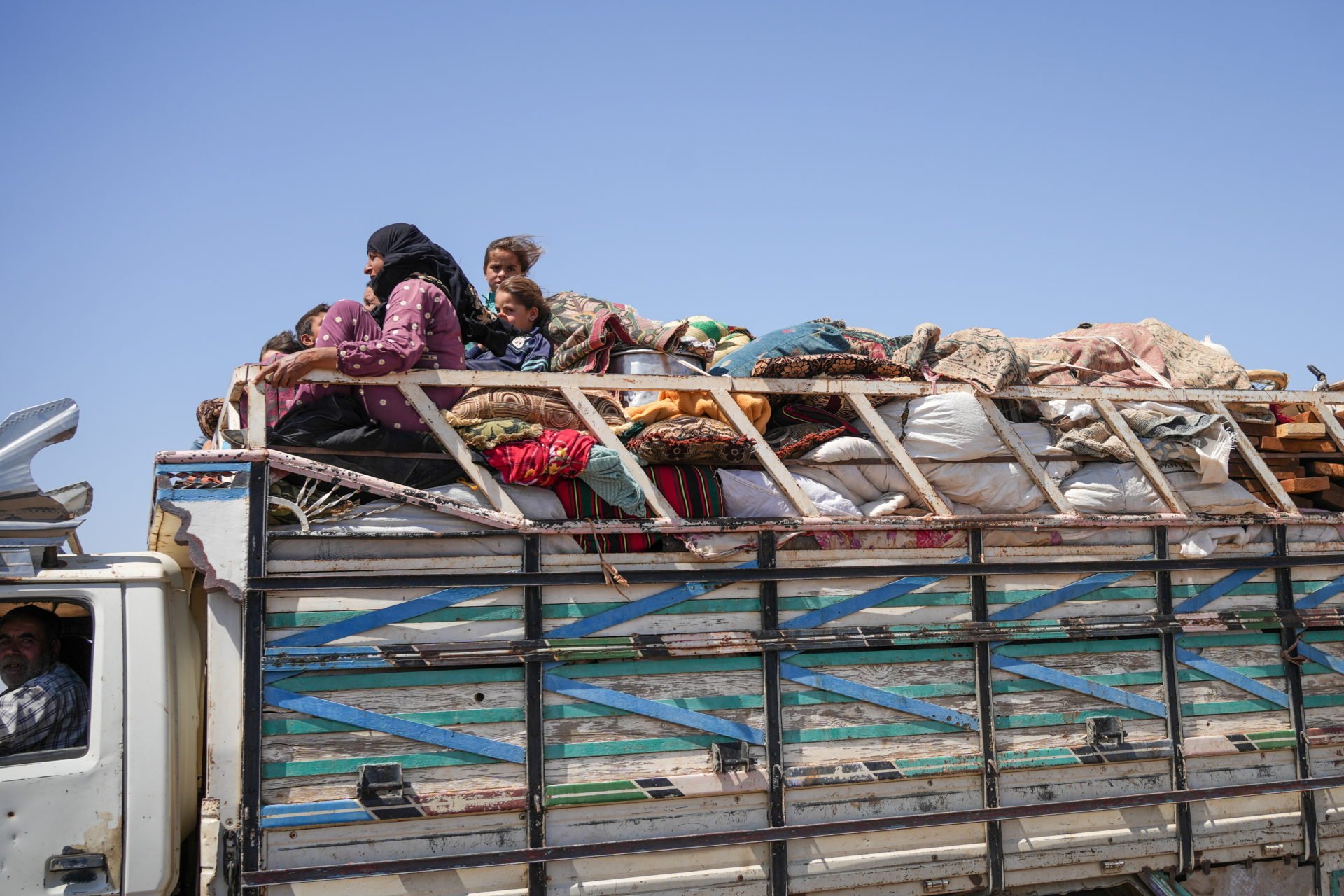
Syrian government forces largely withdrew from Sweida province on Thursday following days of deadly fighting with Druze militias that threatened the country’s post-war stability.
The withdrawal followed a US, Turkey and Arab-mediated ceasefire announced on Wednesday after clashes that killed nearly 600 fighters and civilians over four days, according to the Syrian Observatory for Human Rights.
Israel had conducted airstrikes against Syrian forces in defence of the Druze minority before the truce was reached.
Under the agreement, Druze factions and clerics have been appointed to maintain internal security in Sweida, Syria’s interim President Ahmad al-Sharaa said in a broadcast address early Thursday.
Escalation draws international intervention
The conflict escalated from tit-for-tat kidnappings and attacks between local Sunni Bedouin tribes and Druze armed factions in Sweida. Government forces intervening to restore order clashed with Druze militias whilst also attacking civilians in some cases.
Video circulated on social media showed government forces and allies humiliating Druze clerics and residents, looting homes and killing civilians hiding inside houses. Syrian Druze from Sweida told the Associated Press that several unarmed family members had been attacked or killed.
The Britain-based war monitor reported at least 86 civilians killed in “field executions” – mostly Druze Syrians killed by government forces and allies – whilst at least three Bedouin civilians were killed in revenge attacks Thursday by Druze militiamen.
Israeli Prime Minister Benjamin Netanyahu vowed Thursday to keep southern Syria demilitarised and protect the Druze community. “This will also be the continuation of our policy,” he said.
Israel on Wednesday struck the Syrian Defence Ministry headquarters in central Damascus in a major escalation of its involvement.
Diplomatic mediation secures truce
Turkey’s Foreign Minister Hakan Fidan and intelligence chief İbrahim Kalin conducted diplomatic and security contacts to de-escalate the clashes, a Turkish official said Thursday.
They worked with US mediators and regional officials, including Lebanese Druze leader Walid Jumblatt.
The truce was announced by Syria’s Interior Ministry and in a video message by a Druze religious leader. A previous agreement on Tuesday quickly broke down after being dismissed by prominent Druze cleric Sheikh Hikmat Al-Hijri.
Syrian state media reported Thursday that Druze militiamen had launched revenge attacks on Sunni Bedouin communities, causing displacement. Some reports indicated renewed clashes despite the ceasefire.
Community tensions threaten stability
Interim President al-Sharaa said the Druze were an “integral part” of Syria, protected under law. “We are committed to holding accountable those who wronged our Druze brethren,” al-Sharaa said.
The Druze community had been divided over approaching al-Sharaa’s de facto Islamist rule after largely celebrating when his forces ousted former President Bashar Assad and ended the Assad family’s decades-long autocratic rule.
They feared persecution after attacks from Islamic State and al-Qaeda affiliates during Syria’s 14-year civil war.
Issam al-Reis, a senior military adviser with Syrian research group Etana, said the lack of “effective state-led negotiations” could sow further divisions between the Druze community and Sunni Bedouins.
“This is leading to militant sectarianism, which is dangerous,” he said, adding the government needs to speed up integration of other sects into the Syrian army to make it more unifying and help resolve sectarian tensions.
Border crossings amid crisis
Thousands of Druze residents in Israeli-controlled Golan converged on the border Wednesday after hearing of the sectarian clashes. Israeli media reported dozens forced their way into Syria hoping to help fellow Druze and visit relatives they normally cannot see.
An Israeli security official said Israel is strengthening fences along the Golan border to prevent crossings. Soldiers returned dozens who crossed into Syria whilst security forces also returned an unknown number of Druze Syrians who crossed into Israeli territory.
Three days after killings in Latakia, Druze leaders evacuated more than 1,200 students studying at coastal universities once a curfew was lifted. They arrived late on 10 March 2025 and were greeted by the Druze Military Council at border checkpoints.
UN Secretary-General Antonio Guterres said late Thursday it was “absolutely essential to achieve” unity in Syria, respecting sovereignty, territorial integrity and “full integration of different communities in the state”.
“It is for the Syrians to solve the Syrian problem,” he said.
The Druze religious sect began as a 10th-century offshoot of Ismailism, a branch of Shiite Islam. More than half of the roughly one million Druze worldwide live in Syria, with most others in Lebanon and Israel, including the Golan Heights.
(information from npr.org)

