


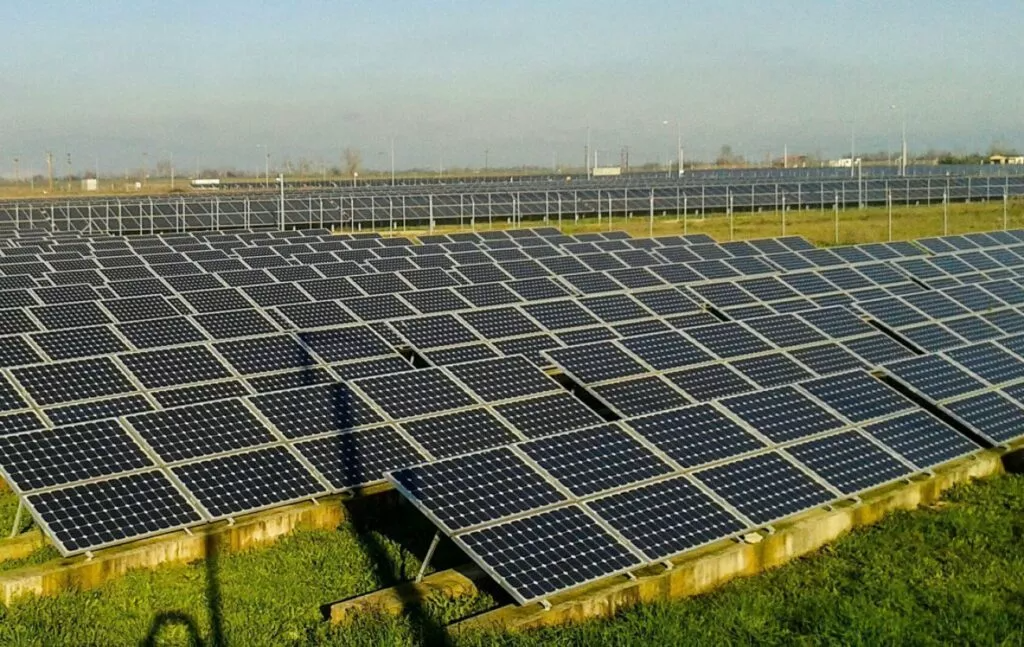
The Department of Environment has rejected Cyprus’s largest planned solar photovoltaic park, citing severe environmental, social and technical impacts that outweigh the project’s climate benefits.
The Department refused consent for the 180MW solar park with 40MW/80MWh energy storage units proposed by Cyrus Solar Thermal Ltd for the Kataliontas, Lythrodontas and Mathiatis communities in Nicosia.
Following comprehensive assessment and public consultation, the Environmental Authority identified eight critical factors making the proposed area unsuitable for large-scale renewable energy development.
The department highlighted proximity to sensitive Natura 2000 network areas and archaeological sites, making the location incompatible with existing legislation. The project would destroy high natural value farmland supporting low-intensity agriculture that promotes biodiversity.
Protected fauna species face threats, including the Bonelli’s eagle (Aquila fasciata), long-legged buzzard (Buteo rufinus) and Cyprus warbler (Sylvia melanothorax). The area provides critical breeding and population maintenance habitat for these species.
Forest clearance would destroy over 7,000 trees, including at least 1,400 Aleppo pines over 25 years old protected under forestry legislation. The project would require extensive earthworks, road construction and interventions in natural formations and streams, altering the landscape’s physiognomy.
Technical concerns include creation of a “thermal island” disrupting the microclimate and affecting local flora, fauna and pollinator efficiency. The project would disrupt pollinator ecosystems crucial for beekeeping, a key element of the regional agricultural economy.
Grid connection presents unmanageable challenges due to the project’s fragmented form and Alaminos station’s inability to support the load, making connection technically unfeasible or problematic.
The project attracted widespread opposition from local authorities, NGOs and citizens. Terra Cypria Foundation, BirdLife Cyprus and a group representing residents of Machairas expressed strong opposition, highlighting cumulative impacts inadequately addressed in the environmental study.
A 2 July 2025 letter from the Game and Fauna Service, documented with satellite transmitter data, confirmed Bonelli’s eagle usage of the area, emphasising the environmental sensitivity of the immediate study area.
Despite the project’s positive carbon footprint reducing emissions by 220,000 tonnes annually, the environmental authority concluded that cumulative, serious, negative and irreversible impacts outweigh energy and climate benefits, prohibiting project licensing at this location.
Read more:

