


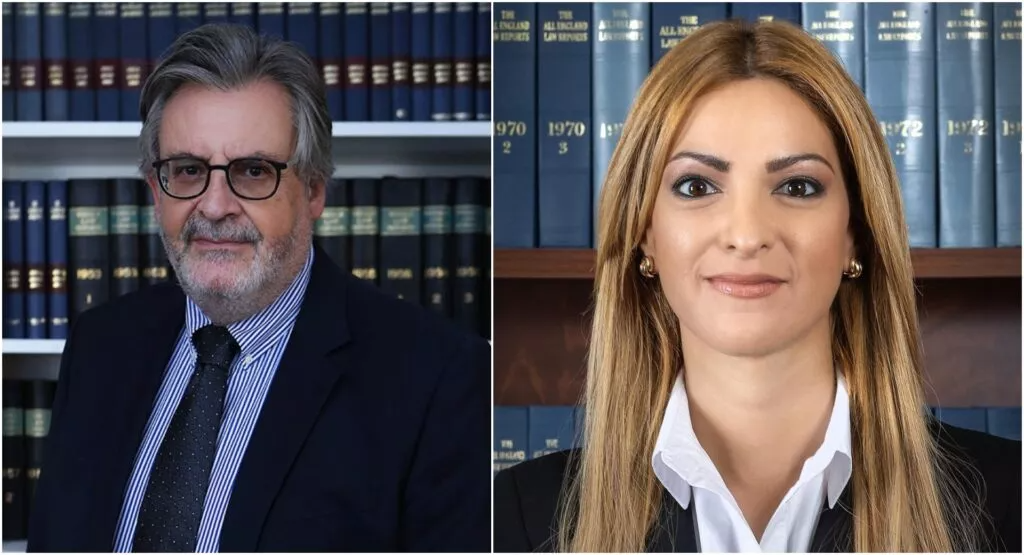
The dismissal of Judge Doria Varoshiotou by the Supreme Judicial Council has raised debate within the legal community over judicial procedures and the circumstances surrounding her termination one day before permanent appointment.
The seven judges of the Supreme Court, sitting as the Supreme Judicial Council, terminated Varoshiotou’s services through summary procedures without hearing her testimony, according to legal sources. The Council is expected to announce its decision formally on Tuesday, though it remains unclear whether specific reasons will be disclosed.
Rare dismissal process
The practice of not confirming a judge’s permanent appointment is rarely applied, with few judges historically dismissed for reasons other than unsuitability for permanent tenure, legal professionals told philenews.
Michalis Vorkas, President of the Cyprus Bar Association, explained that judges receive temporary appointments – one year before 2023, now extended to two years. Following the probationary period, the Council reviews their work before making final decisions on permanent appointment.
“It appears the temporary judge lacks the right of hearing to express views on matters ‘attributed’ to them that prevent their permanent appointment,” Vorkas said, commenting on the absence of a hearing process.
Council composition varies
For appointments and promotions, the Supreme Judicial Council includes the seven Supreme Court judges, the Attorney General, the Bar Association President, and two qualifying Bar Association members. For disciplinary matters and service termination, only the seven Supreme Court judges participate.
In Varoshiotou’s case, the seven judges convened alone and decided her dismissal. They may have heard from the administrative president of the court where she served to express views on her work.
Legal remedies available
Varoshiotou has the right to request minutes from the Supreme Judicial Council proceedings, which the Council is obligated to provide under regulations. She may also appeal to the second-tier judicial council comprising Constitutional Court judges.
“She has the right to appeal to the second-tier judicial council and be heard to determine whether her non-confirmation was justified,” Vorkas noted. Previous judges have successfully appealed such decisions, resulting in first-tier re-examination.
Background
The dismissal follows Varoshiotou’s high-profile handling of the Thanasis Nicolaou death investigation and conflicts with Limassol District Court’s administrative president over death inquiry procedures.
Vorkas reported receiving numerous calls requesting protests outside the Supreme Court due to public association between the judge and the Nicolaou case.
“We must be very careful, in my humble opinion, because we live in a state with its problems – we must not magnify the problems, we must solve them,” Vorkas said. “We cannot know the reasons why the Judicial Council reached this decision.”
Procedural questions
Regarding Varoshiotou’s disagreements with the District Court president, Vorkas explained that the law gives the provincial court president a role in death investigation procedures.
“I am not aware of the intervention the specific Limassol District Court president requested. Each judge handles multiple cases daily, so we cannot be certain what was presented to the Supreme Judicial Council. There may be other issues we don’t know about,” he said.
Cyprus justice sector in crisis, lawyer says
Lawyer Christos Clerides commented on Varoshiotou’s dismissal, stating that no judge should be punished for their decisions.
“I believe that in terms of quality, the report in the Nicolaou death investigation was impeccable from a legal perspective,” Clerides said. “Varoshiotou’s decision not to hear Stavrianos’s testimony for a third time was justified because new medical evidence had shown that the death was due to strangulation.”
He noted that whilst the Supreme Court criticised her decision as erroneous in Stavrianos’s application for annulment, “this does not mean that even if Stavrianos’s testimony had been heard, the report would have been different. Moreover, it very correctly did not proceed with the annulment of the report, something which the criminal investigators appointed by the Attorney General also confirmed.”
Clerides criticised the Law Office’s disagreement and persistence in opposing views, as well as the Attorney General’s decision not to proceed with criminal prosecutions, which “brought to the fore the conflict of interest of the Attorney General as State Counsel and criminal prosecutor.”
“I believe no judge should be punished for their decisions,” he stated. “If the reports about instructions are true, I believe various issues arise, including the need to modernise the law in this area. The decision to make the disagreement public through judicial means again should not be condemned.”
He emphasised the need for “incorruptible, honest, and upright judges who have the courage of their convictions,” warning that “once again the chilling effect in the field will bring opposite results.”
Clerides noted that Cyprus faces “a prolonged crisis in the justice sector” stemming from 2019 events involving former Attorney General Costas Clerides’s conflict with the Supreme Court President. He called for cultural change, modernisation, flexibility, sensitivity, and transparency to restore public confidence in the justice system.
Next steps
The matter will be discussed at the next Cyprus Bar Association council meeting. Varoshiotou retains the right to file an objection with the Constitutional Court, where she would be heard and learn the specific reasons for her non-confirmation.
Read more:

