


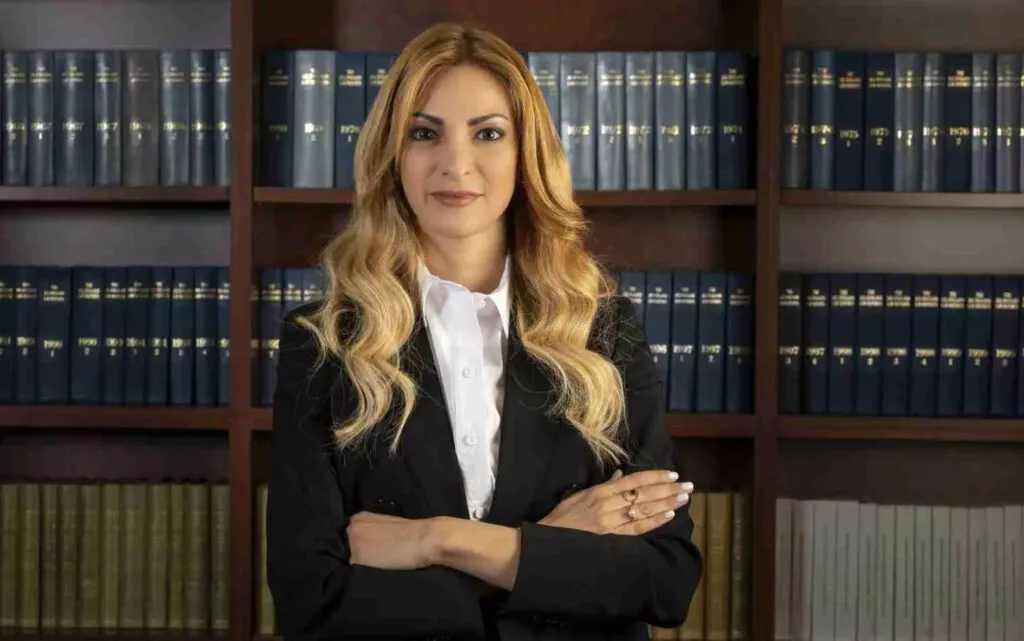
The Supreme Judicial Council terminated Judge Doria Varoshiotou’s appointment on Monday, one day before she would have completed two years in her post, following a series of conflicts with judicial authorities.
In a brief statement issued Tuesday, the Council said the two-year probationary period expired on 30 June 2025 for eleven District Judges. It confirmed seven appointments, extended three probationary periods for six months, and terminated one judge’s services without confirming the appointment.
“The reasoned decision of the Supreme Judicial Council has been communicated to the interested Judge,” the statement said, without citing specific reasons for the dismissal.
Varoshiotou, whose name became associated with the death investigation into Thanasis Nicolaou, was informed of the decision on Monday morning. When she took her seat at Limassol District Court to hear cases, she told the stenographer: “Given that I have just learned that my services with the Judicial Service have been terminated, you will be informed by the Registry about the new scheduling dates for cases and their progress. The same applies to i-justice cases.”
The dismissal follows significant confrontations between Varoshiotou and the President of Limassol District Court over death investigation procedures.
Conflict over death investigations
On 12 June 2024, Varoshiotou clashed with the District Court President over two death investigation reports involving clear causes of death that had been accepted by relatives – one concerning a woman killed in a road accident and another involving a man who died after falling from scaffolding.
According to two decisions published on CyLaw on 15 May 2025, Varoshiotou stated: “The President of Limassol Court called me to his office to indicate his disagreement with the manner of writing and conclusion of the report I issued in this death investigation (numbers 8/18 and 71/22). As he told me, if I did not modify the reports of these cases, he did not intend to sign the ‘letter’ that is signed by the respective President after the completion of a death investigation.”
The following day, on 13 June 2024, Varoshiotou submitted a written memorandum to the President stating her position. She noted that since the President had handed her the files of both cases with instructions to modify the two reports, she judged it her duty to address the matter judicially.
Before deciding on the President’s instruction, she called the Attorney General and the families to express their views on whether, under the Constitution and the Coroners Law (Chapter 153), a coroner has authority to make any modification or alteration to a report after issuing it, particularly on instruction from a District Court President.
Constitutional issue
Varoshiotou ruled that no one could intervene in a coroner’s work after issuing a report and that it could only be quashed following an application for a certiorari order. She concluded: “With full respect to the President of the District Court, I judge that the instruction he gave me cannot be executed.”
This decision to openly confront the administrative head of the District Court appears to have ended her judicial career before it properly began.
Previous legal challenges
Varoshiotou had challenged the judicial system before assuming her position. As a lawyer at a major Nicosia law firm, she applied to become a judge, progressed to the next stage, but was rejected despite the number of successful candidates equalling available positions.
She then took legal action, appealing to the Supreme Court challenging the decision. The Court ruled there was no procedure to challenge their decisions, leading to the establishment of a procedure allowing judicial candidates to challenge Supreme Judicial Council decisions.
She reapplied for subsequent judicial vacancies and was finally appointed on 1 July 2023 as a temporary judge, but was never confirmed permanently.
Thanasis Nicolaou death investigation
Varoshiotou gained public attention when she undertook the death investigation into Thanasis Nicolaou’s death. She rejected forensic pathologist Panikos Stavrianos’s request to testify as a witness, leading to legal battles with the prosecution authority.
Her report, issued in May 2024, overturned the two-decade narrative by concluding for the first time that Nicolaou’s death resulted from criminal action by strangulation, accepting testimony from doctors who examined the 26-year-old National Guard member’s hyoid bone.
One month after issuing the report, Varoshiotou was transferred from criminal to civil duties.
The Supreme Court, sitting in full session, decided not to quash the death investigation report following Stavrianos’s application, but identified legal errors in Varoshiotou’s decision to prevent the pathologist from testifying.
Appeal options
Varoshiotou may file an objection against the termination of her services before the Supreme Constitutional Court. If rejected, she has the right to appeal to the European Court of Human Rights, which could award compensation but cannot reinstate her position.
Read more:

