


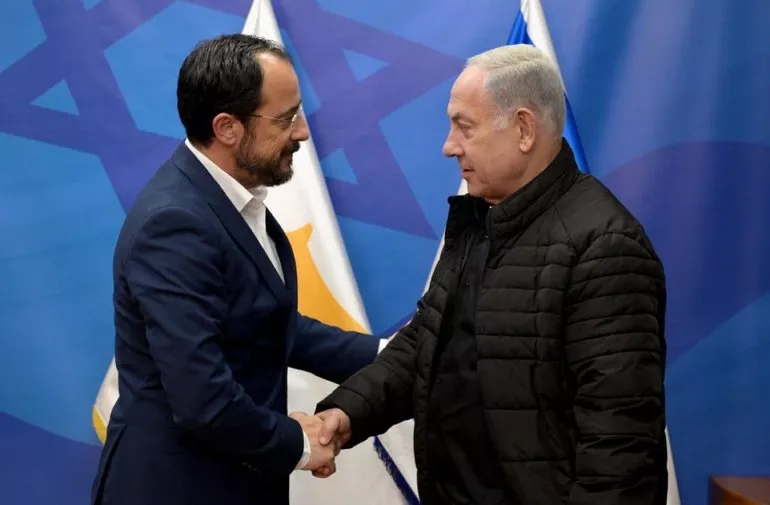
President Nikos Christodoulides’s planned visit to Israel on May 4 has sparked criticism from advocacy groups who say the trip contradicts Cyprus’s international legal obligations as a signatory to the Rome Statute.
United for Palestine, a Cypriot grassroots organisation, condemned the upcoming visit, arguing that meeting with Israeli Prime Minister Benjamin Netanyahu, who faces an International Criminal Court (ICC) arrest warrant, undermines Cyprus’s commitment to international law.
“The President’s visit to a state on trial for genocide, ruled an unlawful occupier by the international court, with active arrest warrants against its senior officials, sends a message on Cyprus’ adherence to international law,” the group said in a statement.
The visit comes immediately after the International Court of Justice (ICJ) concluded public hearings regarding Israel’s obligations to facilitate humanitarian aid into Palestinian territories.
Government spokesman Konstantinos Letymbiotis’s statements defending Cyprus’s foreign policy as “responsible and balanced” and “guided solely by the desire to uphold its national interests,” was criticised by the group, which claimed that these statements “are harmfully
myopic, when they implicate Cyprus with a state on trial for genocide“.
The ICC issued arrest warrants for Netanyahu and former Defense Minister Yoav Gallant in November 2024 on charges of war crimes and crimes against humanity related to military operations in Gaza, while the ICJ ruled in July 2024 that Israel’s occupation of Palestinian territories was unlawful.
United for Palestine highlighted several recent developments in Cyprus-Israel relations, including Cyprus’ December 2024 acquisition of the Israeli-made Barak MX air defense system, joint naval exercises in March-April 2025, and Cyprus’ abstention from a UN Human Rights Council resolution condemning Israel’s actions in occupied Palestinian territories.
The organisation questioned whether Cyprus genuinely values international law given its diplomatic approach to Israel while simultaneously invoking international legal principles regarding its own divided and occupied status.
Read more:

