


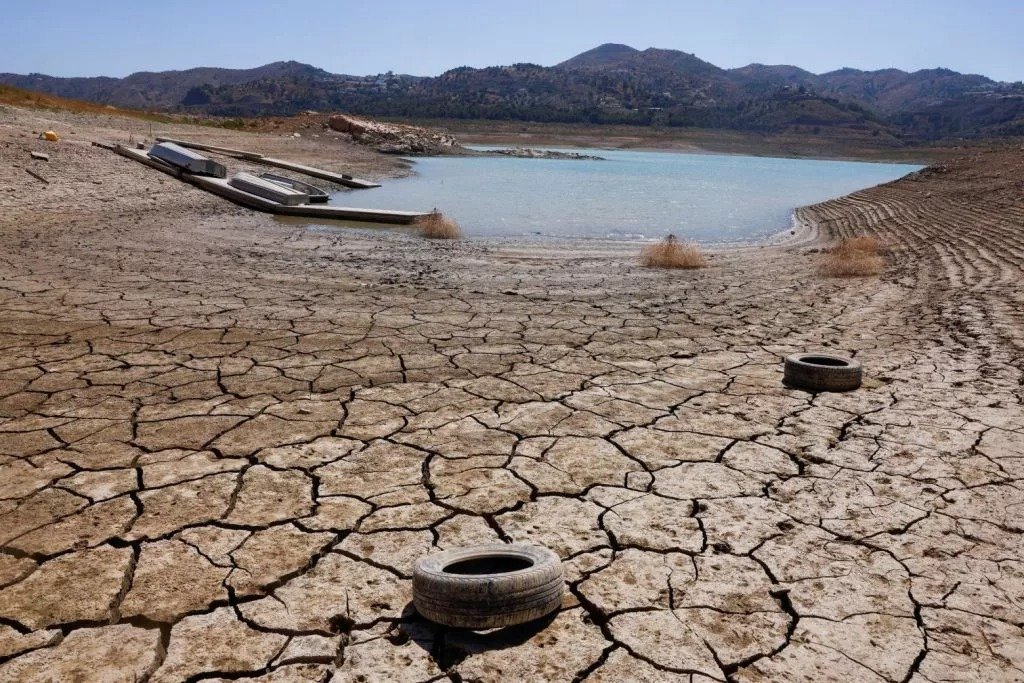
Cyprus is warming nearly twice as fast as the global average, with future generations facing severe water scarcity and extreme weather conditions, according to a report by the Audit Office.
The island’s average temperature has risen by 1.8°C in Nicosia and 2.9°C in Limassol over the past century, significantly higher than the global average increase of 0.74°C between 1906-2005.
The Water Development Department’s analysis reveals annual rainfall has decreased by 87mm (15.6%) over the past 92 years, with 91% of Cyprus now classified as climatically critical or sensitive.
Heatwaves are predicted to increase by 8-12 days per decade, with more days exceeding 40°C expected. Summer days will increase by 8 per decade, while tropical nights could rise by up to 13 per decade.
Natural water resources were insufficient to meet demands in 2010, 2013-17, and 2020-22, the report states, noting that even with desalinated and recycled water, needs were not fully met in 2013, 2014, and 2017.
The audit revealed excessive extraction in 14 of 22 Groundwater Systems, with seawater intrusion affecting seven aquifers. This has led to depleted water tables and deteriorating water quality.
Agricultural productivity has declined due to drought, extreme weather events, and soil degradation. Climate change is expected to further reduce water availability and quality while increasing drought frequency and severity.
Annual water demand in government-controlled areas totals 270 million cubic metres, with the agricultural sector consuming 59.1% despite contributing only 2.3% to GDP. Domestic use accounts for 29.6%, while industry (3.0%), tourism (4.9%), and livestock (3.3%) consume the remainder.
Non-climatic factors, including population growth, rising living standards, and seasonal tourism flows, particularly in summer, have significantly influenced water and food demand.
Flood frequency has increased dramatically, with 61% of recorded floods occurring between 2000-2010. Records from 1859-2011 compiled by the Water Development Department show urban floods (37%), flash floods (20%), river floods (16%), and pluvial floods (13%) among the documented incidents.
Rising sea levels, forecast to increase by 58cm by century’s end, will add over €4.3 million in annual infrastructure maintenance costs and require new investments to maintain vital facilities.
The Audit Office has recommended the Water Development Department urgently revise and update its Water Policy Report to adapt to current conditions and climate change developments.
Read more:

