


A Cypriot climate researcher warned of severe consequences for the country if greenhouse gas emissions continue unchecked.
Dr George Zittis, from the Cyprus Institute’s Center of Excellence for Climate and Atmospheric Research, said rising temperatures and decreasing precipitation threaten Cyprus’ natural environment, public health, and economy.
“Cyprus and the Eastern Mediterranean are climate change hotspots, experiencing significant summer temperature increases,” Zittis said, highlighting a trend distinct from other regions. He noted the potential for these rising temperatures to exacerbate existing issues like energy demand and agricultural production.
The scientist also linked higher summer temperatures to an increase in wildfires.
Another characteristic of our region, he said, alongside rising temperatures, is the decrease in precipitation. “Even though the trends are not as clear as those of temperature, we are moving towards drier climatic conditions,” he noted, adding that in higher latitudes, climate change contributes to increased rainfall.
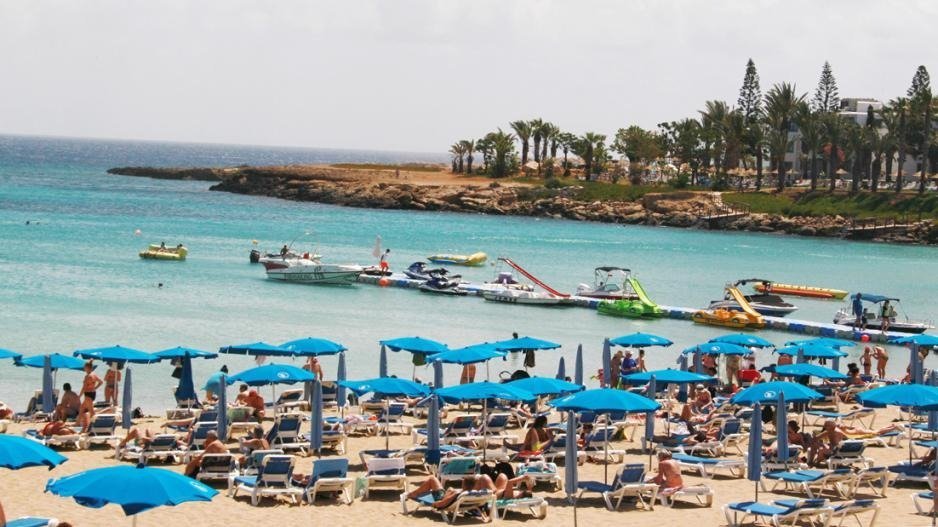
When asked about the potential impacts of rising sea levels, Zittis pointed out that in Cyprus, most infrastructure, such as airports, ports, and power stations, is located near the coast. Additionally, the majority of tourist activities are centred on the coastal areas. “We believe they will be affected by rising sea levels,” he said.
He added that, under a pessimistic scenario, if greenhouse gas emissions continue at current rates and no timely action is taken, “rising sea levels are expected to destroy approximately 50% of Cyprus’s beaches.” He clarified that these predictions are for the next 50 years.
When asked if the situation could be reversed if measures are taken, Zittis said that any measures would need to be implemented within a short timeframe. “In the next decade, we must significantly reduce greenhouse gas emissions to limit this temperature rise and consequent sea-level rise,” he emphasised.
Nevertheless, he underscored that “the magnitude of current concentrations is such that even if we were to stop emitting greenhouse gases entirely, temperatures will continue to rise for the next two to three decades.” Therefore, he said, adaptation measures must be considered to cope with the increasingly warmer and drier conditions.
These measures could include more rational water resource management, energy-efficient buildings, improved air conditioning (such as the ongoing discussion about schools), more resilient crops suited to warmer and drier conditions, and even a shift in our tourism model.
“As our summers may become too hot even for tourists, we should explore opportunities during the slightly cooler seasons,” he noted.

