



January 2025 has been confirmed as the warmest month ever recorded, the European Union’s Copernicus Climate Change Service (C3S) reported, marking the latest milestone in a series of temperature records.
The record-breaking temperatures persisted despite the end of El Niño conditions, which had contributed to warming trends throughout 2023-2024, and the emergence of typically cooling La Niña patterns in the tropical Pacific.
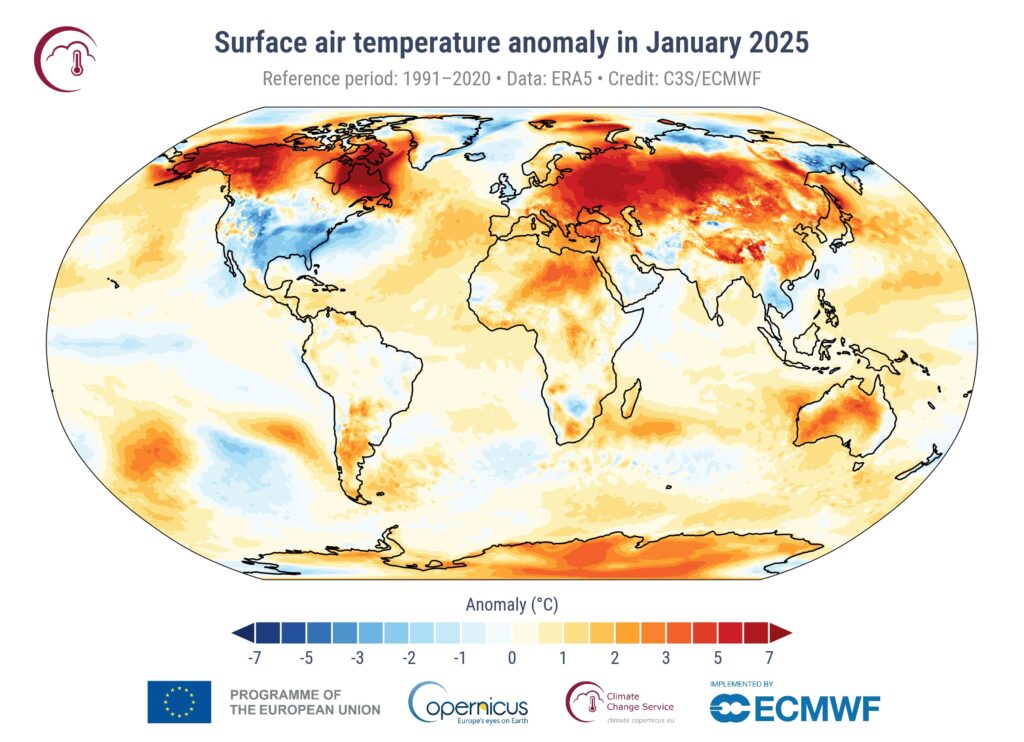
Global surface temperatures averaged 13.23°C in January, surpassing pre-industrial levels by 1.75°C, according to Copernicus data.
The rise is attributed to continued human activities, particularly the use of fossil fuels for energy production.
“This is another exceptional month in a sequence of records”, said Samantha Burgess, deputy director of C3S, noting that high temperatures have continued for a third consecutive year despite La Niña conditions, which typically bring cooling effects.
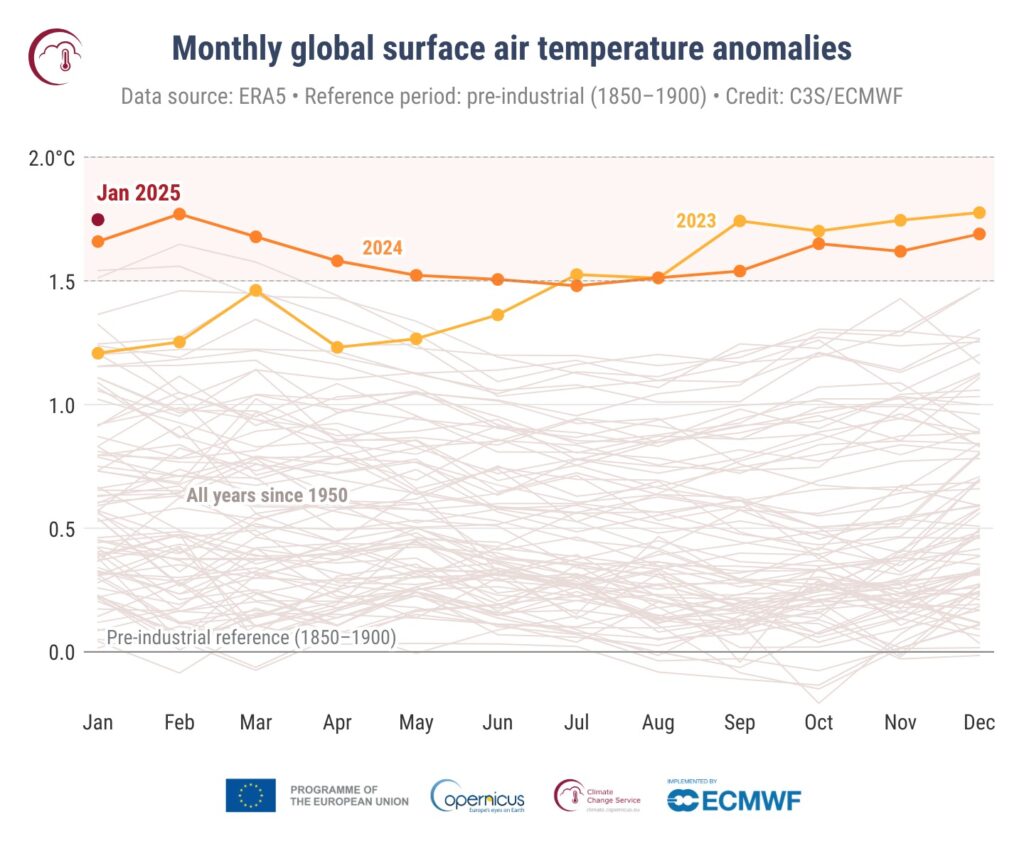
January 2025 marked the 18th month out of the last 19 to exceed the 1.5°C threshold above pre-industrial levels, a key target of the 2015 Paris Agreement.
However, scientists note that long-term warming is measured over decades, with current estimates placing the sustained temperature increase at about 1.3°C.
The UN’s Intergovernmental Panel on Climate Change (IPCC) projects the 1.5°C threshold will likely be breached between 2030 and 2035, regardless of emissions trajectories.
Ocean temperatures, which regulate global climate patterns across more than 70% of Earth’s surface, remained at unprecedented levels first observed in April 2023.
January 2025 recorded the second-highest sea surface temperatures, just 0.19°C below January 2024’s record.
Copernicus warned that indicators suggest a slowdown or halt in the transition to La Niña conditions, potentially limiting expected temperature decreases throughout 2025.
(information from amna.gr)
Read more:

