


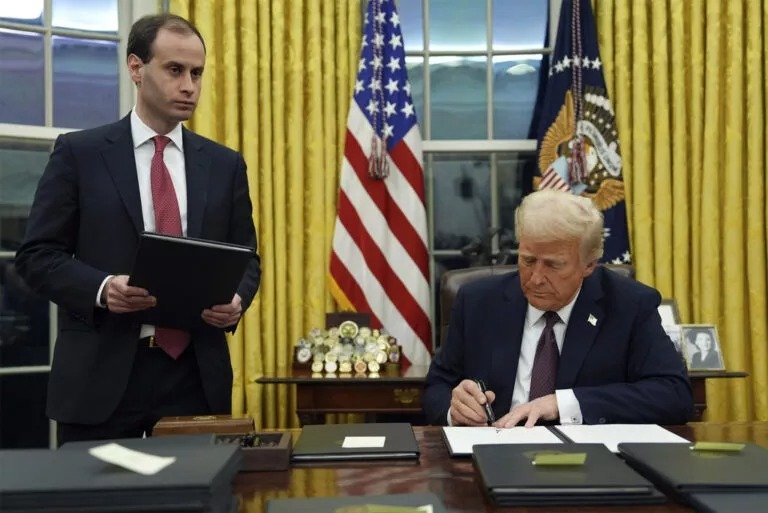
Donald Trump marked his return to the U.S. presidency with a series of executive orders targeting immigration, climate policy, and pardons for January 6 defendants, signalling a dramatic shift from his predecessor’s policies.
In his first day in office, Trump pardoned approximately 1,500 people connected to the January 6, 2021, U.S. Capitol attack and ordered an end to federal cases against what he termed “political opponents” of the Biden administration.
On immigration, Trump declared a national emergency at the U.S.-Mexico border, suspended the refugee admission programme, and reversed Biden-era deportation priorities.
He also moved to end the CBP One border app, which had facilitated legal entry for nearly one million migrants.
The president withdrew the United States from the Paris climate accords and declared an energy emergency, promising expanded fossil fuel production, particularly in Alaska.
He also signed orders to ease regulations on oil and natural gas production.
In economic policy, Trump announced plans to impose 25% tariffs on Canada and Mexico starting February 1 and issued a memorandum directing federal agencies to combat inflation.
He also moved to pause Congress’s TikTok ban for 75 days while seeking a U.S. buyer.
Additional orders included halting federal hiring except for military positions, terminating diversity and equity programmes in federal agencies, and rolling back protections for transgender individuals.
Trump also established a Department of Government Efficiency to be led by Elon Musk.

