


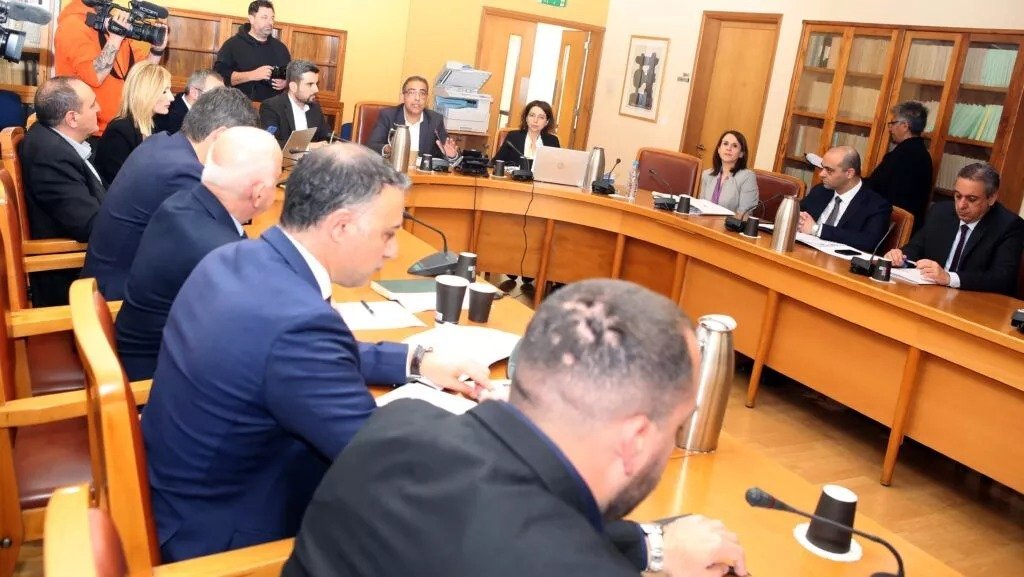
Minister of Labor Yiannis Panagiotou definitively dismissed yesterday the possibility of changes to the operating hours of stores, but discussion in Parliament regarding Sunday operation of stores in relation to workers’ compensation is not ruled out.
Today, as clarified yesterday during the discussion in the Parliamentary Committee on Labor, employees who work on Sundays in stores operating seven days a week, meaning every day of the week, are not paid overtime for Sundays, meaning one to two, as these specific employees work on a five-day basis, with Sunday included as a regular workday, but receiving two 24-hour periods as rest periods (off) weekly and working 38 hours per week.
Regarding this issue and responding to various inquiries raised yesterday by members of the parliamentary Labor Committee and apparently to a remark by Committee President Andros Kafkalias that workers are not compensated adequately for Sundays, Head of the Labor Relations Department at the Ministry of Labor, Andis Apostolou, clarified that the law is clear and has not been affected by interventions regarding store hours.
According to him, weekly working hours in stores are 38, daily hours are eight, and an employee can work up to two overtime hours on a daily basis.
He stated that the law also stipulates that if an employee works overtime on weekdays, each additional hour beyond the two they can work is compensated at one and a half times the regular rate.
Regarding Sundays, he mentioned that it is stipulated by law that in general stores open seven days a week, an employee is entitled to one 24-hour off every other Sunday, and if they are called to work on the off day—and thus accept to work a second consecutive Sunday—they must be compensated double per hour.
“The first Sunday is within the 38 hours, the second Sunday is compensated with double wages,” he said.
Compliance with labor rights in stores is a priority for the Ministry of Labor, the responsible minister stated, mentioning that, based on inspections conducted, the provisions of legislation regarding workers’ compensation and other rights seem to be respected, welcoming this fact.
He specifically mentioned that the percentage of criminal cases registered in court by the ministry for violations concerning workers is less than 1%, through more than 2,000 labor inspections per year.
Responding to positions raised yesterday about legal gaps in legislation regarding operating hours, he clarified that the possible need for codification of the overall framework does not concern workers’ rights, which continue to be safeguarded by legislation.
On the part of the President of the Labor Committee, Andros Kafkalias, the issue of legal gaps seems to remain, urging the representative of the Legal Service to address the issue, but not being satisfied with the answer given.
He reiterated that for AKEL, at least, it is not normal for stores to work every Sunday of the year, clarifying that there is no intention on the part of Parliament to challenge the authority of the executive branch to determine store hours, which has been confirmed by judicial decisions.
He also mentioned that the Labor Committee will monitor developments regarding the issue and will determine its next steps, without referring to a new examination of the issue by Parliament in the immediate future.
In later statements, he supported the necessity of dialogue with social partners and with advisory committees established by law, insisted on the existence of legal gaps, and emphasized the need for strengthened inspections for the employment conditions of workers in this sector and the empowerment of their position through the negotiation of collective agreements or even regulatory provisions in legislation.

