


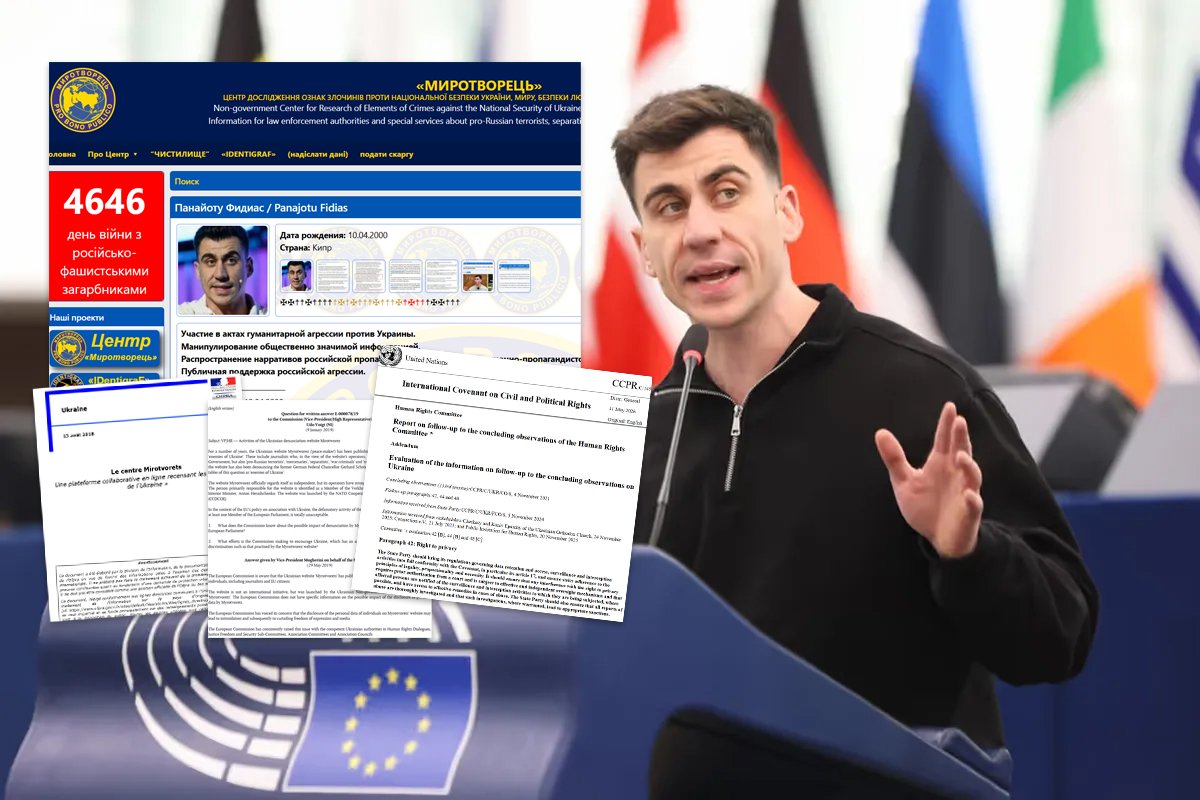
Greek Cypriot MEP Fidias Panayiotou was added on Friday to the database of Myrotvorets, a Ukrainian website criticised internationally for publishing personal data, which presents him as a tool of “Russian propaganda” knowingly acting in Moscow’s favour.
The website’s operators have placed him on a long list of officials and other public figures who, in their view, have acted against Ukraine’s national interests. In his entry, they ask law enforcement authorities to treat the publication as a complaint that he has knowingly committed acts against Ukraine’s national security, peace, the security of humanity and the international legal order, as well as other offences.
Phileleftheros repeatedly tried to reach Panayiotou by phone and an associate of his in writing for comment, but received no response.
The entry
The entry, dated 6 November 2026, was traced by Phileleftheros, which had also found a Russian-language report on the listing. Beneath his name and date of birth, the website accuses him of taking part in acts of humanitarian aggression against Ukraine, manipulating information of public interest, spreading Russian propaganda narratives, joining the information and propaganda activities of what it calls the Russian aggressor, and publicly supporting Russian aggression.
The website then lists published news items that it says show his actions and positions relating to the Kremlin since his election as an MEP. It refers to two trips to Russia, in 2023 and 2025, during which, according to its operators, he visited Red Square and met Vyacheslav Volodin, the chairman of the Russian State Duma and a member of the ‘United Russia’ party.
The entry also cites statements he allegedly made on sending weapons to Ukraine, as well as what it calls a controversial position on the displacement of children from Ukraine. It further refers to a related resolution on minors and the stance he took on it.
Criticism of the website
Myrotvorets has not been officially linked to the Ukrainian government, and its database of personal details of politicians, journalists and other officials has drawn protests from official bodies around the world.
On 2 June 2016, ambassadors of the G7 countries expressed deep concern over the mass publication of journalists’ personal data on the website. In a statement carried on a UK government website, they said it ran counter to Ukrainian law, under which personal data may be made public only with the person’s consent.
Reports from the end of the last decade to the present show that the European Commission, the European Parliament and the OSCE, among others, have intervened, calling on the Ukrainian government to address the issue and investigate possible illegality.
According to a UN document dated 11 May 2026, Ukraine informed the UN Human Rights Committee that it had opened a consolidated criminal case into the illegal collection and dissemination of personal data through the website.
European media reports have at times linked the website to former officials of Ukrainian agencies, and its operators have been criticised for restricting freedom of expression.

