


Tufan Erhürman has spent the past year, since taking over the leadership of the Turkish Cypriot community, arguing that a favourable climate must first be created on the Cyprus issue before expanded talks or even a resumption of negotiations can take place.
However, his insistence on creating such a climate is being interpreted within the Greek Cypriot side as an attempt to delay the convening of a multilateral conference rather than contribute to a successful new effort.
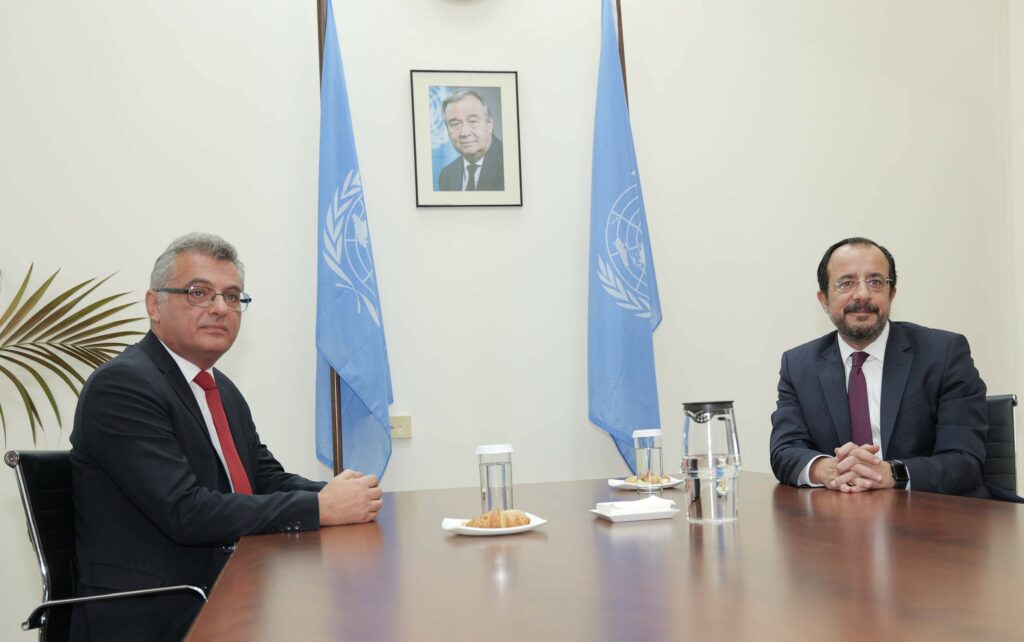
At his latest meeting with President Nikos Christodoulides, Erhürman appeared particularly irritated even before the two leaders began their discussion. His reaction was linked to comments Christodoulides had made in an interview with the Turkish Cypriot newspaper Yeni Düzen.
The President’s references and messages directed at Erhürman appear to have annoyed the Turkish Cypriot leader, who responded by once again raising the issue of creating a favourable climate, citing part of the messages delivered by UN Secretary-General Antonio Guterres during his visit to Cyprus.
At the same time, Christodoulides’ remarks appear to have received a positive response in the north, something that has further increased Erhürman’s frustration. Within the Turkish Cypriot community, his continued focus on creating a favourable climate is being interpreted as an effort to delay developments rather than help move the Cyprus issue forward.
The coming period is expected to be more challenging for Erhürman, as he will face pressure both from Ankara’s policy on the Cyprus issue and from the upcoming “electoral process” in the north for the selection of the “parliament” of the breakaway regime.
The so-called “municipal and parliamentary elections” are expected to take place on 6 December, according to information published in the Turkish Cypriot press, meaning the north is entering a pre-election period.
This is considered a negative development for UN Secretary-General Antonio Guterres’ effort to convene a new informal 5+1 meeting in the coming months, during which he hopes to announce the resumption of Cyprus talks.
A number of Turkish Cypriot parties, including the National Unity Party (UBP), which currently holds a majority in the breakaway parliament, are the main representatives of Ankara’s policy on the Cyprus issue. At the same time, they challenge Erhürman’s moves, including references pointing towards a return to negotiations or positions that do not adopt Ankara’s policy for a “two-state” solution.
In a pre-election climate, it is expected to become more difficult for Erhürman to take steps that could contribute to a resumption of talks. Parties such as UBP are expected to adopt stronger positions in the coming period, with support from Turkey, which is not favouring a return to negotiations.
At the same time, Ankara could send a message, directly or indirectly, to the United Nations that the north is entering an “election period” and that this should be taken into account. It could also invoke the precedent created by the UN Secretary-General’s personal envoy, who referred to parliamentary elections in the Republic of Cyprus to put the Cyprus issue on hold until last June.
The two leaders are due to hold another meeting next Thursday, their last before travelling to New York, where they will hold separate meetings with the UN Secretary-General. Christodoulides will meet Guterres during the High-Level Week, while Erhürman will meet him immediately afterwards.
Until then, it is considered difficult, if not impossible, for the two sides to produce any deliverables that would provide momentum for progress on the Cyprus issue.

