


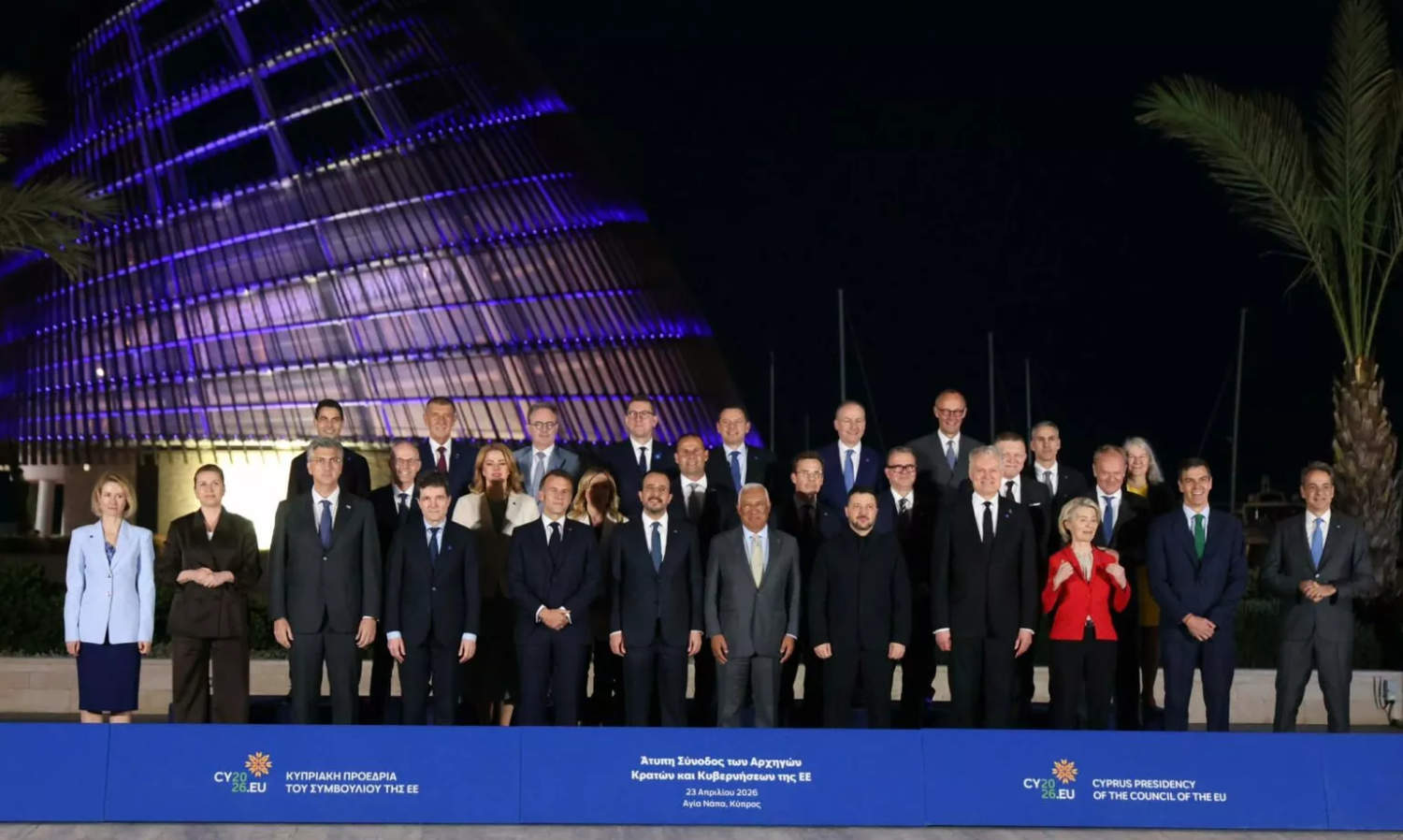
The political decision to open serious discussions on blueprint around the activation of Article 42.7 of the EU Treaty was taken at the Ayia Napa summit. But diplomatic sources in Nicosia told philenews the difficult work is only now beginning — and the gaps that need filling are significant.
Ten years of inaction
Article 42.7, introduced in 2009, obliges all other EU member states to provide assistance and support by all means available if a member state suffers an armed attack on its territory. The last time the EU engaged seriously with the clause was in 2015-2016, when France activated it following the Paris terrorist attacks. That activation exposed serious gaps in the mechanism. The Council issued a legal opinion analysing exactly what the provision meant, and the Commission produced a paper recording the “lessons learned” from the French activation.
And there, the discussion stopped.
“For ten years nothing happened,” diplomatic sources acknowledged. Cyprus, drawing on its own experience of having seriously examined the possibility of activating the clause, has been working through the gaps step by step — and says it now knows better than anyone else exactly where the problems lie.
A legal duty, not a political choice
The Cypriot approach rests on a central legal argument: when a member state activates Article 42.7, the obligation on the remaining 26 member states to provide assistance is not a political choice. It is a legal duty.
“The 26 have no role in deciding whether to question why you are activating it,” diplomatic sources said. The only criterion the provision requires for activation is an armed attack on the territory of a member state. Nothing else. The assistance provided cannot be symbolic — it must be substantive and proportionate to the capabilities of each state.
Equally important, sources said, is clarity about what the clause is not. “It is not a substitute clause. It is not an alliance like NATO’s Article 5. It is an obligation to provide assistance.” Cyprus insists this distinction must be the starting point of every discussion on the subject.
The three gaps that need filling
Beyond the legal foundation, the challenge is deeply operational. Diplomatic sources identified three distinct gaps.
The first is the absence of a recording mechanism — a clear picture of what the activating state needs, what other member states have available, and what each can contribute. “Right now none of us has a picture of which countries have specific procedures, what those procedures are, what capabilities they have, or how quickly they can respond,” sources said.
The second concerns national procedures. Many member states have specific legislative or parliamentary requirements before they can send assistance — which means there is no point requesting something that cannot be delivered in time. “If you are the one burning, you need to know what you can actually receive,” sources said.
The third is the operational question of who speaks to whom. EU institutions, including the European Commission, have no formal role in the process — unless the activating state itself decides to assign them one.
The playbook
These three gaps together point to the need for what sources described as a playbook: a comprehensive guide that answers all of these questions before a crisis occurs, so that a response can be mounted in real time. “When you know what you will ask for and from whom, then you can also do your own planning,” sources said.
What happens next
The European External Action Service has already begun considering next steps. Cyprus says it is ready to contribute, adding that it has done the preparatory work and will engage other member states to build momentum in this direction.
A simulation exercise at ambassador level is planned for May, running through various scenarios for how the EU would respond to an Article 42.7 activation. Cyprus considers the exercise useful for others but unnecessary for itself — “because we have already done the exercise,” sources said.
Following the exercise, a report will go to the Commission, which will forward it to the Foreign Affairs Council. That body will record the findings, though the resulting text will not be final — member states will have the opportunity to submit their own recommendations.
Cyprus’s starting point for the entire process remains two documents: the Council’s 2016 legal opinion and the Commission’s lessons-learned paper from the French activation. After ten years of silence, that is where the discussion begins again.
Read more:

