


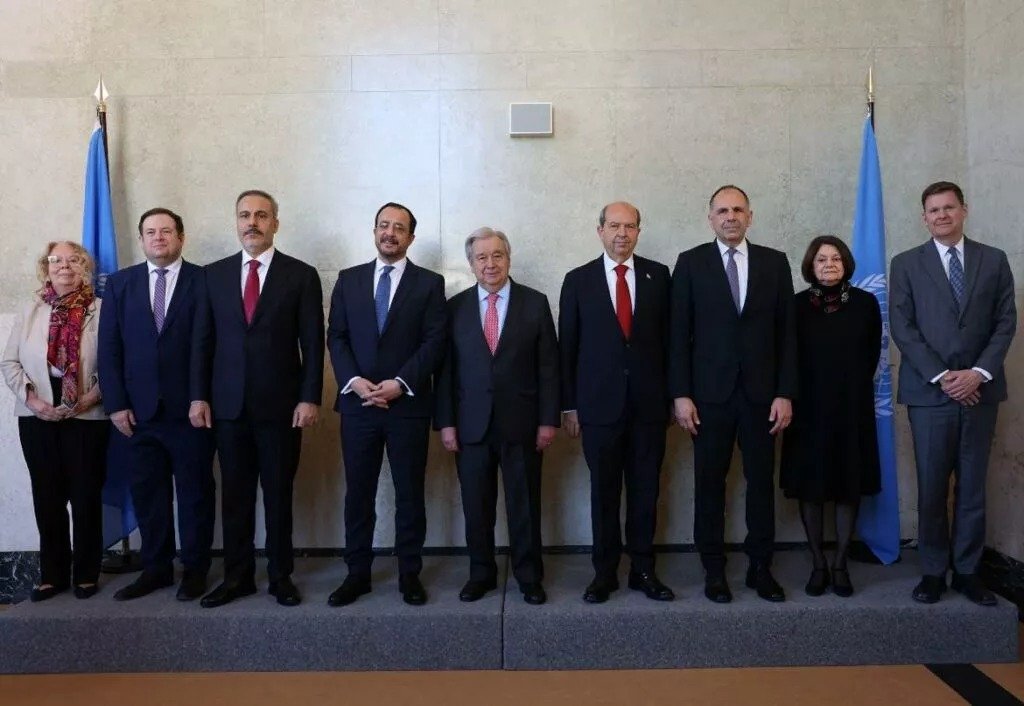
The informal Five-Party Conference on the Cyprus issue, convened by the United Nations Secretary-General, António Guterres, in Geneva over the previous two days, March 17-18, led to developments that we did not expect.
Expectations were lower before the Conference than the outcome that has emerged. Not that there have been major breakthroughs, but steps forward were agreed upon.
The conference, regardless of the results, was not one of high expectations after all, led to steps that create momentum, which will help moving forward. Indeed, it is clear that the coexistence of all involved parties in the same room, after considerable time, was obviously a positive development in itself.
A positive development is also the fact that a new Conference will take place, scheduled for this coming July.
Confidence Building Measures have been announced, which need to be implemented. Whether this will happen, that is whether the occupying side will cooperate to implement them, remains to be seen.
It is clear that the resumption of negotiations was not possible. This was evident from the beginning. The issue, of course, is whether these measures will lead to the resumption of a process of talks.
We must note in all this the intervention of the European Union. The heads of EU institutions, the President of the European Council, António Costa, and the President of the European Commission, Ursula von der Leyen, sent a letter to the United Nations Secretary-General, António Guterres, ahead of the informal Five-Party Conference on the Cyprus issue (yesterday and the day before).
It is clear that through this letter-intervention, the heads of the institutions highlight that the Cyprus issue is a European matter and that while supporting the efforts of the United Nations, their position is that any agreement must be aligned with the principles and values, the legislation of the Union. It reiterates the readiness of Brussels, of the EU, for active action.
This is an important intervention, made at a critical point in the United Nations’ efforts. In our view, it is a move that sends messages to many recipients, which was noted at the appropriate moment by the EU.
This intervention will obviously help moving forward. If and when, of course, there will be a resumption of the negotiation process, which is obviously the objective.
Read more:

