


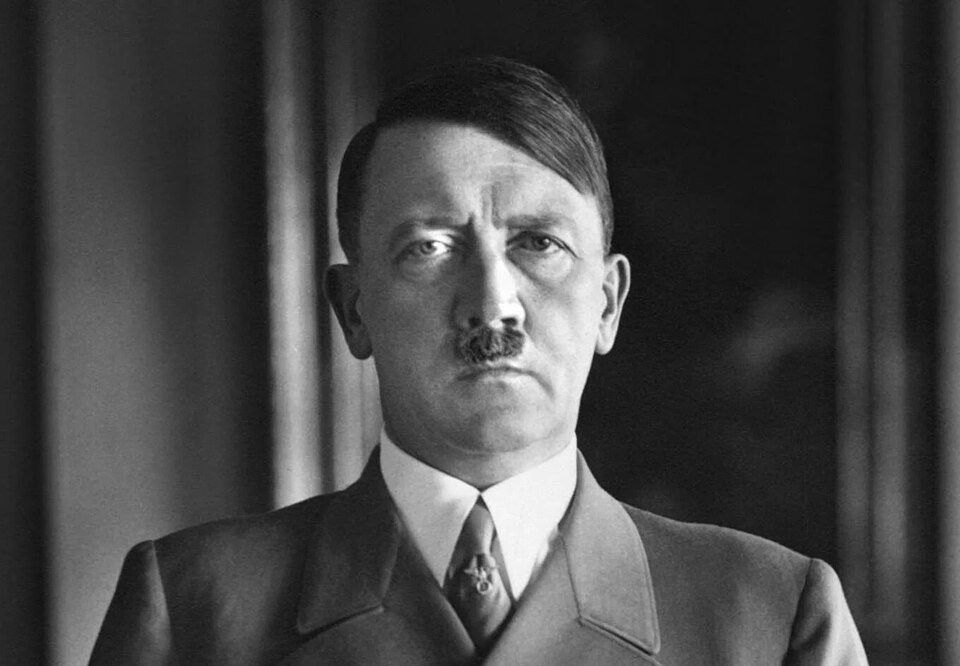
Plenty of Germans, and no shortage of other Europeans, reckon they can see the ghost of Hitler hovering over Germany once more. Little wonder. The far-right Alternative for Germany (AfD) has just won a landslide in Saxony-Anhalt’s state election, bringing a far-right party closer to power in a German federal state than at any point since the Second World War. Ulrich Siegmund, the AfD’s leader there, rejects any such comparison, of course. His opponents aren’t buying it, accusing him of language that echoes Nazi rhetoric on more than one issue.
So Hitler is back in the headlines. And once again, I found myself reaching for that extraordinary book, “The Anatomy of Human Destructiveness,” by the German social psychologist and psychoanalyst Erich Fromm (1900-1980). In this forensic psychobiographical study, Fromm draws on Albert Speer (1905-1981), the architect and Nazi politician who stood closer to Hitler than any other figure in the regime, to make a striking point: Hitler’s real passion was architecture, not painting, a craft he had precious little talent for in any case. His paintings were a lifeless, dead extension of his own soul, and yet they now sell for eye-watering sums to anonymous, wealthy collectors, for reasons I suspect only a psychoanalyst could properly explain. As Fromm puts it: “Hitler’s fundamental lack of education drove him to systematically avoid inviting academics and other educated people into his office or his home, because a conversation with genuinely cultured minds would have threatened the entire edifice of his shallow knowledge. The one exception to this was Hitler’s relationship with architects, simply because he loved architecture, which seems to have been the only genuine interest in his life, outside himself, that wasn’t narcissistic and wasn’t an expression of destructiveness.”
Christina Wieland’s work is worth turning to as well. A Greek Cypriot psychoanalytic psychotherapist based in England, she wrote about the phenomenon of “inner fascism,” observing that “the absence of an inner world, the inner emptiness in Hitler, has been noted by many writers, including Ian Kershaw, who calls him a ‘non-person,’ Sebastian Haffner, who sees him as an ’empty man,’ and the psychoanalyst Walter Langer, who describes Hitler’s inner world as a void that he filled with Germany itself, since he felt love for no one and had neither friends nor family.”
It’s that same void, Dr Wieland argues, that lies behind the urge some now see stirring again: “The desire to destroy the entire world and rebuild it from nothing is unquestionably part of the fascist ambition.”

