


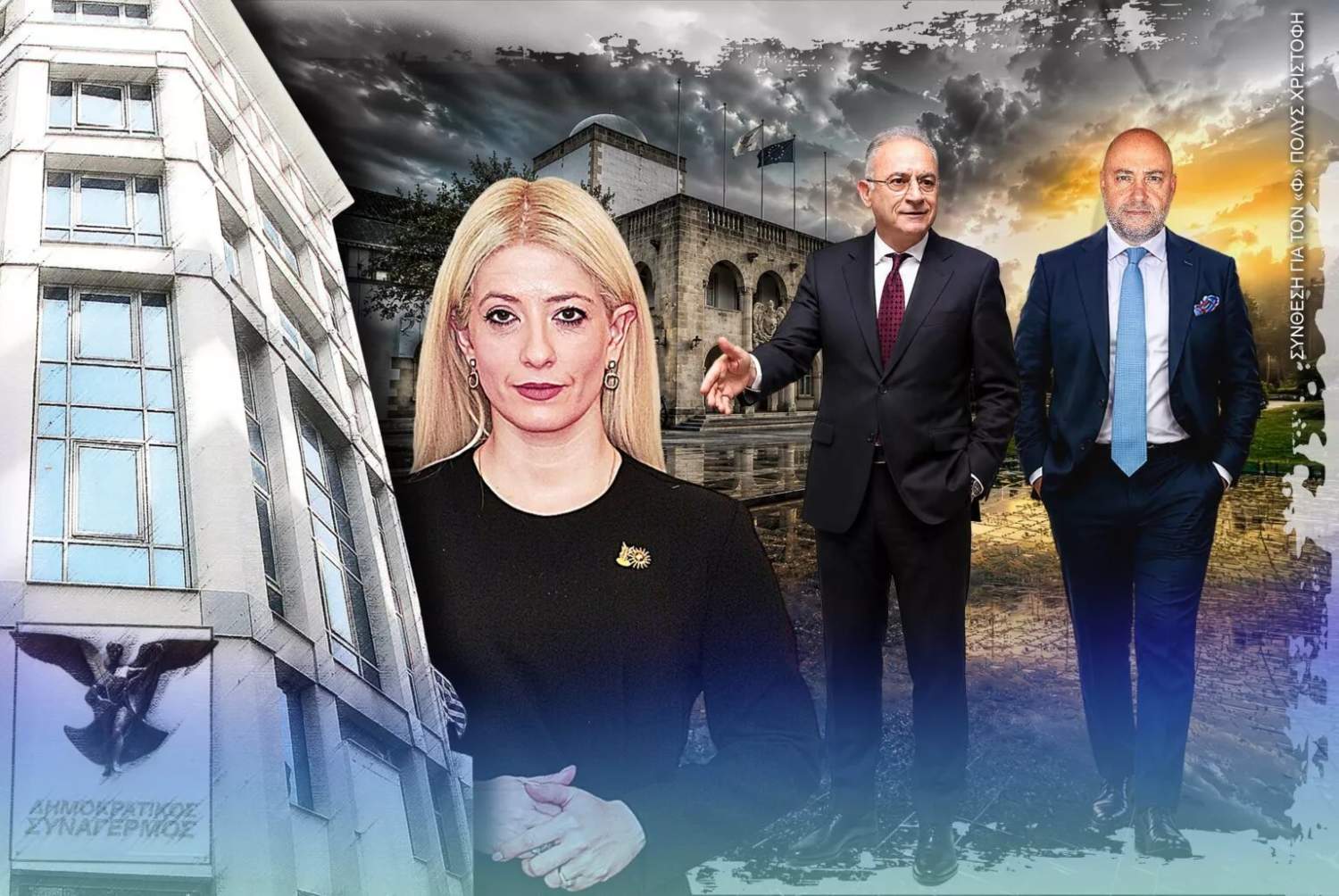
In politics, nothing stays put. Events, circumstances and personalities can upend the whole picture and turn everything on its head. History, after all, can be written in many ways. What the day after looks like at Pindarou may well depend on the road to the 2028 presidential elections. And there may be other stops along the party’s route before then.
One thing, however, is a given. The Democratic Rally (DISY) is facing one of the hardest moments in its history, if not the hardest.
The 2023 presidential elections left a deep scar on the party. That is a fact. The leading players of that period bear responsibility too, both for the choices they made and for the way the clash played out.
Perhaps the greater responsibility lies in how the stretch between the first and second rounds was handled. It was a period when passion trumped reason, and political judgement gave way, to a large extent, to hooligan instincts rather than cool heads. All this from people in a party that claims political realism as its banner.
The current leadership’s share of the blame, though, starts right there. From its very first day in charge.
Flip-flopping, contradictory choices and erratic tactics. From the flirtation with the Presidential Palace to the much-discussed party congress and the decision to suspend the party membership of government ministers. Positions constantly shifting, a policy of blowing hot and cold, and a political message that failed to convince on either consistency or strategy.
And yet, for all the mistakes and contradictions, the party and its leadership were given a second chance. DISY’s supporters gave them a vote of confidence, making the party the largest and handing it a share of the vote that was high by today’s standards.
From that Sunday night, if not before, what appears to have been an anxious drive to secure the House presidency got under way. Straight after that, the ship set its course for the presidential elections.
For some, a perfectly logical next step. Logical, that is, only for those who choose to look at the surface and not the substance.
Because the real message of the ballot box was never read properly. The final result was shaped by the momentum generated by the 56 candidates who fought the campaign, by the worry among part of the electorate that the political landscape was coming apart, and by fear of political chaos. The mobilisation of every faction within the Rally, all putting their shoulders to the wheel, certainly helped too.
Some did so because they genuinely believed in the party’s course. Others because they chose to believe in the constructive ambiguities of the campaign pledges, which were made in contradictory terms to both the Presidential Palace and Averof Neofytou.
Let’s not kid ourselves. That played its part too.
But the story does not end there. Political responsibility is not simply about taking decisions. It means grasping their weight, weighing up the consequences and having the political courage to stand by your choices to the very end.
Seen in that light, the fact that a second-round scenario is already being discussed, even on the top floors at Pindarou, is the clearest admission that something has gone wrong. It is, in effect, a confession that the original plans may not survive contact with reality. And when political management ends in second thoughts and after-the-fact readjustments, talk of tactical manoeuvring is not enough to paper over the problem.
Because had there been sound political judgement from the outset, and a serious weighing-up of all the facts, the balance of forces and every factor in play, the question of whether to go the distance would have been asked much earlier. The calculations would have been different. And perhaps the decisions would have been too.

