


Will today’s energy crisis push Europe to step up its drive for more ‘green energy’ in its mix? Just as it did after Russia invaded Ukraine, when the EU decided to wean itself off Russian fuel in a hurry? And plug the inevitable ‘hole’ in its supply with dearer oil and gas from elsewhere?
How much faster can the Union move to cut its use of fossil fuels further, given all the problems its members face?
Inadequate transmission and distribution grids, which have left, and still leave, huge investments in renewables on ice or under-used because of curtailment. A shortage of storage. The enormous cost of keeping conventional power in reserve and balancing the grid. Limited or dysfunctional interconnectors. And diesel’s massive grip on transport, and with it on supply chains.
And how will the European Union and governments handle the costly coexistence of renewables and fossil fuels on the grid? That cost keeps prices high for consumers, when it doesn’t send them soaring at the first sign of international turmoil, even though green energy is far cheaper to produce.
Then there is the competitiveness of European industry, which is finding it ever harder to hold its own against other major markets. A faster green transition and a smaller economy, in the short and medium term? Is that something European societies are prepared to discuss?
More energy from renewables means the EU relies less on imported fossil fuels and is less exposed to geopolitical uncertainty and international crises, the Commission points out.
At the same time, a faster move to green energy, with today’s problems pushing up the cost of the transition, breeds heavy dependence on the makers of ‘clean’ technology, mainly in China.
Think of solar panels: 90 per cent were imported from China in 2025, according to Eurostat. Wind turbines: about 60 per cent from China. Then there is the mass purchase and installation of storage equipment, new interconnectors, the switch to electric and hybrid cars, the push for public transport with less carbon or none at all, and fitting electric vehicle chargers at millions of sites and along road networks.
And all that kit gets replaced, bit by bit. You don’t buy it once and forget about it.
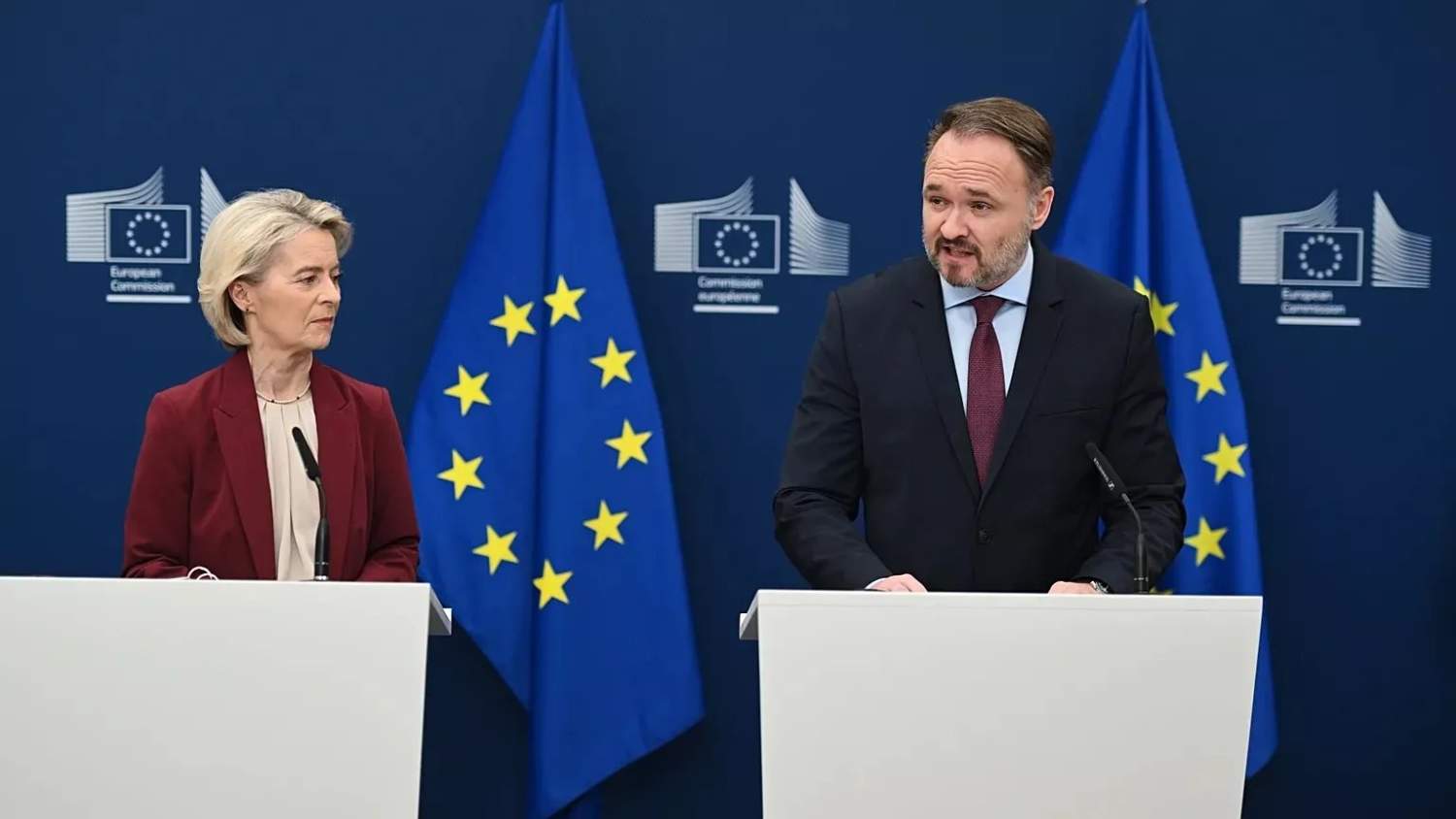
On Wednesday, the European Commission opened a dialogue with European industry, the energy sector in particular, in a joint initiative by its energy and defence commissioners. Guess what for? To turn Europe’s refineries into a strategic pillar of the EU’s energy security and defence readiness, with more and cheaper (fossil) fuel to hand and less dependence on imported refined oil products.
For the two commissioners, Jorgensen and Kubilius, the priority is to squeeze as much diesel and jet fuel as possible out of them, including for the defence industry and the armed forces. The Commission is obviously right to raise its defences. But it is doing so by turning to the oil industry, European or global, for support. It, too, is seeking refuge in fossil fuels, if only as a stopgap: a medium-term stage for adjusting better to decisions already taken on an irreversible course towards the green transition. Quite right too. But it should have secured a smoother, more controlled path to decarbonisation sooner.
The direction is one thing. The journey to the goal is quite another.
Brussels and many governments have struggled to grasp that. The result is a competitive energy environment, within Europe’s Target Model market and the import and trade of transport and heating fuels, whose pricing is scandalously unfair. Unfair on electricity consumers, despite sporadic government interventions with price caps, tax breaks and subsidies. Unfair on drivers of combustion-engine cars, on consumers at the end of the supply chain and on European industry.
On the sidelines of Wednesday’s meeting on European refineries, Commissioner Jorgensen said we are once again living through a serious energy crisis that will make this winter very hard for millions of Europeans because of high prices. A few hours later, that afternoon, gas in Europe broke through 100 euros a megawatt hour for the first time since December 2022.

