


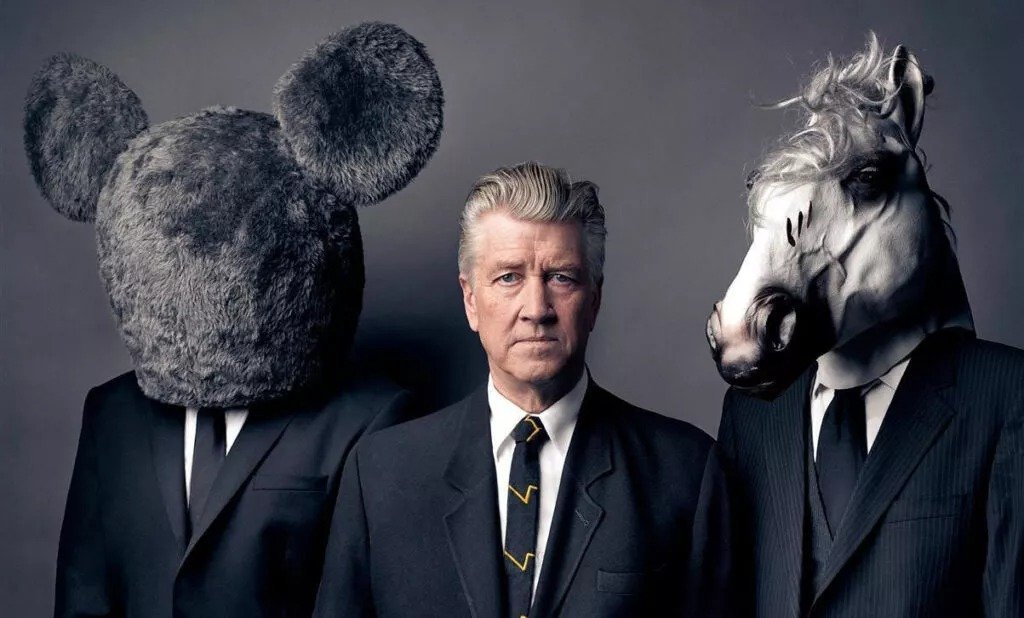
In his autobiographical book “Catching the Big Fish: Meditation, Consciousness, and Creativity”, David Lynch describes visiting a psychiatrist after feeling trapped in a repetitive pattern. Upon entering the room, he asked the doctor if this process might somehow harm his creativity. “Well, David, to be honest, it could.” The director shook his hand and left.
In an age where political correctness has been elevated to religious status and public statements are often interpreted through broader social lenses, this personal experience, if taken out of context, might be criticised as encouraging therapy avoidance, especially by those sensitive to mental health issues. The key here, however, is context. It reminds me of Salvador Dalí’s famous, disarming quote: “The only difference between me and a madman is that I am not mad.”
A visionary and intuitive artist, restless, eccentric, and sensitive, David Lynch directed just ten feature films—the last in 2006. Yet since last Thursday, when news of his death broke, he’s been mourned far and wide on social media, even by those who might never have seen a single one of his films. Such is the nature of greatness. Even more distinct than their body of work is the mark they leave in pushing boundaries, blazing trails, and laying runways for their art to take flight.
Lynch’s worlds are made of the stuff of dreams, in the Shakespearean sense. He knew how to guide his dreams, seeking harmony between the universe and imagination, inviting us to take part in them. To become part of them and discover worlds we never knew existed. Viewing them is both the most bizarre and the most familiar experience.
Film critic Roger Ebert put it brilliantly when discussing “Mulholland Drive”: the less sense it makes, the more we can’t stop watching it. The search for meaning or answers was never a driving force for the “maestro of the uncanny.” “I don’t understand why people expect art to make sense when they accept the fact that life doesn’t make sense,” he once said. He was a creator of questions and stimuli.
The dreamlike scenes in his films will forever haunt cinephiles, not because they were carefully designed as strict references to “Freudian literality,” but because even our most enigmatic and impenetrable dreams would envy his unexpected and incomplete sequences as they triumphantly rupture the membrane of consciousness. In his universe, the image is both an end in itself and a trigger for further image-seeking, as stimuli for kneading more dreams. For a being made to dream, the only path is realising that reality too is an illusion, destined to keep us captive, holding us back from the allure of transcendence, mystery, and dreaming. Lynch sought to set us free.
In the aforementioned book, which also serves as a self-help guide, he shares his belief that ideas are like fish: you don’t create them, you catch them. The starting point is the desire for an idea—something like bait. And when you catch even a small fish, it will attract others, completing the puzzle. However, this puzzle ultimately depicts an image that already exists somewhere in the universe. Thus, he used the language of cinema as an interpreter to express feelings and thoughts flowing through time, inventing experiences whilst keeping ideas tantalizingly abstract.
The term “Lynchian,” like “Kafkaesque,” has been officially added to the Oxford Dictionary and will increasingly be used beyond cinema. As an architect of swooning nightmares constructed from the shadows of memories, he left behind work that penetrates the fantastic, the surreal, and the eerily real. He never succumbed to conventions and dared to explore the dark heart of human experience.
In the worlds he crafted, like René Magritte paintings in motion, everyday life coexists with the paradoxical, and images hide more than they reveal. They function as puzzles, inviting audiences to explore layers of implications and visible threads of the subconscious as they seek living space in real life.
In Steven Spielberg’s autobiographical film “The Fabelmans” (2022), David Lynch makes his last (cameo) film appearance playing legendary director John Ford—a totem of creativity who captured America’s mythology. His presence in the film pays tribute to cinema’s formative power. It adds a postmodern dimension, as his idiosyncratic filmography contrasts with Ford’s structured style.
Embodied in Lynch, Ford’s authority vividly advises Spielberg to “watch the horizon”—to look beyond the obvious, to place life and art elements in a personal perspective revealing deeper truths: “When the horizon is at the top, it’s interesting. When the horizon is at the bottom, it’s interesting. When the horizon is in the middle, it’s boring as shit.”
I leave the quote untranslated because the essence is that to create something truly interesting, you must break free from convention.

