


The British are the masters of “constructive ambiguity.” It’s a long-standing tradition in the Foreign Office for their statements to be deliberately open to multiple interpretations.
This approach, they believe, allows them to obscure their true intentions, leaving others in the dark while British plans and objectives prevail.
A representative of the Foreign Office was asked by the Cyprus News Agency correspondent in London to comment on the outcome of the dinner in New York on October 15 (between António Guterres, Nikos Christodoulides, and Ersin Tatar) and how the British view the prospect of participating in an expanded meeting with all the guarantor powers.
So, what does that mean? It says nothing about the UK’s participation in an expanded conference on the Cyprus issue, the well-known 5+1 (UN)+1 (EU) format.
Yet on October 14, when the issue was raised in London by the Cypriot side, the British gave an immediate response: “Of course, we will be there!”
However, it seems that either something different was communicated to the Turks or they simply don’t want to upset Erdogan.
It’s well known that London always stays close to the occupying power, Turkey, and looks after its interests.
The Turkish side has been pushing for a quadrilateral meeting since the beginning of the year, a long-standing goal tied to its strategy of upgrading the status of the secessionist entity in Northern Cyprus.
Initially, London indicated it had no issue with the idea of a quadrilateral conference, as long as everything that followed took place in its presence, with its participation.
In other words, Ankara would be appeased, but when the talks moved to substantive issues, Britain would ensure it was involved, because it has interests at stake.
However, politics doesn’t work that way, unless these masters of “constructive ambiguity” believe they can deceive everyone by being intentionally vague.
The UK has strategic interests in Cyprus, and through Cyprus, in the wider region.
These interests are clearly not safeguarded by being at odds with the Republic of Cyprus, or more crucially, with Cypriot society itself.
London’s stance contradicts its own interests, which it has failed for decades to align with those of Cyprus. This seems to be a deliberate choice.
The problem for Cyprus regarding the UK’s position is long-standing. London must realise that by undermining the Republic of Cyprus, it is also undermining its own presence on the island.
It’s clear that the root of the issue is the incomplete decolonisation process. Full decolonisation is tied to the full exercise of Cyprus’ sovereignty.
A country’s sovereignty cannot be contingent upon third parties—neither on occupying Turkey nor on a “toothless” colonial Britain.
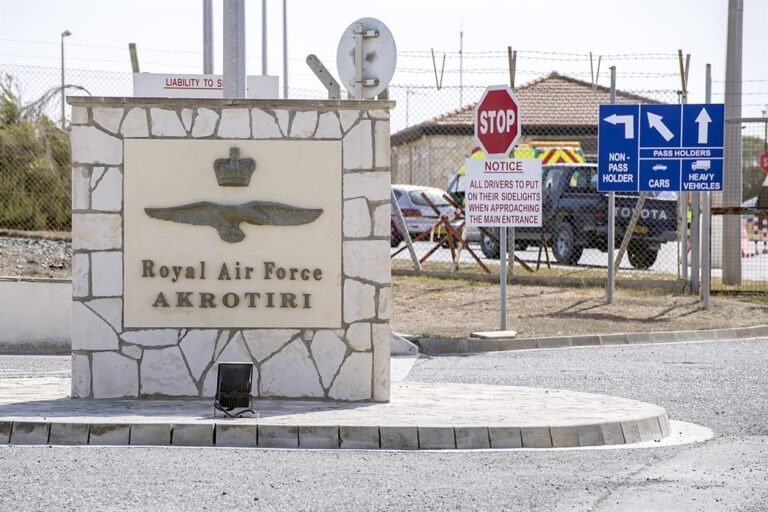
As for the British military bases, which London is so eager to maintain, they are a relic of the colonial past.
This includes their presence, their installations, their operations, and the so-called rights they claim on Cypriot soil.
The presence of these military bases on the island is a constant reminder of “an incomplete decolonisation by the British and an unfinished exercise of the right to self-determination by the Cypriot people.”
Clearly, this situation affects the strategic objectives of the Republic of Cyprus in the region, and it should also be of concern to the European Union, even though Britain is no longer a member.

