


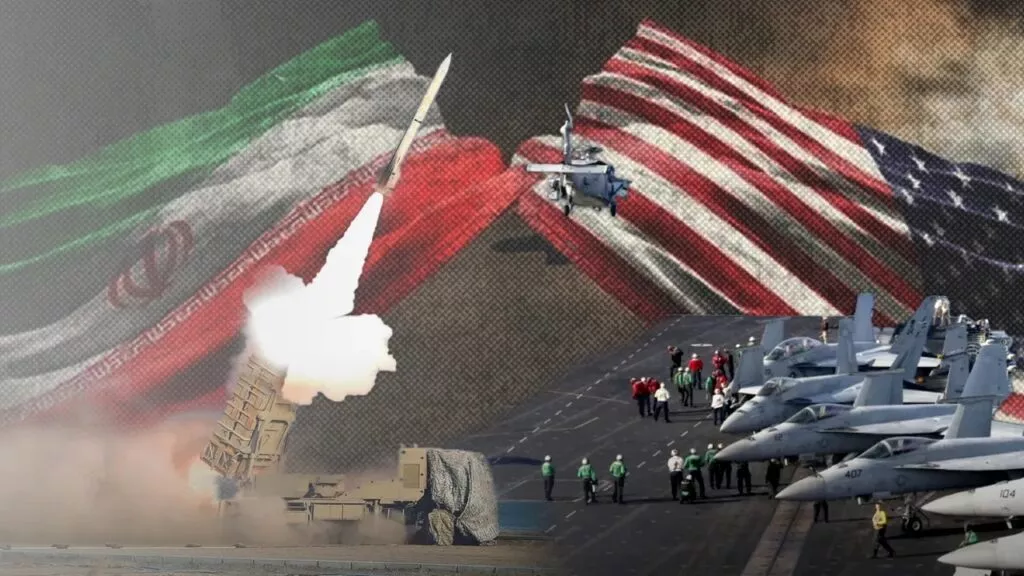
Rising oil prices, threatened shipping routes, and renewed inflation risks show how a regional war is rapidly becoming a global economic crisis.
By Giorgos Kentas, Associate Professor of Governance and Politics, University of Nicosia
A war that began with air strikes in the Middle East is rapidly evolving into a global economic shock. As attacks spread across Iran and the wider Gulf region and the Strait of Hormuz comes under direct threat, energy markets are already reacting. Oil prices have surged, shipping routes face growing risks, and policymakers are confronting the possibility that a regional conflict could once again reignite global inflation.
Two weeks after the United States and Israel launched large-scale air strikes against Iran on February 28, the confrontation is no longer only a military crisis. It is also an economic one. The Middle East remains central to global oil and liquefied natural gas flows, and disruptions in the region can propagate quickly through energy markets, inflation, and financial systems.
The economic transmission mechanism is straightforward and powerful. Disruptions to Gulf energy flows raise global oil prices. Higher energy prices feed directly into inflation and production costs. Rising inflation forces central banks to maintain tighter monetary policy for relatively long periods, slowing economic growth. What began as a regional military confrontation is therefore quickly becoming a macroeconomic shock with global consequences.
This dynamic is unfolding at a particularly fragile moment for the world economy. After the inflation surge of 2021–2023, many economies were only beginning to stabilize price pressures. A renewed energy shock now threatens to reverse part of that progress, forcing policymakers once again to balance inflation control against the risk of recession.
The conflict has now entered its second to third week, with intense airstrikes continuing and Iran launching missile and drone barrages despite claims that its capabilities have been severely degraded. Attacks and retaliations have struck multiple targets in Iran, Israel, US bases, Lebanon, and Gulf countries, with available—though not independently verified—estimates pointing to significant human and material losses.
The human toll is already severe, with civilian casualties dominating the figures (see Table 1). The conflict has also spread to Lebanon, where Israeli strikes have targeted Iranian proxy forces linked to Hezbollah. Iran’s security apparatus has warned that anti-government protesters will be treated as “enemies”. Mojtaba Khamenei, son of Ayatollah Ali Khamenei and designated successor, was reportedly wounded early in the war but has not appeared publicly since.
US President Donald Trump has suggested the war could end “soon,” claiming US forces have destroyed dozens of Iranian naval vessels and left the country with “no navy, no air force, and nothing left to target.” Yet Iran continues to exert effective pressure on the Strait of Hormuz. Naval mines have reportedly been deployed and merchant shipping has come under attack. Three vessels were hit on March 11 alone, bringing the total number of damaged ships since the war began to fourteen. Iranian officials have also threatened to drive oil prices toward $200 per barrel and target banks conducting business with the United States or Israel.
Less visible but equally consequential is the economic chain reaction now unfolding. The Middle East remains a central hub for global oil and liquefied natural gas flows, and roughly one-fifth of the world’s oil trade passes through the Strait of Hormuz. As a result, every attack on energy infrastructure and every threat to maritime transit immediately reverberates through global energy markets.
Oil prices have already surged. Brent crude climbed to around $100 per barrel on March 12, up more than 8 percent in a single day and roughly 40–50 percent higher than pre-conflict levels, after briefly approaching $120 earlier in the week. Markets are now pricing not only immediate disruptions but also the possibility of a prolonged systemic shock, particularly as attacks have extended to Iraqi ports, Saudi oil facilities, and infrastructure in the United Arab Emirates.
For a global economy that had only recently begun to emerge from the inflationary surge of 2021–2023, this could hardly come at a worse time. Energy price spikes function like a tax on households and firms: they squeeze real incomes, raise production costs, and reduce consumer spending. At the same time, they complicate monetary policy by forcing central banks into a difficult trade-off between controlling inflation and preserving economic growth.
The International Energy Agency (IEA) has responded with the largest coordinated release of strategic reserves in its history. Thirty-two countries have agreed to release approximately 400 million barrels of oil, including 172 million from the United States beginning next week, in an attempt to stabilize prices. While such measures can provide short-term relief, analysts warn they may only partially offset disruptions if attacks on energy infrastructure or shipping routes continue.
For net energy-importing economies, the main transmission channel is inflation. Higher fuel prices raise transport, heating, and manufacturing costs, eroding real incomes and complicating monetary policy. If central banks tighten policy too aggressively, the result could be a recession. If they ease too soon, inflation expectations may become unanchored, repeating the policy errors seen during the oil shocks of the 1970s.
The economic consequences are unevenly distributed (see Table 2). Gulf economies face direct security risks as attacks on ports, refineries, and liquefied natural gas terminals disrupt exports and require costly repairs. Europe, despite having diversified away from Russian gas since 2022, remains vulnerable to another energy shock. Households and industries are still adjusting to structurally higher energy prices, and political leaders are increasingly frustrated by the absence of a coherent long-term strategy.
Two broad scenarios primed to define the economic outlook.
In a controlled-escalation scenario, hostilities remain contained and some form of ceasefire or operational pause emerges within the next one to two weeks. If Iranian military capabilities are further degraded and indirect diplomatic channels gain traction, oil prices could gradually fall toward $85–90 per barrel by mid-year. Under this path, the additional impact on global inflation might remain closer to the lower end of current estimates—roughly 0.5–0.7 percentage points—and the drag on global growth would likely remain manageable.
In a prolonged-crisis scenario, the conflict expands further, causing significant damage to regional infrastructure or leading to a full closure of the Strait of Hormuz. Under such conditions, oil prices could climb above $110–120 per barrel and potentially approach the $200 level threatened by Iranian officials. That outcome would likely raise global inflation by around 1–1.5 percentage points over the next year, significantly increasing the risk of recession in Europe and parts of Asia.
What policymakers can do?
Given these risks, policymakers cannot treat the conflict as a distant regional war. The immediate priority must be to mitigate the energy shock while strengthening structural resilience against future disruptions.
First, governments should focus on targeted fiscal support rather than broad market interventions. Temporary, means-tested assistance to vulnerable households and energy-intensive industries can cushion the impact of higher prices while preserving market signals that encourage conservation and supply responses. Blanket subsidies or price caps, by contrast, risk distorting incentives and imposing heavy fiscal costs.
Second, strategic reserves and supply diversification should be treated as core pillars of economic security. Coordinated releases from emergency stockpiles provide valuable short-term relief, but they must be accompanied by credible plans to replenish reserves once the crisis subsides. Over the longer term, countries should expand supply diversification through long-term contracts with reliable producers, investments in alternative transport routes, and strengthened naval coordination to secure shipping lanes.
Third, central banks must maintain disciplined and forward-looking monetary policy. Rather than overreacting to a temporary energy shock, policymakers should emphasize clear communication and data-dependent decisions that prevent inflation expectations from becoming unanchored while avoiding unnecessary damage to economic activity.
Fourth, international coordination remains essential. Multilateral forums such as the IEA and the G7 can help align reserve usage, share intelligence on threats to energy infrastructure, and explore mechanisms to insure shipping through high-risk areas. Diplomatic efforts to prevent further escalation are equally critical, since sustained closure of key maritime routes would overwhelm even the most robust reserve strategies.
Finally, this crisis should serve as an accelerator—not a setback—for the transition toward more resilient energy systems. Expanding renewable energy, strengthening electricity grids, electrifying transport and heating, and improving energy efficiency can gradually reduce dependence on volatile fossil-fuel chokepoints. For the European Union and other import-dependent economies, this means faster permitting for renewable projects, large-scale investment in storage and grid infrastructure, and clear long-term electrification strategies.
This war may have begun as a regional security operation aimed at weakening Iran’s nuclear and proxy capabilities. Its economic repercussions, however, are already global. The crisis highlights a fundamental reality of the modern world economy: energy security, geopolitical stability, and macroeconomic resilience are inseparable. Whether this episode remains a temporary shock or becomes a precursor to recurring global disruptions will depend on how decisively governments act to stabilize markets, protect vulnerable households, and accelerate the transition toward more resilient energy systems.
Tables
Table 1 – Attacks and casualties (estimates to 12 March 2026)
| Side/Country | Type of attacks | Estimated deaths | Estimated injured | Main targets |
| US/Israel vs Iran | 10,000+ air and missile strikes | 1,255+ (mainly civilians) | 12,000+ | Nuclear facilities, refineries, missile/drone sites, airports, hospitals |
| Iran vs Israel | 500+ missiles, 2,000+ drones | 13–30 | 1,929–3,200+ | Urban centers (Tel Aviv, Haifa), naval bases, radar systems |
| Attacks on US bases | Missiles and drones | 7–8 (US troops) | 140–150 (US troops) | Bases in Iraq, Kuwait, Gulf states, Erbil |
| Attacks on Gulf countries | Missiles and drones | 17+ | Hundreds | Ports, airports, desalination plants, oil fields (e.g., Shaybah in Saudi Arabia) |
| Attacks on Lebanon | Airstrikes, missiles | 570+ | 1,444+ | Beirut suburbs, Hezbollah sites |
| Regional total | – | 2,000+ | 15,000+ | Mostly civilians |
(Various sources; Indicative estimates, not fully verifiable from independent sources)
Table 2 – Indicative impact on the global economy
| Region | Energy prices | Estimated inflation increase | Main economic effects |
| Global economy | Brent ~$100 (+40–50%) | +0.5–1.5 percentage points | Slower growth, higher uncertainty, recession risks |
| Asia (India/China) | Higher energy import costs | +0.6–0.8 p.p. | Trade deficits, liquidity pressures, market volatility |
| Europe (UK/EU) | More expensive oil and gas | +0.7–0.9 p.p. | Renewed inflation risk, persistent high interest rates |
| Gulf economies | Export disruptions | High domestic inflation | Tourism decline, rising defense costs |
| United States | Rising fuel prices | +0.4–0.6 p.p. | Political pressure, billions in military expenditure |
(Various sources; Model-based estimates; not fully verifiable)
Read more:

